Culture Is Becoming Abu Dhabi’s New Currency
Abu Dhabi’s cultural ambitions are approaching a defining moment. On 11 December 2026, Guggenheim Abu Dhabi is scheduled to open on Saadiyat Island, adding one of the world’s most recognisable museum names to a cultural district that already includes Louvre Abu Dhabi, teamLab Phenomena Abu Dhabi, Natural History Museum Abu Dhabi and Zayed National Museum.
Taken individually, they are major cultural institutions. Together, they reveal something more consequential that Abu Dhabi is no longer merely investing in culture as an extension of wealth and tourism. It is attempting to establish cultural authority of its own.
For decades, the capital of the United Arab Emirates was most readily associated with oil wealth, monumental architecture and luxury. Today, museums, heritage institutions and cultural programming are becoming equally important to how the emirate presents itself internationally.
The shift is critical because culture offers something wealth alone cannot guarantee: legitimacy, memory and influence that can outlast an economic cycle.
Saadiyat Becomes the Centre of the Story
Saadiyat Cultural District is the clearest expression of that ambition. Louvre Abu Dhabi provided the first major international statement when it opened in 2017. Designed by Jean Nouvel, the museum remains one of Abu Dhabi’s most recognisable pieces of architecture, its vast geometric dome filtering sunlight into what has become known as its “rain of light”.
Its significance, however, has always extended beyond the building.
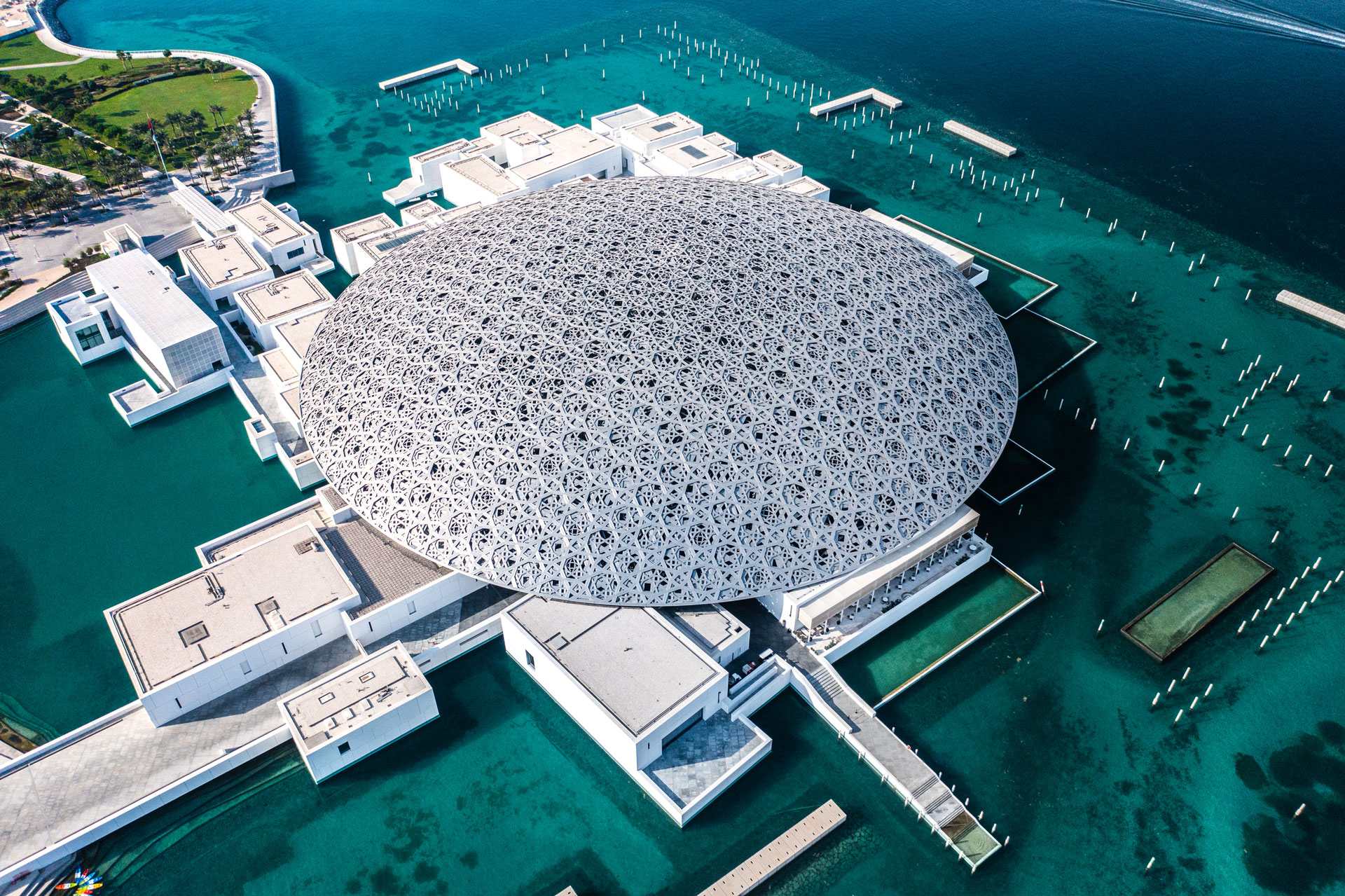
Louvre Abu Dhabi was conceived as the Arab world’s first universal museum, presenting objects and artworks across civilisations rather than organising history strictly by geography. Its underlying proposition — that cultures have developed through exchange as much as isolation — established an intellectual direction that would later become increasingly visible across Saadiyat.
The museum’s relationship with France also gave Abu Dhabi immediate access to established cultural expertise, institutional partnerships and loans while the emirate developed its own collections and curatorial infrastructure. That initial statement has since expanded into a broader cultural district, with each new institution adding another dimension to Abu Dhabi’s ambitions.
From Immersive Art to Natural History
In April 2025, teamLab Phenomena Abu Dhabi introduced a radically different kind of cultural experience. Created by Japanese art collective teamLab, the immersive institution uses light, sound, movement, water and digital technology to create environments that respond to visitors. Rather than standing outside the artwork, audiences become part of it.
Later that year, Natural History Museum Abu Dhabi expanded the district’s reach from contemporary experience to billions of years of planetary history. Its collections span the origins of the universe and the evolution of life, including a Tyrannosaurus rex skeleton, a blue whale specimen and material from the Murchison meteorite.
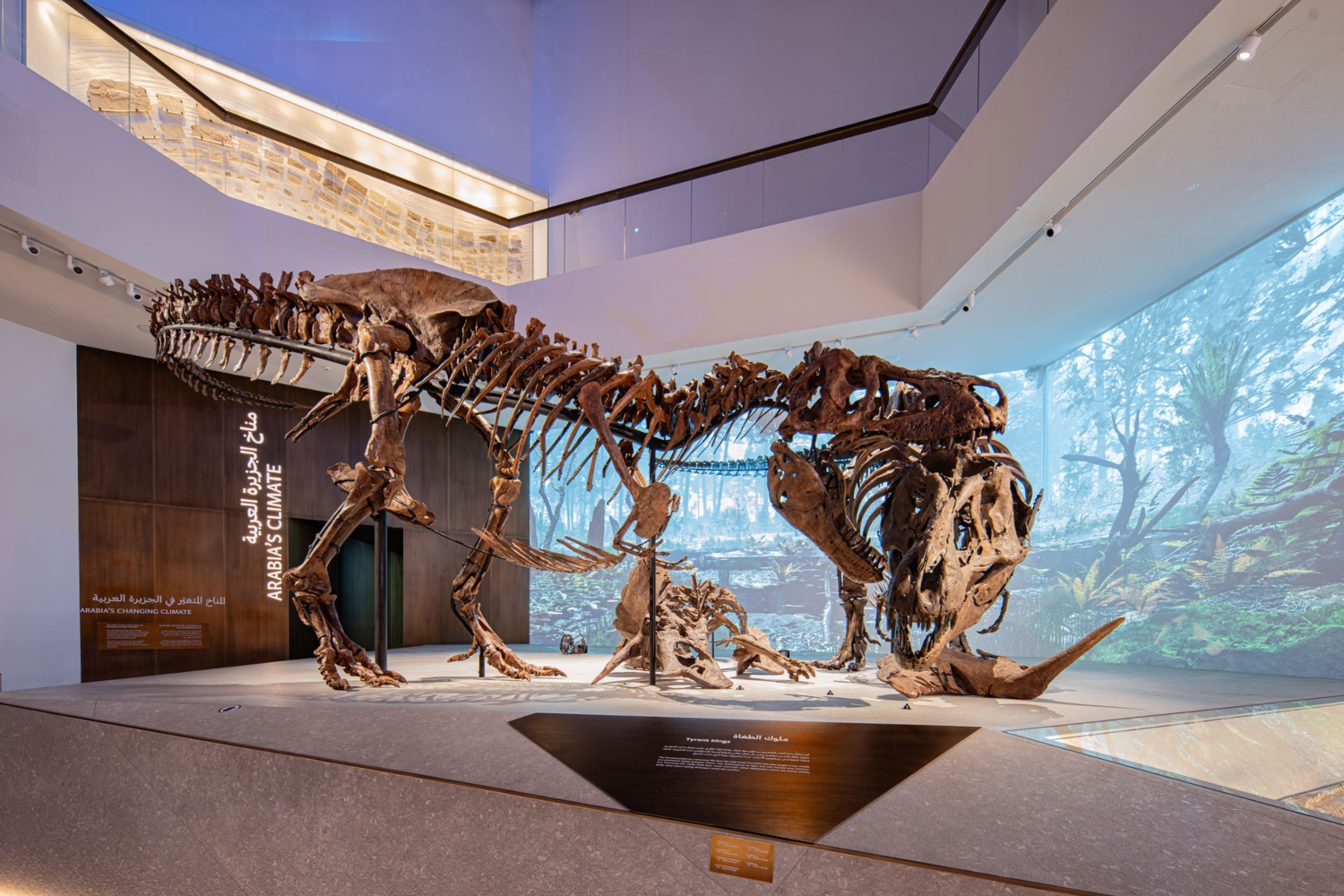
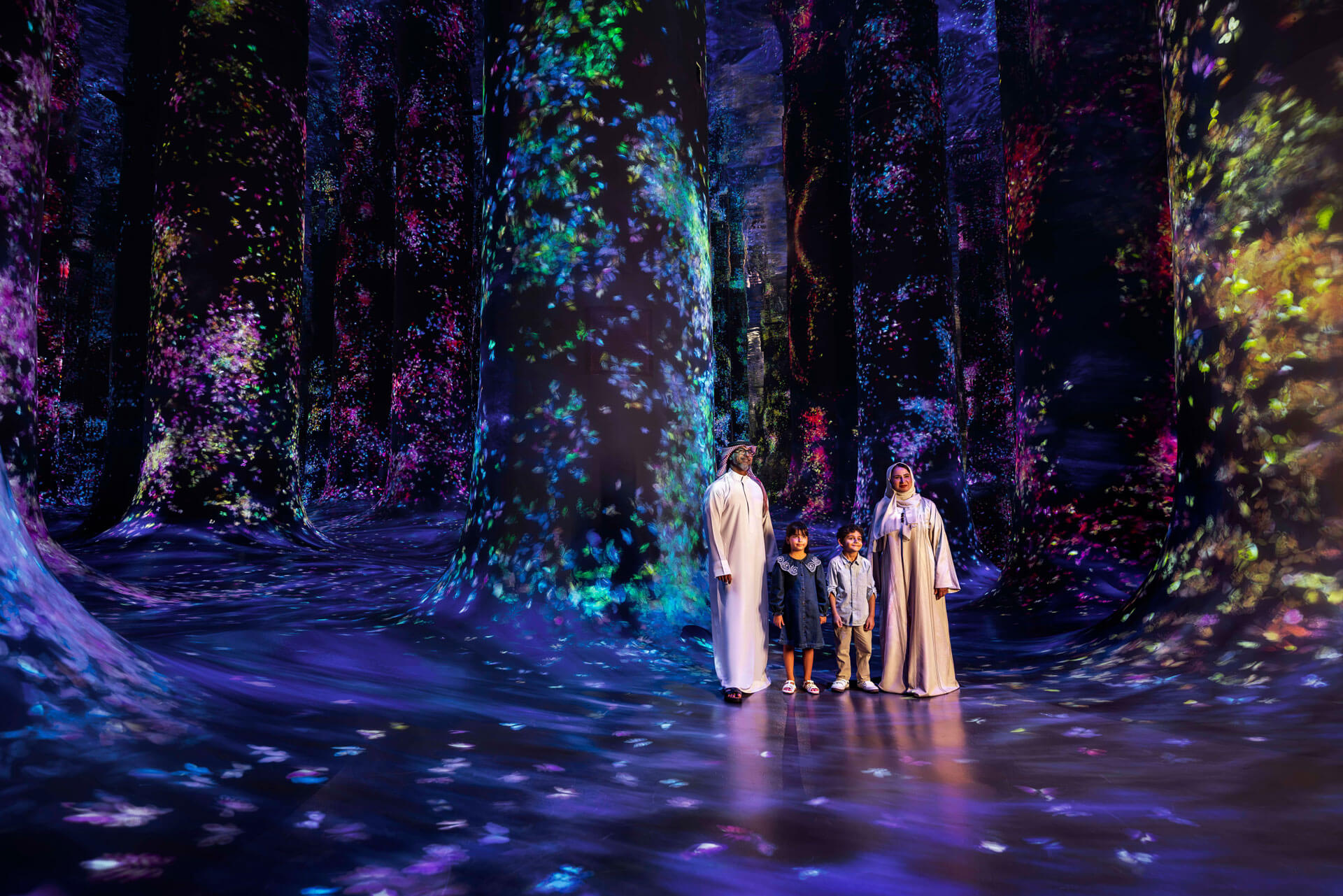
Left to right: Current exhibition display at Natural History Museum Abu Dhabi and the multi-sensorial and immersive experience at teamLab Phenomena Abu Dhabi. Images courtesy of visitabudhabi.ae
Then came Zayed National Museum, which opened in December 2025 as the national museum of the UAE. Its role is fundamentally different. Where neighbouring institutions look outward towards global art, science and contemporary culture, Zayed National Museum looks inward, exploring the history, heritage and development of the Emirates while placing the life and values of Sheikh Zayed bin Sultan Al Nahyan at the centre of the national narrative.
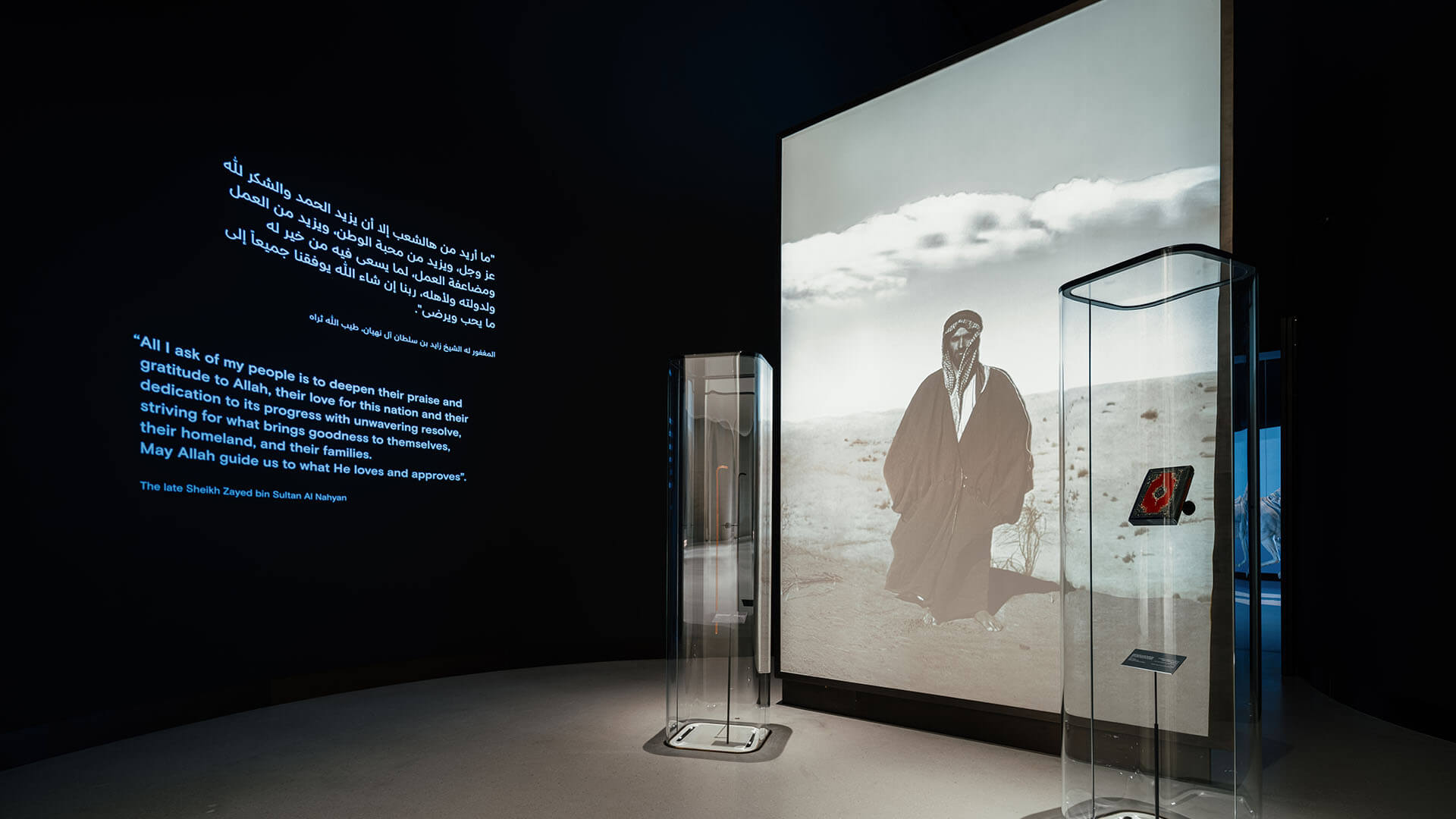
The result is important. Saadiyat is no longer simply assembling prestigious museum brands. Art, science, technology and national history now occupy the same district, giving Abu Dhabi the beginnings of something far more difficult to create: a coherent cultural destination.
Read more: What Does Luxury Style Look Like in Abu Dhabi?
Guggenheim Abu Dhabi Raises the Stakes
Guggenheim Abu Dhabi will add another interesting layer when it opens in December. Designed by the late Frank Gehry, the museum will focus on modern and contemporary art while positioning Abu Dhabi within a global network of Guggenheim institutions.
Its collection has been developing since 2009, with an emphasis on artistic production from the 1960s onwards and connections across regions, generations and disciplines.
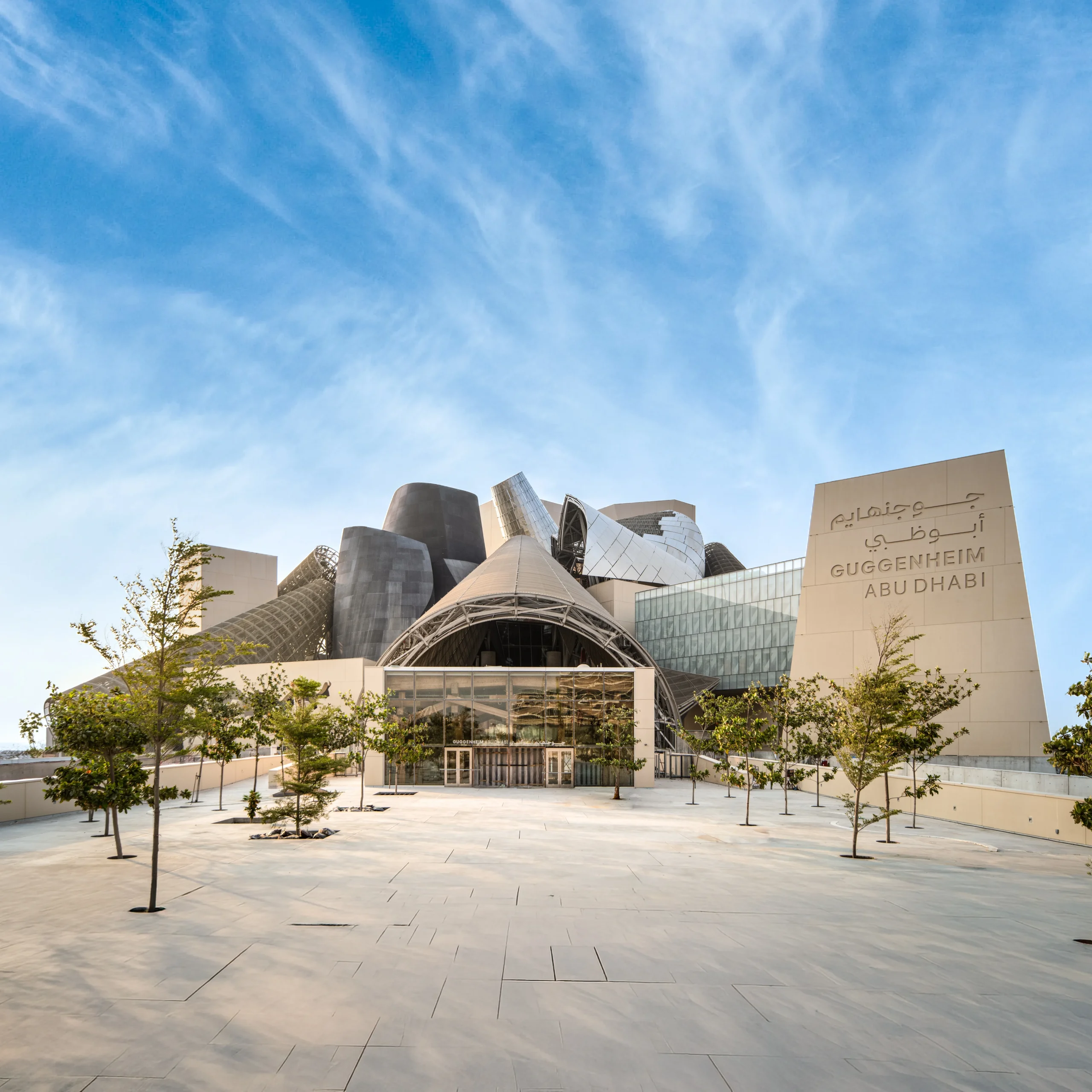
The architecture is characteristically Gehry: monumental galleries, irregular forms and sculptural cones organised around a central atrium. Yet the greater significance is strategic.
Modern and contemporary art has historically been narrated primarily through institutions in Europe and North America. Guggenheim Abu Dhabi has an opportunity to complicate that geography by placing the Middle East, North Africa, South Asia and other underrepresented regions more firmly within the story.
That could ultimately matter more than another landmark building. Abu Dhabi can commission extraordinary architecture relatively quickly. Cultural credibility takes considerably longer and is more intentional.
Culture Cannot Begin With a Museum Opening
The risk with any project of Saadiyat’s scale is that culture appears to have arrived fully formed through billion-dollar institutions. Abu Dhabi’s story is much older.
At the centre of the city, Qasr Al Hosn remains the clearest counterweight to Saadiyat’s architectural ambition. Its original watchtower, built around the 1790s, is Abu Dhabi’s oldest permanent structure. Over time, the site became a fort, royal residence, seat of government and national archive before reopening as a museum following extensive conservation.
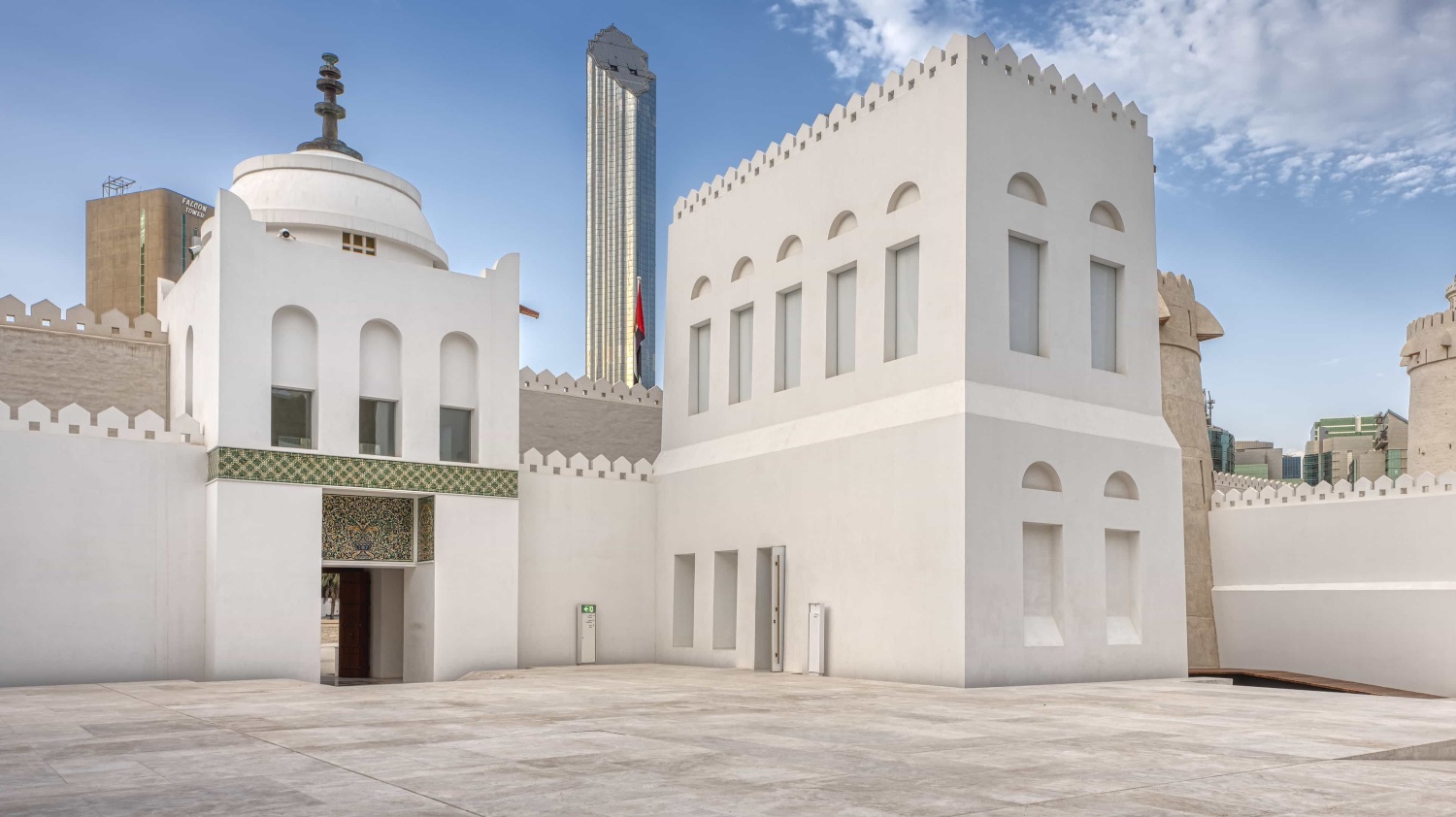
Its history traces Abu Dhabi’s development from a settlement dependent on fishing, pearling and maritime trade into a global capital. Within the wider Al Hosn complex, the House of Artisans preserves traditional Emirati practices including Al Sadu weaving and other crafts, placing skills passed through generations into a contemporary cultural setting. The institution explicitly positions itself around the preservation and transmission of the UAE’s intangible heritage.
This is where Abu Dhabi’s cultural strategy becomes more convincing. Saadiyat looks outward, while Qasr Al Hosn looks backward. Neither works quite as effectively without the other.
From Wealth to Cultural Capital
Abu Dhabi’s transformation should therefore not be reduced to the construction of museums. The more interesting development is the attempt to convert economic capital into cultural capital.
That requires more than architecture and acquisitions. It depends on scholarship, exhibitions, local artists, education, audiences and institutions capable of generating ideas rather than simply importing them.
Saadiyat already possesses the architecture and the global names. Its next test is whether those institutions become embedded deeply enough in the city to shape how Abu Dhabi understands itself — and how the rest of the world understands Abu Dhabi.
The emirate is not abandoning the identity built on energy, wealth and ambition. It is adding another layer to it.
And when Guggenheim Abu Dhabi opens in December, the most important question may no longer be what Abu Dhabi has built, but what kind of cultural influence those buildings can ultimately create.
For more on the latest in culture and art reads, click here
The post Culture Is Becoming Abu Dhabi’s New Currency appeared first on LUXUO.