


The Flock Backlash Is a Warning for Building Owners
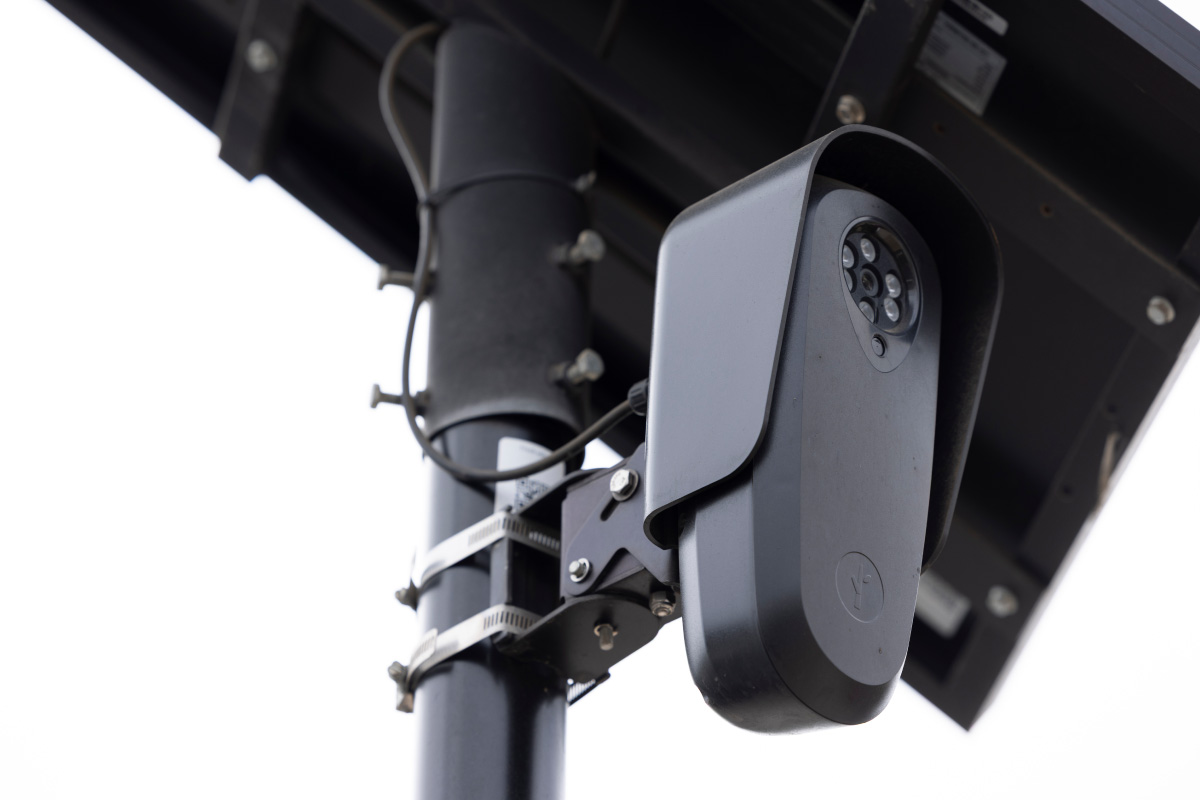
Something unusual is happening in American city council meetings. Since the start of 2026, more than 50 cities and counties have canceled or deactivated automated license plate readers, most of them made by Flock Safety, according to reporting by Politico. Roughly 23 city councils voted to cancel, reject, or deactivate the technology in the first part of the year alone. Denver residents packed a town hall with more than 250 attendees to protest a contract renewal. Two Phoenix suburbs terminated their agreements on the same day in August. Florida’s state transportation office revoked local law enforcement’s ability to place readers on state highways. In Boston, people marched to Flock’s offices.
The technology itself is not new. Automated license plate readers have existed since the turn of the century. What changed is scope and aggregation. Modern ALPRs photograph and identify every vehicle that passes, whether or not it is connected to any investigation, and the resulting data flows into searchable networks accessible to agencies well beyond the jurisdiction that deployed the camera. Concerns about federal immigration agents accessing local data have driven a significant share of the opposition, along with documented instances of misuse. Hillsborough, North Carolina ended its contract over contract language that appeared to let Flock disclose data to any government entity on a good faith belief of need. The ACLU has run organized campaigns in states across the country.
Meanwhile, cameras are proliferating inside buildings at an accelerating pace. The AI video surveillance market is projected to grow from roughly $7 billion in 2026 to more than $24 billion by 2035, with the commercial and residential segments among the fastest growing. Multifamily operators are being advised to prioritize cloud-managed video, AI analytics covering loitering detection, license plate recognition, and people and vehicle identification, along with access-video integration and remote monitoring. The business case is legitimate. These systems reduce guard costs, cut response times, resolve disputes, and deter incidents in ways that static cameras never could.
The deployments are also getting more capable in ways residents may not fully register. A camera that records footage for later review is a different thing from a system that identifies individuals, tracks movement patterns across a property, flags behavior as anomalous, and reads license plates in a parking garage. Building operators have been adding the second category while residents and tenants still assume they are living with the first. That gap is where reputational risk lives.
The obvious response is that private property is genuinely different from public roadways, and that distinction is real. A building owner monitoring their own lobby and garage is not operating a municipal surveillance network. Residents and employees enter voluntarily under terms disclosed in a lease. The data generally stays with the operator rather than flowing into a national law enforcement lookup system. There is no Fourth Amendment question when a private entity watches its own front door. Legally and ethically, these are separate situations.
But sentiment does not move along legal distinctions. What the Flock backlash demonstrates is that a substantial and growing share of the public has developed a reflexive discomfort with camera networks and the aggregation of data those networks produce. That discomfort does not carefully partition itself between government and private deployments. A resident who spent the past year watching their city council debate surveillance cameras, reading about data sharing with federal agencies, and seeing neighbors organize against the technology arrives at their apartment building with a different set of assumptions than they had two years ago.
The complicating factor for operators is that this sentiment often goes unvoiced. A resident who is uncomfortable with facial recognition in their lobby is unlikely to raise it at a leasing appointment. A corporate tenant evaluating a building is not going to lead with a question about video analytics during a tour. The discomfort surfaces later, in renewal decisions, in online reviews, in a tenant’s IT or legal team raising objections during lease negotiation, or in an incident that puts the system in front of people who did not know it existed. By then the investment is made and the relationship damage is harder to repair.
Transparency is the most reliable protection available, and it costs almost nothing to implement well. Operators who clearly document what their systems collect, how long data is retained, who can access it, what it is used for, and what happens to it if the property changes hands are in a fundamentally stronger position than those who install capable systems quietly and hope nobody asks. That documentation should be written for residents rather than lawyers, and it should be available before someone signs a lease rather than buried in an addendum.
It also helps to be specific about benefits rather than gesturing at security generally. Package theft resolution, faster emergency response, reduced incidents in parking structures, and dispute resolution are concrete outcomes people can evaluate. Operational applications like traffic flow analysis and amenity utilization are worth explaining too, because a resident who learns about them from a data breach notification will interpret them very differently than one who was told about them at move-in.
The data sharing question deserves particular attention given how much of the Flock backlash has centered on it. A great deal of the anger in those city council meetings was not about cameras existing but about where the footage went and who could search it. Building operators who can state plainly that their video stays on their systems, is not connected to any external network, and is released only under subpoena have a meaningfully better answer than those who have not examined what their vendor’s terms actually permit. That is worth checking rather than assuming, particularly for cloud-managed platforms whose contracts may contain broader disclosure provisions than an operator realizes.
None of this argues against deploying modern video security systems. The security and operational benefits are real, the technology is improving quickly, and buildings that forgo it will be at a disadvantage. The argument is that the environment surrounding these systems has changed faster than most operators have noticed, and the organizations that get ahead of it with clear disclosure and defensible data practices will avoid a problem that others will encounter at the worst possible moment.
The post The Flock Backlash Is a Warning for Building Owners appeared first on Propmodo.