


‘A wheeler and a dealer’: How Roy Cohn laid the foundation for Donald Trump
Roy Cohn’s life might not have been long – he was only 59 when he died of Aids in 1986 – but it was an eventful and influential one. It is arguable that this ruthless, pugnacious and almost gleefully malevolent New York lawyer shaped the current state and tone of US politics more than any other individual.
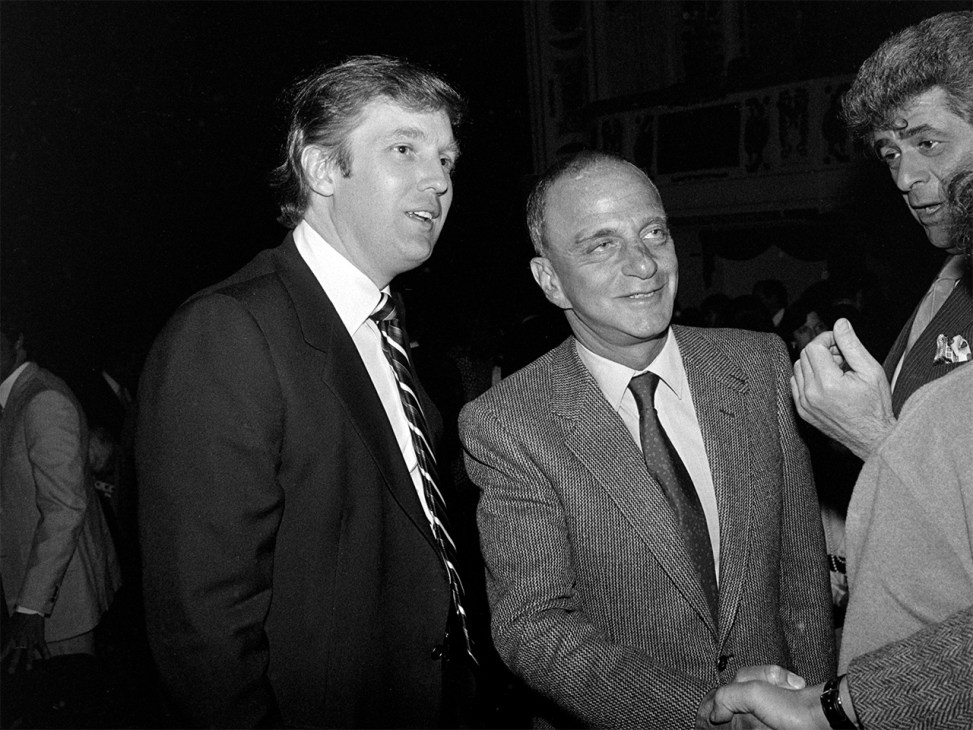
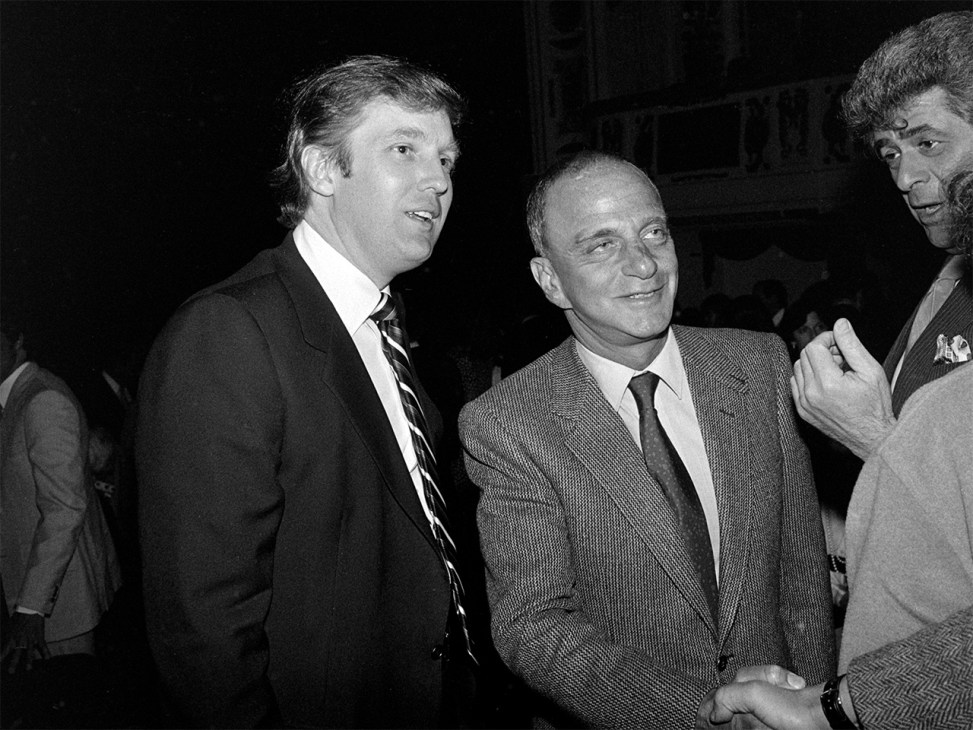
Cohn is the mentor credited with teaching US president Donald Trump everything he knows. He drilled his creed into his protégé: never admit fault, always hit back, use the law as a cosh, keep your name in the papers and fear is your friend. Trump’s introduction to Cohn at the ritzy Manhattan haunt, Le Club, in 1973 is to modern US politics what Robert Johnson’s 1930s encounter with the Devil at a Mississippi crossroads was to the blues.
When he met Trump, Cohn was already steeped in the theory and practice of paranoid brawling. As a young prosecutor, he helped send Soviet spies, Julius and Ethel Rosenberg, to the electric chair. He had furthered his endeavours in red-baiting as a chief counsel to senator Joseph McCarthy, a bellicose drunk whose largely hallucinatory anti-communist witch hunts of the early 1950s destroyed the lives and careers of thousands. After McCarthy was poured into an early grave, Cohn made himself useful to generations of prominent conservatives – including presidents Richard Nixon and Jimmy Carter – and New York mobsters.
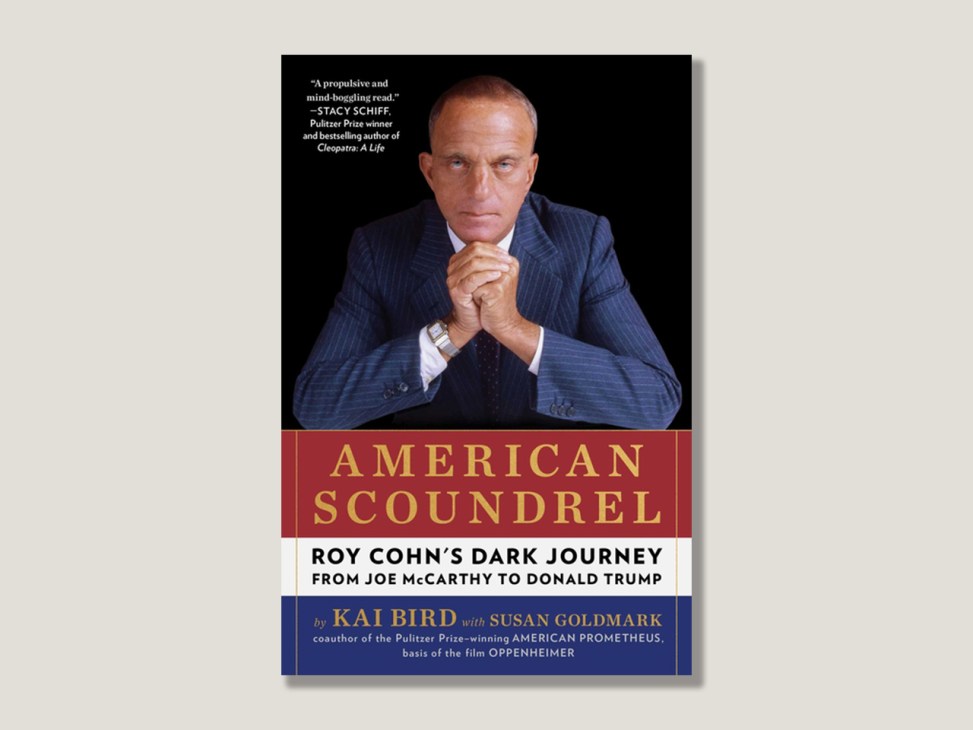
Roy Cohn’s story is told in a new book by husband-and-wife team Kai Bird and Susan Goldmark, American Scoundrel: Roy Cohn’s Dark Journey from Joe McCarthy to Donald Trump. Bird spoke to Monocle’s Andrew Mueller.
This conversation has been edited for clarity and length.
What did people see in Roy Cohn? It’s not just Trump and McCarthy – it’s Aristotle Onassis, Barbara Walters, Rupert Murdoch, George Steinbrenner and many others.
In American Scoundrel, I struggled to explain how so many powerful elite New York personalities and celebrities could condescend to be in Roy Cohn’s presence. They all knew who he was. They all knew what he had done during the McCarthy era. They all knew that he was a mafioso lawyer. They all knew that he was despicable, yet they would show up. He hosted his own birthday parties at Studio 54 and the Armory, and two or three hundred of these elite New Yorkers toasted to Cohn’s good health.
One reason for his popularity is that he could be very charming over the dinner table. He was a great gossip. But the other reason is that he was very transactional. He was a wheeler and a dealer, a fixer. He loved to find out what you wanted and then he’d find some friend of his to make it happen.
Was it just transactional with Trump? The book does hint at a genuine friendship.
I think there was a genuine friendship. When Cohn died, Trump showed up at his memorial service and Peter Manso – a journalist who knew them both – said that he saw him weeping. Trump is not the type of man who has genuine friendships. He has acquaintances and is an extremely transactional figure, just like Cohn. But I think they clicked. Cohn was a closeted gay man who never came out of the closet and Trump was his type – tall, blue-eyed and wealthy.
You spoke to President Trump during your research. He’s usually reluctant to extend credit to anybody else for anything. Does he extend any to Roy Cohn?
Absolutely. In my first phone interview with him – which was a cold call, by the way – I just dialled a number that someone had given me and Trump answered. I introduced myself quickly and said that I was writing a biography of Roy Cohn. He immediately gushed: “Oh, what a wonderful man he was! He was such a smart lawyer. We won a lot of cases together,” which wasn’t really true.
Trump was an insecure, aspiring real-estate developer when they met in 1973. Cohn opened the doors of Manhattan society for this young man and taught him how to deal with the press and the courts, and how to get his name into the gossip pages. He also encouraged him to think that he could get away with things. Cohn’s mother, Dora, had raised him with no guardrails, telling him that the rules didn’t apply to him, that he was special and that the rules were for small men. And Cohn taught Trump that.
Could anybody but Trump have applied those lessons to this effect?
Trump is a particularly charismatic, demagogic politician. But Cohn’s lack of ethics are haunting us from his grave. I used to think that McCarthy was just an aberration – a low point in American history that we had overcome – but I’ve reconsidered that notion. Every few generations, we go through a period of paranoia and insecurity. We become obsessed with the Other, resentful of the immigrant, suspicious of the establishment. We become conspiratorial. This is all the politics of Cohn.
Did you reach any conclusions about his motivations? He also campaigned against gay rights and persecuted gay people – was it all an exercise in deflection?
There were plenty of closeted gay men in the 1950s who didn’t turn out like Cohn. It’s part of the answer but the other explanation is that he’s a product of New York, a product of the Bronx. His father was a Bronx judge and his mother was the daughter of a wealthy banker. He grew up on Park Avenue and his mother took him to Sing Sing every weekend to visit his beloved Uncle Bernie – the only banker after the crash of 1929 who was convicted of bank fraud and sent to prison. Dora told her son that Uncle Bernie was the victim of a vendetta by Jewish communists and Wall Street Wasp bankers who refused to bail out this Jewish bank [the Bank of United States]. And so Cohn imbibed this conspiratorial view of the world, full of these resentments, which explains his actions as an adult.
The post ‘A wheeler and a dealer’: How Roy Cohn laid the foundation for Donald Trump appeared first on Monocle.