



One stock quietly did 590% in 2026 after a decisive AI rebranding
Many AI investors have not heard of Axe Compute, and a year ago the company was doing something completely different. It used to be Predictive Oncology, a small firm that applied artificial intelligence to cancer research. Late last year it changed its name, its ticker, and its entire business.
Now it rents out the computing power that companies need to run AI, and the stock has moved sharply. Shares trade near $11, up nearly 590% over the past six months.
Chief Executive Officer Chris Miglino and President Kyle Okamoto sat down with me to explain how the business works, where the money comes from, and what they think happens next in the market for AI infrastructure.
How Axe Compute went from cancer research to selling AI computing power
The company was called Precision Therapeutics, then Predictive Oncology, before it became Axe Compute in December 2025, as reported on Yahoo Finance, and began trading on the Nasdaq as AGPU.
Miglino took over as chief executive in February 2026, and Okamoto, who helped build the Aethir GPU network, joined as president in April.
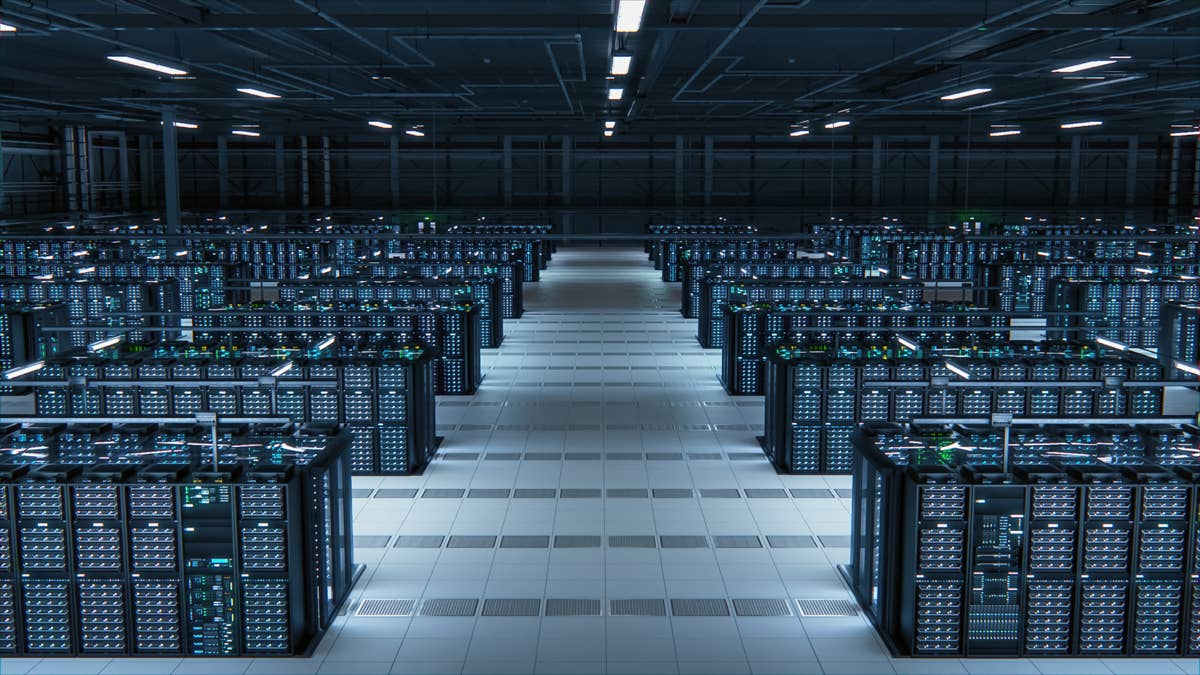
The business rents out graphics processing units, the specialized chips that train and run AI models. Axe Compute buys and owns the hardware, leases space and power inside data centers run by partners, and rents finished, dedicated clusters to business customers.
It draws on Aethir’s distributed network, which reaches more than 400,000 GPUs across 93 countries.
Okamoto said the company was built to fix what he and Miglino disliked about rival providers, starting with how little say customers usually get.
“The primary tenet that we’ve built this around is choice,” he said, meaning customers pick their location, their chips, and their contract terms instead of taking a fixed package.
What the surge in Axe Compute stock reflects
The climb tracks investor appetite for anything tied to AI infrastructure, plus a fast pivot and a crypto-linked treasury the company calls a Strategic Compute Reserve. Over six months, the shares are up nearly 590%, and for the 2026 calendar year they are up about 56%, according to the chart. The 52-week range runs from $1.04 to $12.
There is real business behind the move, at least on paper. Miglino said the order book has grown fast. “We’ve closed $3 billion worth of business. We have $6 billion worth more in the pipeline,” he said. Okamoto put the announced contracts at about $696 million in annual recurring revenue once the large builds are deployed.
More AI Stocks:
- Morgan Stanley sees AI stocks surviving backlash
- Top analyst resets AMD stock price target for rest of 2026
- Burry says AI leaders have ‘nothing to slow down’
The reported figures today are far smaller. For the fiscal year ended December 2025, according to an SEC filing, revenue was tiny, the computing segment brought in nothing, and the company posted a net loss of $233.1 million.
Market value sits near $128 million, and the shares are volatile. For now, the price reflects what investors expect the company to become.
How the business actually makes money
Building a dedicated cluster costs a fortune long before a customer pays, so Axe Compute does not build on speculation.
“We never execute on a cluster until we have a tenant,” Miglino said.
The customer, which the company calls an offtaker, pays 25% to 45% of the contract value upfront. That money buys the chips, and Axe Compute finances the rest against the equipment.
The contracts are take-or-pay deals, so a customer pays the same fixed amount each month whether or not it uses the capacity, which gives Axe Compute predictable income. Almost all of its clusters are bare metal, meaning one customer gets the entire machine and runs its own software on it.
That setup is the pitch against the largest cloud providers. Okamoto said those providers force customers into fixed offerings at a premium.
“If you go to a hyperscaler, you’re going to sit in a long line, and you’re going to get exactly what they have. If you ask for changes, the answer is no,” he said. He added that they can charge 40% to 60% more.
What Miglino and Okamoto say comes next
Both executives expect the market to thin out. Miglino said many current players simply rent capacity from one another and add a markup, and that this layer will disappear.
“I think that margin in the middle will go away,” he said, arguing that the survivors will own their hardware and know how to run data centers.
Getting there depends on power and land, which are scarce. Okamoto said about 80% of U.S. data center capacity is sold before it is even built, and both men flagged community resistance to new data centers as a growing constraint.
Axe Compute has locked in extra capacity abroad, including sites in Sweden and the Middle East.
For investors, Okamoto offered a plain test. He said a signed deal means little until a company shows the money and the buildout behind it, and he pointed to customer prepayments as the signal that matters.
“I would look at a company’s overall execution path, not just the exciting press release,” he said.
That is the honest read on AGPU. It is a speculative, early-stage bet that trades alongside other neocloud infrastructure names, the shares swing hard, and anyone buying after a near-590% run should size the position carefully and set a clear exit plan.
Related: Analyst sets jaw-dropping Nvidia price target