If Britain stops believing in AI we’ll sabotage our own progress
Britain faces an “AI belief challenge” driven by public skepticism over job losses and corporate greed, requiring companies to align technological progress with human interests, says Michael Hayman
Technology companies at the frontier of AI development are rethinking the speed at which they improve the capabilities of their models. Safety is the focus. With it comes a societal question: what happens if people no longer believe the progress of AI is in their interests?
ONS research finds just 36 per cent of adults in Great Britain believe AI will benefit them. Britain doesn’t just have an AI adoption challenge; it has an AI belief challenge.
The second annual BPI Reputational Resilience Index reveals a widening gap between the growing capability of AI and the public’s belief in it.
It shows what happens when that lack of belief meets a powerful negative narrative. Across the UK, 49 per cent of adults are susceptible to harmful narratives about companies, but that figure rises to 60 per cent for app-based businesses. When we tested the most damaging narratives, the claim that companies use AI as an excuse to cut jobs and increase profits sat at the top of the harm score.
Despite the dialogue between the AI giants over recent days, this is much more than a story about technology; it is also one about the perception of motive: job losses, corporate greed, misinformation and the fear that progress will benefit companies at the expense of people. For business the risk is that an anti-progress narrative takes hold.
Perception of values
Take the UK finance sector. We stress-tested two major UK financial services firms. Both started with identical 69 per cent trust levels but when confronted with the same attack narrative, the outcomes differed considerably. The “vulnerable” brand saw 60 per cent of consumers believe the attack, with 60 per cent feeling worse about supporting them. In contrast, the “resilient” brand saw only 36 per cent believability, with only 38 per cent feeling worse about supporting them. The difference seems to be explained by their perceived values.
Resilient companies tend to have issues advantage. It is established through their actions, before an attack arrives. We know what they stand for and whose interests they serve. If the first time an employee hears a company talk about the future of work is when redundancies are announced, the damage has already been done.
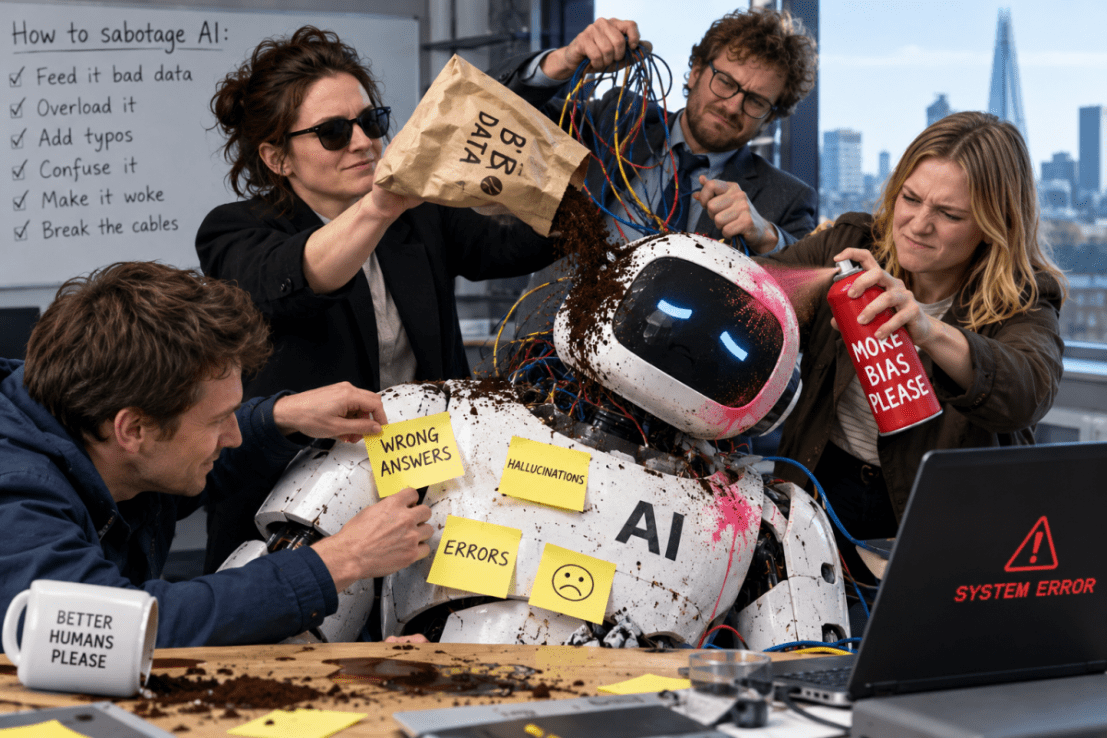
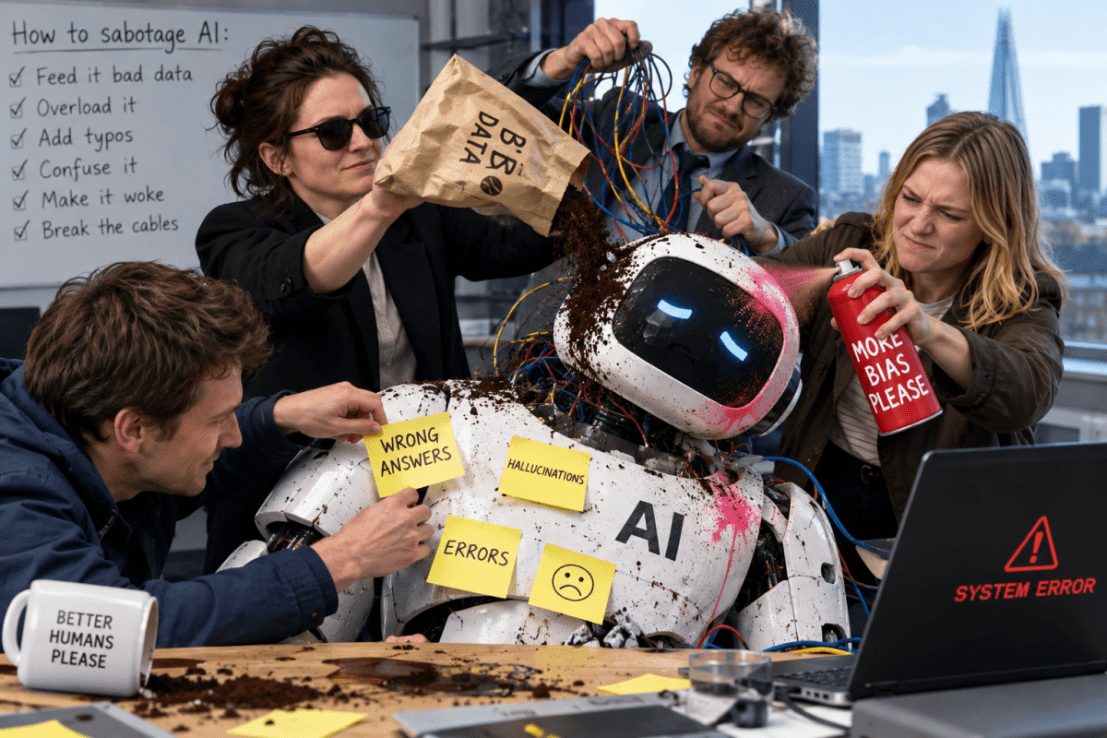
There are lessons from the mythology of the past for the creators of tomorrow. The French word sabot means a wooden clog. From it came sabotage —workers allegedly disabling the machines that they believed would undo their livelihoods.
Today’s machine is less mechanical. It is an algorithm. And If people believe they are its victim rather than its beneficiaries, the journey to active opposition has already begun.
This is belief sabotage. And companies can become the saboteurs of their own technological revolution if their actions confirm the very narrative they are currently seeking to address.
That is why the discussion about the risks of AI speaks to so much more than technological evolution and advancement. How society sees it as a force for good is critical.
This rests on the delivery of a very human definition of progress: and that is realising the potential of people rather than just testing the possibilities of technology.
AI is a game changer partly because of its speed of acceleration. The future has arrived and it has arrived suddenly. With it a dividend of computing power that can deliver and distribute incredible advancements. But that speed carries with it the risk of accelerated anxiety and heightened concern.
So, as leaders consider the future deployment of frontier technologies, they should consider this: the promise of AI is a promise kept for people.
Michael Hayman is UK Chair of BPI Group