Europe’s space chief wants decision this year on launching without NASA
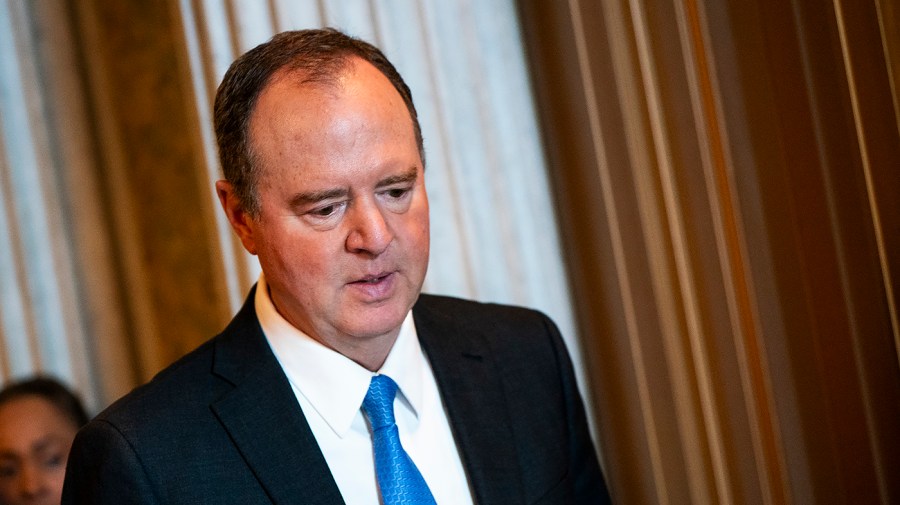
PARIS — Europe’s space boss wants European countries to decide by the end of the year whether to launch astronauts without U.S. help.
“We would like to strengthen our autonomy. The very visible part, which we are discussing, is whether we shall build up a European capability to bring astronauts to space with our own means,” the European Space Agency’s director general, Josef Aschbacher, said in an interview ahead of an international space summit in Paris this week.
“That means with our rocket, our own crewed vehicle, our launch … system, our operational system, the science, the recovery and everything that is attached to it, including the control centers operating the facilities,” he added.
Aschbacher’s comments come amid a global space race between the world’s biggest powers, including China and the United States, and increasingly strained relations between European countries and the Trump administration.
The U.S. government has lobbied against the European Commission’s EU Space Act, a proposed rulebook for space activities the U.S. sees as targeting American companies.
It also successfully pressured American space giants into skipping this week’s Paris space summit — which takes place on Wednesday and Thursday and will address space exploration. The Trump administration accused Paris of “anti-competitive practices” and of disregarding the perspective of U.S. industry.
While Europe contributes hardware to U.S.-led projects like the Artemis Moon exploration program with its European Service Module — which provides propulsion, power, water, oxygen and temperature control — it has for years relied on NASA to send astronauts into space.
The dependence on the U.S. underscores the limits of Europe’s role in missions it helped build, leaving key decisions up to Washington. In March, the U.S. space agency unilaterally decided to repurpose Gateway, a lunar space station project that had involved ESA.
Now, Aschbacher will ask European ministers to make a decision on whether to give the ESA a mandate to explore independent astronaut launches at a key interim ministerial meeting in Rome in mid-December.
However, it’s not about decoupling from the United States, he stressed — the agency still wants to contribute to the Artemis program — but about becoming more autonomous. “We will always work with the U.S. in space. What we certainly want to achieve now is a stronger Europe.”
“Should Europe decide to also cover human astronaut transportation and astronaut missions to orbit and maybe eventually to the moon and beyond?” he asked. “The answer will be given by politicians, but we at ESA are preparing the case with all the facts, all the estimations, with all the pros and cons for ministers and heads of governments to make their informed decision.”
“I do expect from the space summit this week very important guidelines on how I should prepare the decisions for December on the topic of space exploration in particular,” the ESA chief said.

The continent is not starting from scratch in terms of building launch capabilities.
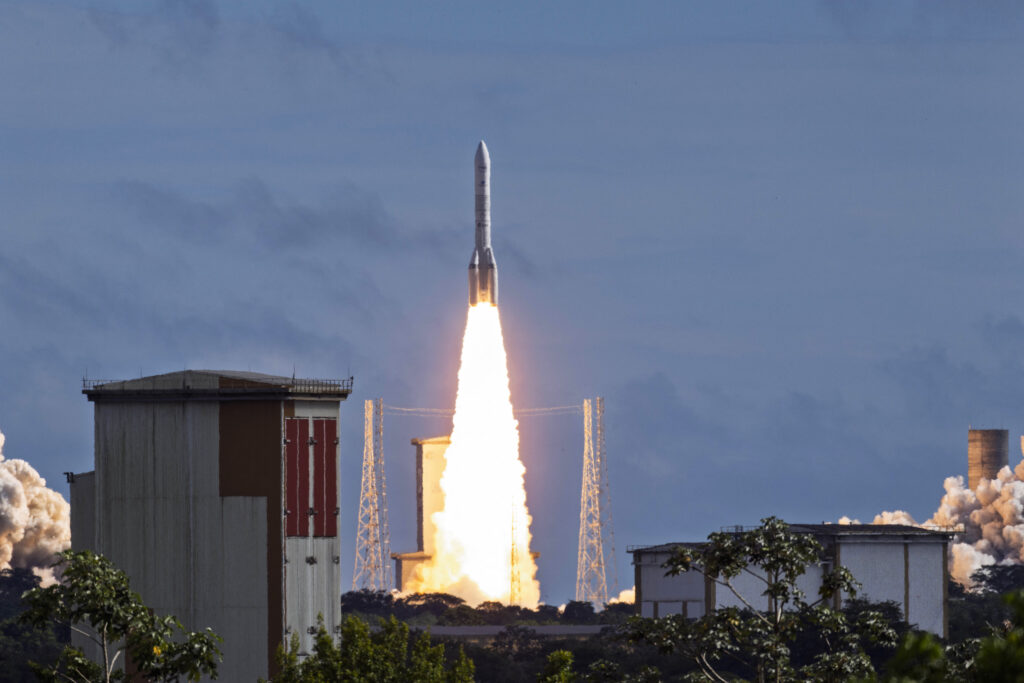
On Monday, ArianeGroup’s CEO Christophe Bruneau told reporters that “technically, the Ariane 6 launch vehicle is fully capable of carrying out crewed flights,” referring to one of Europe’s main launchers. German startup Isar Aerospace also sent a rocket carrying a payload of five small satellites into orbit last weekend. It was the first successful commercial orbital launch from continental European soil.
Aschbacher also said that while Europe has “a lot of autonomy” in navigation and Earth observation technology, it lags behind the U.S. in satellite-based communications — an area dominated by SpaceX — as well as in exploration.
In the short term, a decision to launch astronauts independently would not require new funds, Aschbacher pledged. Back in November, the agency’s member countries approved a record €22.1 billion three-year budget, up from an earlier €17 billion.
The ESA can start doing architecture studies with its existing budget and use cash initially earmarked for participation in NASA’s Gateway project, the European space boss said. “We will redirect some of the funds that have been foreseen for Gateway … into building up a new ambition.”