



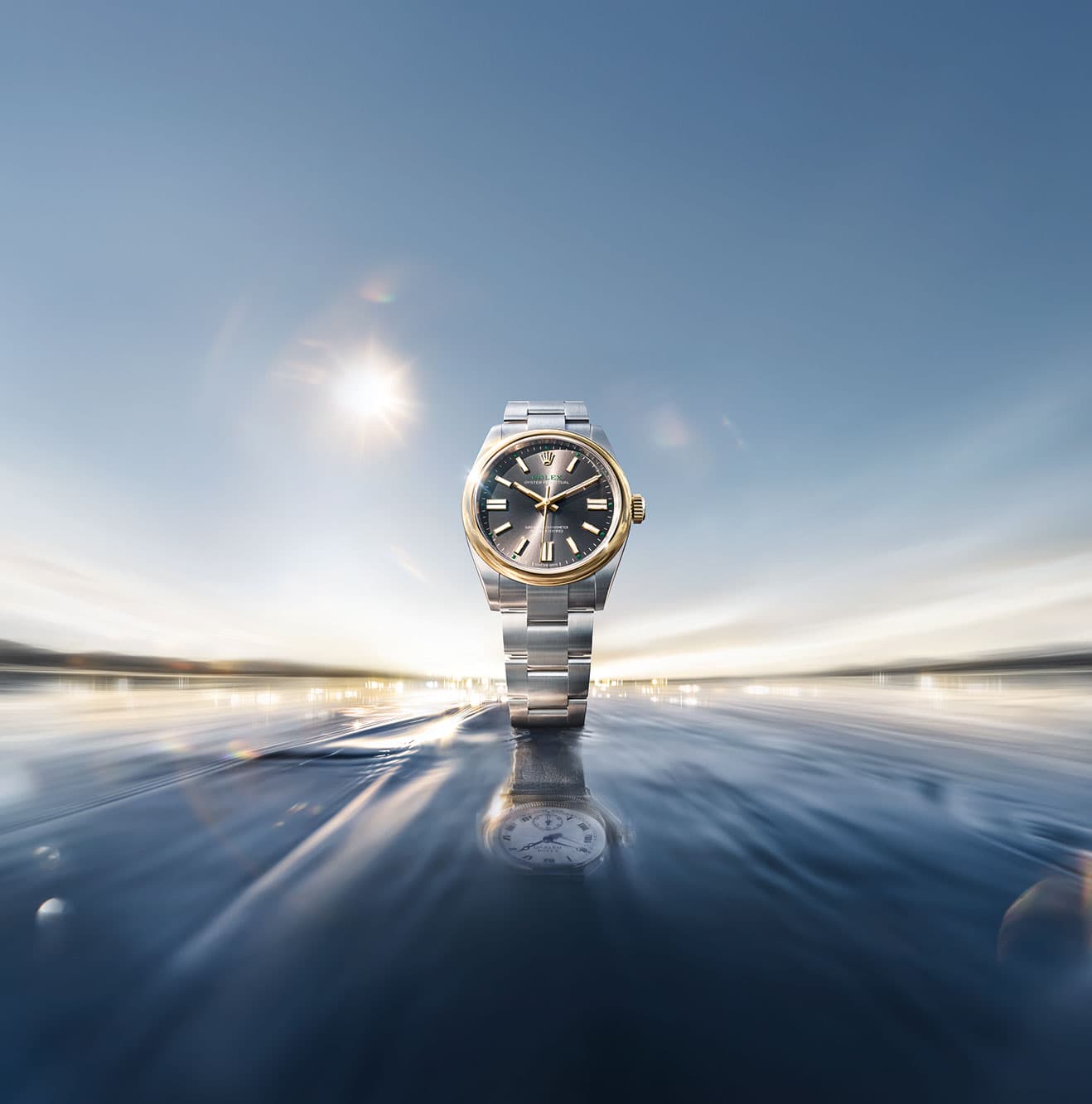
100 Years of the Rolex Oyster: The Case That Changed Watchmaking

This year marks an incredibly important year for Rolex as they celebrate 100 years of the Oyster case. And even though the founding of the brand dates back to 1905, it is arguably the invention of the Oyster case that imbued Rolex with a philosophy that is still in practice today. In the last 100 years, Rolex have gone from waterproofing a watch enough for a swim across the English Channel to being able to dive 10,916 metres beneath the sea. But more than just waterproofness in a watch, the Oyster case evolved into the Oyster Perpetual promise, a dedication to innovate and perfect every component in their watches, making them more powerful, robust and reliable to accompany its wearer in all their activities.
Precision, waterproofness and self-winding – these were the three fundamental achievements that would set Rolex on the path to revolutionise the wristwatch. Before the Oyster case first appeared, Rolex’s founder, Hans Wilsdorf, focused on establishing chronometric precision. By improving the quality of movements, a Rolex watch became the first in the world to receive the Swiss Certificate of Chronometric Precision, granted by the Official Watch Rating Centre in Bienne in 1910, and just four years later in 1914, the Kew Observatory in Great Britain awarded a Rolex wristwatch a class “A” precision certificate, a distinction that, until that point, was reserved for marine chronometers.

Then in 1926, Hans Wilsdorf unveiled the Oyster case to the world. It was Rolex’s first watch that was completely waterproof and dust-proof. These days, waterproofness in any wristwatch is practically expected, but back in 1926, the invention of a watch that could not just withstand minor splashes but actually be fully submerged in water, at a time when dust was still considered an enemy of watch longevity, was revolutionary. In 1931, Rolex invented and patented the Perpetual rotor, a self-winding system with a free rotor, an ingenious system that is still present in the majority of modern automatic watches. These three inventions would forge the success of a visionary individual and the destiny of a revolutionary watch.

What began with the introduction of the Oyster case 100 years ago would evolve into the Oyster Perpetual we know today. Rolex have never lost sight of the core tenets of that watch in 1926 – precision, reliability and waterproofness – instead cementing this philosophy as the cornerstone of their progress. Since then, Rolex have not stopped tinkering and innovating with their watches. They ask forward-thinking questions and dedicate the time necessary to reach the most apt resolution. Because of this, Rolex watches are continuously updated with time whenever innovation takes place. From horological accomplishments like the Parachrom and Syloxi hairsprings to the Chronergy and Dynapulse escapements, their watches are imbued with the latest in technology to ensure they remain the most precise, robust and reliable they can be.

The invention of the Oyster case also set about another precedent at Rolex. In October 1927, a young British swimmer, Mercedes Gleitze, wore an Oyster while swimming the English Channel, putting this newly waterproof watch through the harshest of tests. Needless to say, both the swimmer and the watch made it to the other side unscathed. This moment in history cemented Hans Wilsdorf’s conviction that true excellence has to be demonstrated in the field, over time and under pressure. Since then, Rolex has entrusted their watches to various explorers, scientists, athletes, pilots, seafarers, mountaineers and divers. These men and women have taken Rolex watches to the most demanding locations like the highest peak in the world, Mount Everest, or the deepest depths in the ocean, the Challenger Deep in the Mariana Trench, and those watches have lived to tell the tale.
What began as wearer testimonials after wearing Rolex watches while doing incredible things has today turned into the notion of Rolex Testimonees. The core concept is unchanged: The brand supports a family of inspiring individuals, men and women who have made their mark on the world. What has changed, however, is the scope. Today, Rolex Testimonees include people from various sports, the ones who display technical flair and the ability to inspire the young, but more importantly, they also support conservationists and artists. This is all part of their Perpetual Planet and Perpetual Arts Initiatives to ensure we protect our planet and the culture of its people.


From left to right: Integration of the oscillator in the movement, Waterproofness test: Fathometer
In 100 years, Rolex has debuted countless achievements that have and continue to shape the world of watchmaking, and they plan to extend this human and technical journey well into the future. As their founder once exclaimed, “Rolex must continuously strive to think and act differently from the rest!” In 2026, they are expanding their Superlative Chronometer certification to encompass seven testing criteria, which include resistance to magnetism, reliability and sustainability, now joining precision, waterproofness, self-winding and autonomy. With this new addition to their own internal standards that outperform the commonly used industry ones, Rolex are confident that their watches are more precise and robust than they have ever been. What started as a brand philosophy 100 years ago has become a mantra for Rolex, pushing them to create better watches for generations to come.

This story was first seen as part of the WOW #84 Summer 2026 issue.
For more on the latest in luxury watch reads, click here.
The post 100 Years of the Rolex Oyster: The Case That Changed Watchmaking appeared first on LUXUO.