


How the reconstruction of Lisbon’s Baixa district became a model for modern urban planning
Monocle touches down in Lisbon early next month for our annual Quality of Life Conference. For some, the design of the Portuguese capital echoes saudade, a romantic form of longing for an absent person, place or time. To satiate this yearning, most visitors turn their attention to the yellow trams winding up the 16th-century cobbled streets but in doing so, they often miss a different vision of the city – one built on boldness, foresight and rationalism – in its downtown Baixa neighbourhood.
The reconstruction of this locale is an epic tale that begins with a crisis of biblical proportions. In 1755, Lisbon was struck by an earthquake, followed by a fire and a tsunami, that left thousands dead and much of the city in ruins. Enter Sebastião José de Carvalho e Melo – later known as the Marquis of Pombal – a minister who seized the moment to transform the city’s urban fabric and, ultimately, its society. Three years after the catastrophe, De Carvalho e Melo’s team of engineers and architects produced a plan for Lisbon’s reconstruction – a revolutionary document considered by many to be the first modern urban plan in the Western world, predating Haussmann’s Paris by a century.
Under this 1758 blueprint, housing, commerce, mobility, sanitation and, crucially, the financing of reconstruction were all accounted for. Streets were levelled and straightened into grids; land was parcelled into standardised blocks. Stone window frames and wooden slabs were made uniform, allowing for off-site prefabrication. Each building was reinforced by a cage of timber beams, known today as the gaiola pombalina, to withstand earthquakes.
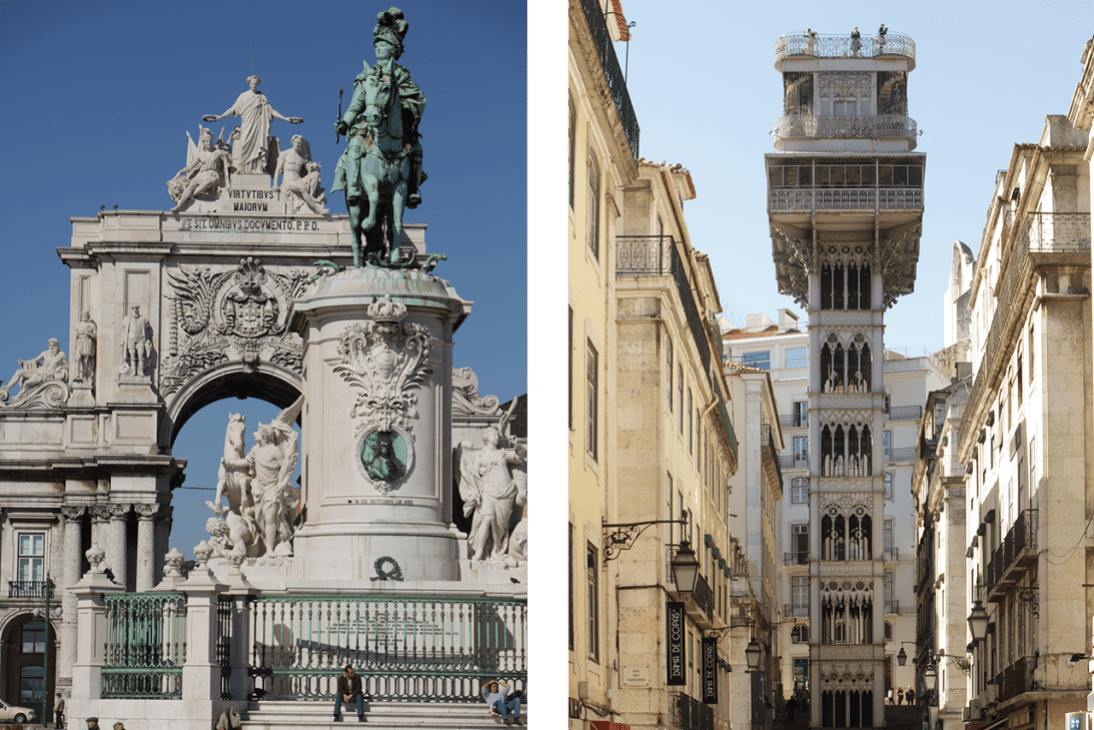
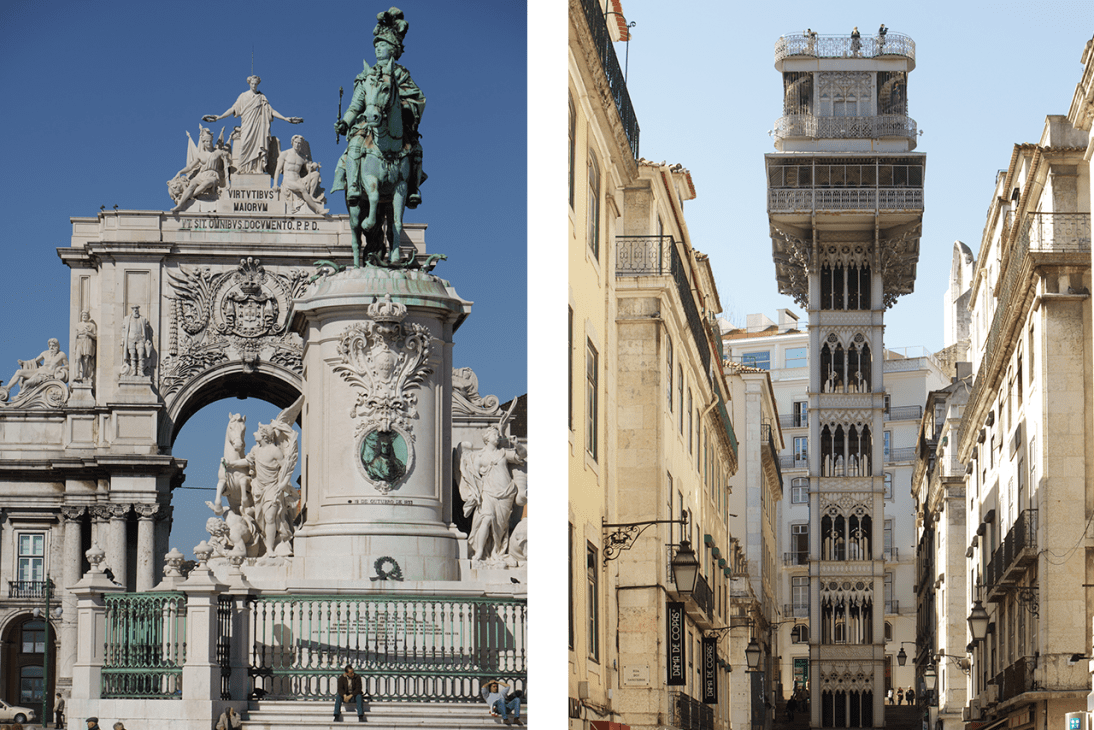
Baixa was reimagined as a whole. It’s now home to landmark structures such as the Praça do Comércio gate (pictured, left) and the neo-gothic Elevador de Santa Justa (pictured, right). The city remade itself in the language of the Enlightenment, shifting from a medieval landscape of alleys and cloisters to one of wide boulevards, where commerce thrived and a middle class emerged. Today the measured elegance of Lisbon’s Baixa endures. Visitors who look beyond the havoc of tourists, tuk-tuks and souvenir shops that now crowd the streets can still admire the harmony and order of a city centuries ahead of its time. The neighbourhood has become a global benchmark for architects looking to reshape their own metropolises, proving that saudade can be transformed from transient beauty into permanent urban-design wonder.
Gaia Lutz is Monocle’s Lisbon correspondent.For more opinion, analysis and insight,subscribeto Monocle today.
Join the fun: Join us for Monocle’s annual Quality of Life Conference in Lisbon from 3 to 5 September, where we’ll meet the people who know how to deliver better quality of life for all.
The post How the reconstruction of Lisbon’s Baixa district became a model for modern urban planning appeared first on Monocle.