Parents and politicians love social media bans for kids. Experts worry they’re a shot in the dark.
LONDON – It’s a muggy summer afternoon in London and more than two dozen academics and civil society experts, all interested in how digital technology affects children, have gathered in an airless basement lecture theatre to discuss a hot topic.
The U.K. government’s statutory ban on smartphones in English schools only came into force the day before, so the launch of new research exploring how students experience these restrictions couldn’t be more timely.
Experts like the ones assembled worry that policymakers around the world weighing broad crackdowns on children’s access to smartphones and social media are at best barrelling ahead of the evidence, and at worst ignoring it altogether.
Edith Rodda, a PhD student at UCL’s Institute for Education, reads out a quote, attributed to a parent in the south-east English county of Kent.
“A phone shortens [children’s] attention span, compromises their social life and skills, it’s addictive and wires their neurology in a way that makes them more prone to substance addiction.”
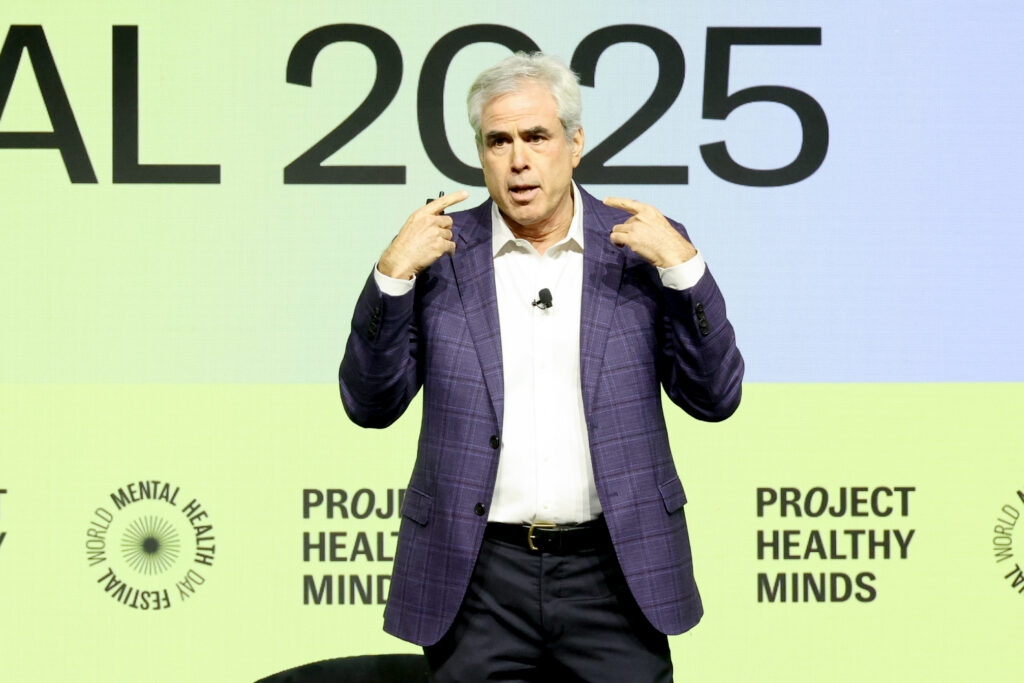
There’s a pause that feels like a collective wince. Rodda points to a picture of a grey-haired man at the bottom right-hand corner of her slideshow. “I blame this man,” she says.
The audience laughs knowingly; Jonathan Haidt needs no introduction.
Anxious policymaking
Haidt’s 2024 book The Anxious Generation, which argues that the adolescent mental health crisis we see today originates in the advent of social media and mass adoption of smartphones from the early 2010s onwards, has spent 118 weeks (and counting) on The New York Times bestseller list.
It’s not just struck a chord with the public, it’s also won Haidt the ear of top lawmakers around the world considering crackdowns on young people’s access to the tech, including in the U.K. where a ban on social media for under-16s is set to land next spring.
Among many of the academics who’ve spent their careers researching online harms, though, the American social psychologist is public enemy number one.
They say his work confuses correlation with causation and, in the words of chief critic Candace Odgers, tells “a scary story about children’s development that many parents are primed to believe.”
Jonathan Haidt disagrees: “When critics say we don’t have enough evidence of causality, I ask: what additional evidence would convince you? Policymakers don’t need perfect evidence to protect children from companies that deliberately design products to capture their attention and monetize their engagement,” he said. “The evidence of causality is already extensive and damning.”

Haidt is not alone. On Wednesday Meta agreed to apply restrictions to under-18s using Facebook and Instagram in the U.S. as part of a landmark settlement to resolve claims brought by dozens of states that the company intentionally hooked children on its products.
But the agreements in the settlement do not reach the level of a blanket restriction, and now experts without Haidt’s clout are desperately trying to grab governments’ attention on how they configure their various bans.
Missing evidence
Consensus is always difficult to find in academia. But when it comes to establishing a causal link between time spent using social media or smartphones and adverse mental health impacts on children, researchers broadly agree – Haidt aside – that the evidence is lacking.
Last year a U.K.-government -commissioned consortium of more than a dozen leading scientists identified “significant limitations” in the evidence base, noting, for example, that screentime is an imprecise measure and ultimately a “crude conglomerate” of other, potentially more important factors, like the type of content viewed.
“Fundamentally, the evidence base you would like to have in order to produce a watertight policy just simply doesn’t exist,” said Pete Etchells, a professor of psychology and science communication at Bath Spa University who advised the U.K. government on children’s online wellbeing.
The evidence that experts do have just looks like a “jigsaw puzzle” pointing in different directions, towards both benefits and harms, depending on what exactly is being studied, said Sonia Livingstone, the director of the London School of Economics’ Digital Futures for Children centre and an advisor to both the U.K. government and the European Commission.
Haidt told POLITICO he thinks there is ample evidence, saying: “The claim that there is little good evidence of a causal relationship between social media use and adolescent mental health may have been defensible in 2020. It isn’t today.
“Dozens of experiments find that reducing social media use improves mental health (including one conducted by Meta and then buried) and eight of nine natural experiments find mental illness rose when high-speed internet enabled heavy social media use. Plus, dozens of internal documents show Meta’s employees discussing the harms, and the addiction, that Instagram was causing,” Haidt said.
Time pressure
Online safety campaigners say there’s no time to waste. “Of course it is complicated to find the smoking gun in this space, but if we wait for another ten or twenty years, and this situation continues at pace, it’s only going to get worse and worse and worse,” said Joe Ryrie, co-founder and director at U.K.-based campaign group Smartphone Free Childhood.
But experts worry moving fast could bring unintended consequences. Although first-mover Australia offers a natural experiment other jurisdictions can learn from, bans are still mostly uncharted territory: “We’re staring down the barrel of a policy gamble and hoping it comes out the right way,” said Harry Dyer, associate professor in education at the University of East Anglia.
Four academics that POLITICO spoke to said bans were a bad gamble, citing the risks to children’s rights, and the inappropriateness of one-size-fits-all solutions. It’s not just academics concerned about bans quashing children’s rights: a court in France recently blocked President Emmanuel Macron’s proposed social media ban for under-15s, saying it disproportionately impacted children’s right to freedom of expression and communication.

“The government is not interested in evidence, or it’s strategically interested in only evidence that supports the zero resource investment it intends to make to improve the lives of citizens,” said Jessica Ringrose, a professor of sociology of gender and education at UCL and the lead author of the UCL research on smartphone restrictions.
The money question
Given the uncertainty, policymakers need to dedicate proper resources going forward to understanding the consequences of bans, said Etchells, who’s also a member of the academic advisory group appointed by Australia’s eSafety Commissioner to assist ongoing evaluation of its social media ban. He wants to see the U.K. government commit to a similar response, as he says more study of the impacts is the “major bit” still missing.
The broader issue is lack of funding, Livingstone said. “If [policymakers] want research on the relation between smartphones or social media and well-being among young people, then for goodness sake, fund it … And then they’ve got to listen to the answers.”
So far, U.K. ministers defending the restrictions have been doing a lot of expectation management – conceding that kids getting around the ban in the short to medium term is inevitable, while insisting future generations stand to benefit.
But the U.K. “hasn’t laid out what else needs to be done to help support young people, to support parents, teachers and caregivers and everyone else in the new [post-ban] environment,” Dyer said, adding that young people need a voice in the conversation.
“It isn’t necessarily an either-or of an idyllic Victorian childhood or a screen-obsessed childhood, most young people will exist in a post-digital space where technology is embedded into their lives in complex ways, and that’s unlikely to stop.”
Etchells dismisses the prospect that kids will be redirected off of social media toward other activities, noting that so-called “third spaces” such as youth centres have been decimated over the past decade. “This idea that if you ban kids from being on social media or being online, that they’ll go out and do stuff, they’ll touch grass or whatever, is utter nonsense,” he said.
Future collaboration
Many experts skeptical of bans have resigned themselves to the fact that the global direction of travel for tech regulation has shifted toward access restrictions, but that doesn’t mean the window has completely shut on trying to influence future policy.
Some countries are yet to decide exactly how bans should be done. EU Commission President Ursula Von der Leyen is set to unveil EU-wide plans as soon as September, but several key details remain unclear. A panel of experts appointed by Von der Leyen advised against blanket bans in favor of “time-limited” access to social media with parental supervision for under-13s.
Meanwhile the U.K. hasn’t laid out any real detail on how it plans to structure and enforce its own ban for under-16s.
And the political weather could change again. “I suspect what we’ll see is a thousand little stories of the complexity here, of unintended consequences,” Andy Burrows, CEO of the online safety charity Molly Rose Foundation, said at the UCL research launch in June. “We’re ready as the policymaking landscape changes to be able to start to push for better.”
They may not have to wait long. As a result of its settlement with U.S. states, Meta is now set to introduce features including daily time limits and notification blocks for American children within months, the impacts of which should provide more real-world evidence for researchers to dig into.
Dyer said there’s also an opportunity now for countries to work together regulating tech platforms, before policies are set in stone.
“Right now we’re in a position of piecemeal policy that differs from country to country, and focuses unhelpfully on attempting to age verify young people, and in turn collecting more data from us all,” he said. “We need to push for internationally driven meaningful change with real consequences.”