Discount grocery giant makes bold move in costly US market
Grocery shoppers have become increasingly selective about where they spend their money.
Higher food prices over the past several years have pushed consumers to compare prices more closely.
That has created an opening for discount chains.
And Aldi appears to be benefiting.
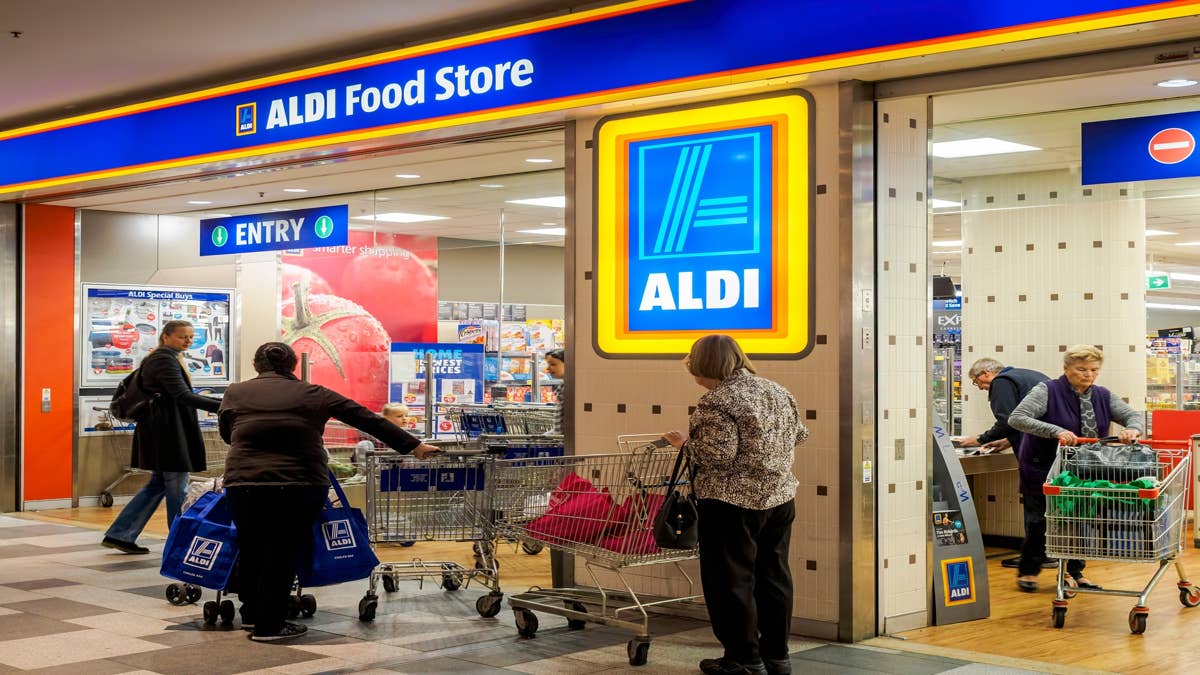
The discount grocer has now opened its first store in Midtown Manhattan, bringing its low-price grocery model within steps of Times Square.
The move comes as demand for the brand grows and the company accelerates one of the largest expansions in its U.S. history.
The new location is only one piece of a much bigger push.
Aldi plans to open more than 180 stores across 31 states in 2026 and is working toward a target of 3,200 U.S. locations by the end of 2028.
Aldi opens first Midtown Manhattan store
Aldi opened its first Midtown location at 311 West 42nd Street, on the ground floor of The Ellery near Times Square.
The approximately 25,000-square-foot location puts the discount grocer into one of New York City’s highest-profile retail markets.
The store offers fresh groceries, organic products, Aldi-exclusive brands, and the retailer’s rotating Aldi Finds assortment.
More Retail:
- Coca-Cola quietly hints at reinventing previously failed flavor
- Bath & Body Works quietly gains a competitive advantage
- Dollar General brings back old prices
Aldi has also been updating the presentation of its private-label products, which are at the center of its business model.
In September 2025, Aldi unveiled updated packaging, after what it described as 50 years of “setting the standard in private label.”
Nearly 90% of the products sold on Aldi shelves are exclusive brands.
These products now carry either the ALDI brand or a bold “an ALDI Original” endorsement, making it easier for buyers to identify.
Rather than carrying large assortments of competing national brands, Aldi relies heavily on a more limited selection of its own products.
This model allows the retailer to simplify purchasing, inventory, and store operations while keeping prices low.
“At our Midtown store, New Yorkers will see why so many already choose Aldi for their weekly grocery trip,” said Chris Daniels, Aldi Regional Vice President, in the company announcement.
The company said the store is designed to offer shoppers a fast and streamlined grocery trip while maintaining Aldi’s focus on value.
But the decision to open near Times Square also comes as Aldi attracts significantly more shoppers nationwide.
Aldi demand grows as shoppers seek value
Aldi said 17 million new customers visited its stores in 2025, and roughly one in three U.S. households shopped at the chain during the year.
That growing customer base helps explains why the company is expanding so aggressively.
Aldi has also developed an unusually enthusiastic following online, particularly around its weekly Aldi Finds, grocery deals, private-label dupes, and limited-time products.
Aldi notes that some of the Facebook groups dedicated to Aldi finds have over 3.8 million members.
Creators on TikTok, Instagram, and YouTube regularly post Aldi grocery hauls, compare Aldi products with more expensive national brands, and highlight new merchandise arriving in stores.
The social media presence has at times drawn large audiences around products that may only be available for a limited time.
The discount grocer is further leaning into that attention.
Aldi plans more than 180 new U.S. stores in 2026
Aldi plans to open more than 180 stores across 31 states in 2026, bringing its U.S. footprint to nearly 2,800 locations by the end of the year.
The retailer ultimately plans to operate 3,200 U.S. stores by the end of 2028 as part of a $9 billion investment in its American business.
CEO Atty McGrath has said the company wants to make Aldi easier for more Americans to access.
This involves opening more stores, upgrading its digital shopping experience, and expanding its distribution network to support its growing footprint.
Aldi plans to open three new distribution centers in the next three years:
- Baldwin, Florida in 2027
- Goodyear, Arizona in 2028
- Aurora, Colorado in 2029
The retailer is also entering markets where it previously had little or no presence.
Aldi entered Maine in 2026 and plans a significant expansion into Colorado over the next several years.
More than 50 stores are planned for the Denver and Colorado Springs markets, supported by a new distribution center.
Aldi is also expanding farther west.
The company is planning additional stores in the Phoenix area and expects to significantly increase its presence there by 2030.
It also plans to expand its Las Vegas footprint, which it entered in 2025.
Aldi expansion gets boost from major grocery acquisition
Part of Aldi’s rapid growth is coming through its acquisition of Winn-Dixie and Harveys Supermarket.
The deal gave Aldi access to a large network of existing grocery locations, particularly across the Southeast.
Aldi has been converting selected former Winn-Dixie and Harveys stores into its own discount grocery format.
The company plans to convert close to 80 additional former Southeastern Grocers locations into Aldi stores in 2026.
It has already converted and opened nearly 90 locations following the acquisition and plans to open more than 200 locations in total by the end of 2027.
Converting existing supermarkets gives Aldi a faster route to expansion than building new locations from the ground up.
Aldi bets its discount model can keep gaining shoppers
Aldi’s expansion comes as the broader US retail industry continues to see a wave of store closures.
Approximately 7,900 stores are projected to close nationwide in 2026, compared with about 5,500 openings, according to Coresight Research estimates previously reported by TheStreet.
The grocery sector has not been immune.
Aldi’s rapid expansion also stands out against a broader wave of store closures reshaping the U.S.
Kroger announced plans to close approximately 60 underperforming stores over an 18-month period, while Albertsons has continued closing selected locations under banners including Safeway.
But the industry is not moving only in one direction.
Chains including Publix, Sprouts, and H-E-B continue to enter new markets and add stores where they see growth.
Aldi stands out for the scale and speed of its push.
Aldi’s limited assortment, heavy reliance on private-label products, and streamlined stores are designed around keeping operating costs and prices lower than those of many traditional supermarkets.
The Midtown Manhattan opening puts that strategy in an unusually visible test.
Aldi is bringing a business built around low prices and operational simplicity into one of the country’s most expensive retail markets.
Related: Key auto parts maker closes factory, lays off 325 workers