All the trade promises the EU and the US never meant to keep
All the trade promises the EU and the US never meant to keep
A year after Donald Trump shook hands with Ursula von der Leyen on a trade deal, POLITICO assesses how their commitments have held up.
By POLITICO
In Brussels

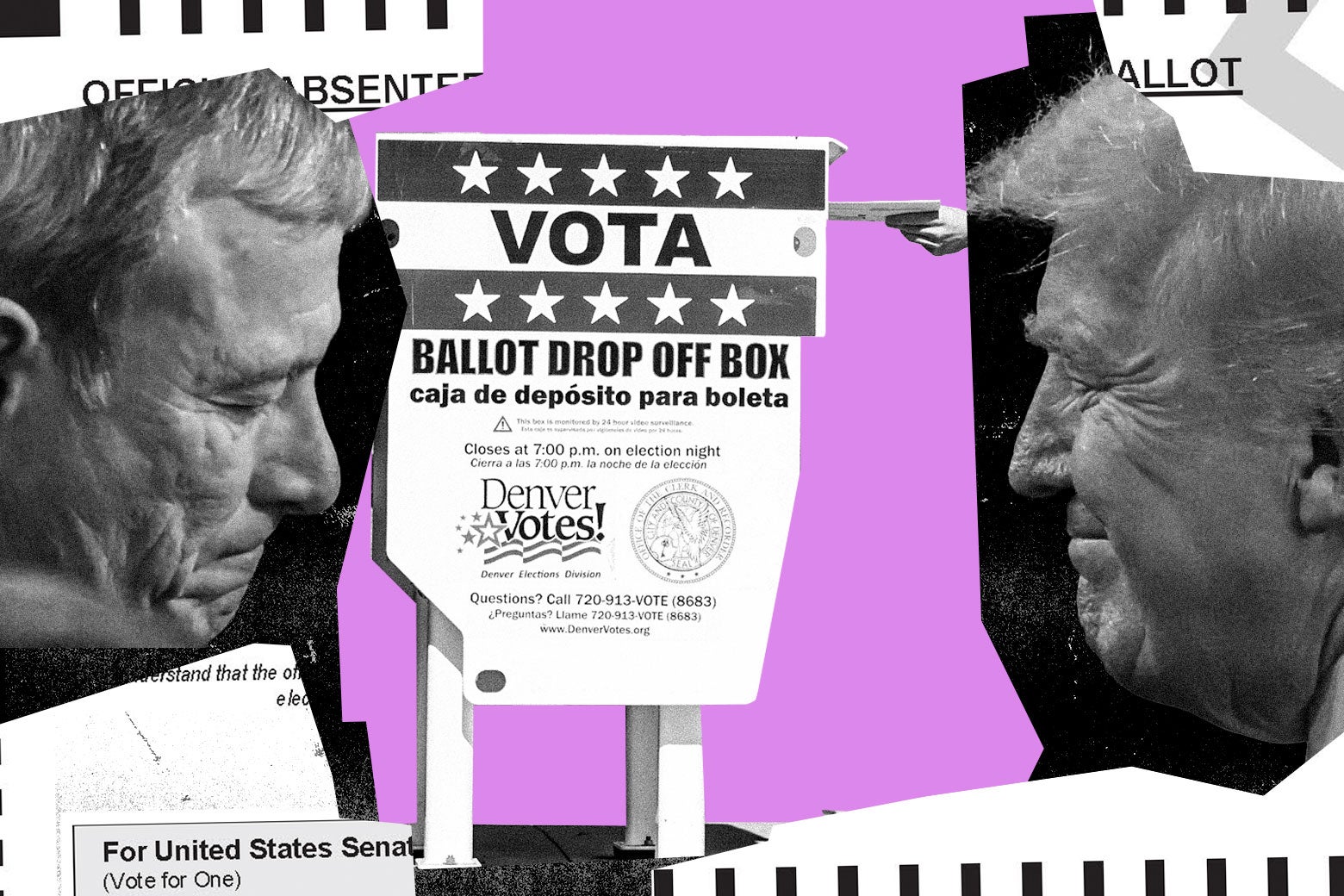
Illustration by Natália Delgado/POLITICO
When Ursula von der Leyen and Donald Trump struck their trade truce at his Scottish golf club last July, they made fulsome promises to each other — to reduce tariffs, boost energy purchases, ease green and tech regulations, and cooperate on artificial intelligence.
Nearly a year on, many of the commitments made at Turnberry are proving hard to keep. Some — like a pledge by von der Leyen that European businesses would purchase U.S. energy worth $750 billion through 2028 — were never realistic in the first place.
With the ink barely dry on the legislation the EU passed to keep its side of the bargain, Brussels and Washington are already exploring where they might collaborate next. But with Trump blowing hot and cold toward Europe, the deal could always unravel.
Brussels, for its part, says it is committed to the pact.
“The transatlantic partnership remains a cornerstone of our economies. Its continued strength will depend on both sides honoring their commitments and addressing future challenges in a pragmatic and balanced manner,” Trade Commissioner Maroš Šefčovič said in a statement to POLITICO.
“We have delivered, and we expect the same from the US.”
POLITICO rates the chances that the promises made in Turnberry — and in the Joint Statement that confirmed the deal — will be broken or kept:
Tariff cap
“The United States commits to apply the higher of either the U.S. Most Favored Nation (MFN) tariff rate or a tariff rate of 15 percent, comprised of the MFN tariff and a reciprocal tariff, on originating goods of the European Union.”
Verdict: At risk.
The 15 percent tariff ceiling on EU exports to the U.S. is the cornerstone of the Turnberry agreement.
In exchange for that lower baseline tariff, Brussels committed to a raft of concessions — from scrapping tariffs on U.S. industrial goods to easing the regulatory burden for U.S. companies and boosting purchases of U.S. energy and AI chips.
But the bargain underpinning that agreement is now at risk. Trump’s original “reciprocal” tariffs were overturned in February by the U.S. Supreme Court, and a temporary replacement measure will soon expire. To replace those nixed tariffs, Washington has launched several trade investigations under the more legally robust Section 301 of the U.S. Trade Act of 1974.
The new tariffs resulting from those probes, at least some of which the Trump administration aims to have in place by July 24, could put the 15 percent ceiling under pressure — even after Trade Representative Jamieson Greer reassured his European counterparts they won’t exceed the agreed cap.
A new probe into Germany’s drug pricing policies has added fresh uncertainty, as has the prospect of investigations into the digital services taxes of some member states.
“The transatlantic relationship will continue to remain volatile,” Matthias Jørgensen, the Commission’s top trade official on U.S. relations, told EU lawmakers. “We have seen recent actions of the U.S. toward individual member states on digital services taxes, as well as the launch of a Section 301 investigation on pharmaceutical pricing. While this investigation currently concerns only Germany, investigations involving other member states cannot be ruled out.”
Any breach risks triggering retaliation by Brussels in line with the safeguard mechanisms that EU lawmakers baked into the Turnberry deal. The Commission, meanwhile, last week shared with Washington a list of export products worth €115 billion for which it is seeking lower U.S. tariffs, including medical devices, wine, spirits, beer, cheese and olive oil.
By Camille Gijs
Energy and investment
“European companies are expected to invest an additional $600 billion across strategic sectors in the United States through 2028.”
“The European Union intends to procure U.S. liquefied natural gas, oil, and nuclear energy products with an expected offtake valued at $750 billion through 2028.”
Verdict: Unrealistic.
The two eye-catching figures at the heart of the Turnberry deal obeyed a similar logic: While they made for impressive headlines and pleased Trump, Brussels can’t deliver on either — nor are they legally binding.
The European Commission negotiates trade deals on behalf of the bloc’s 27 members — but it can’t instruct European companies to invest, nor can it direct energy purchases. Those decisions are made by the private sector, not by the EU executive.
In the run-up to the Turnberry deal, Brussels gauged the intentions of leading European businesses and “urgently” requested they provide data about their ongoing and planned investments in the U.S. The $600 billion figure was based on those estimates, but was never intended as a binding commitment.
The same applies to the $750 billion energy pledge. Commission officials have admitted the figure reflects the bloc’s projected “needs,” not a procurement plan by the EU executive or member countries. Moreover, with energy prices so volatile, it’s hard to target a fixed price.
To be sure, EU energy imports from the U.S. are increasing. Over the past year, the bloc has significantly upped its purchases of U.S. LNG as it sought to extinguish its energy trade with Russia.
The war in Iran has added further momentum: Between January and April the EU bought $15 billion in oil and gas products from the U.S., up 24 percent from the previous four months according to EU trade data.
But that’s still far short of the headline figure pledged over three years. Getting to $750 billion, at that rate, would take 16 years — not three.
By Ben Munster and Camille Gijs
Transatlantic green deal
“The European Union commits to work to address the concerns of U.S. producers and exporters regarding the EU Deforestation Regulation, with a view to avoiding undue impact on U.S.-EU trade.”
“Taking note of the U.S. concerns related to treatment of U.S. small and medium-sized businesses under the Carbon Border Adjustment Mechanism (CBAM), the European Commission … commits to work to provide additional flexibilities in the CBAM implementation.”
“The European Union commits to undertake efforts to ensure that the Corporate Sustainability Due Diligence Directive (CSDDD) and the Corporate Sustainability Reporting Directive (CSRD) do not pose undue restrictions on transatlantic trade.”
Verdict: Under pressure.
The Turnberry agreement committed the EU to address longstanding U.S. complaints about several of the bloc’s flagship green laws. A year later, Brussels has simplified parts of its rulebook but stopped well short of the broader changes Washington had hoped for — leaving the issue a potential flashpoint in the trade relationship.
EUDR: The commitment to “work to address” U.S. concerns over the EU’s deforestation regulation was left deliberately vague.
After the deal, the Commission stressed that the U.S. would be classified as a “low-risk” country, raising hopes that Brussels would significantly reduce the regulatory burden on U.S. agricultural and timber exports.
But when the Commission in May published its examination of how and whether to simplify the regulation, the U.S. timber industry was deflated. The EU executive determined it would not revisit the rules — which require importers of some commodities to demonstrate that supply chains are fully traceable and deforestation-free. Instead, the review proposed modifications to the scope and administration of the regulation.
“The scope of their review was far too narrow to address any of the concerns that have been raised repeatedly by stakeholders in the U.S.,” said Kate Gatto, chief strategy officer at the National Alliance of Forest Owners.
CSDDD/CSRD: Brussels likewise points to its “Omnibus I” simplification package as evidence it has reduced regulatory burdens. The package, proposed even before the Turnberry agreement, narrowed the scope of both laws so they apply only to the largest companies.
But the EU didn’t meet a key U.S. demand: exempting American companies altogether.
“It doesn’t really address our concerns,” said a Washington-based lobbyist in regular contact with Trump administration officials, who warned that the White House remains prepared to press Europe for further concessions.
CBAM: The EU has moved furthest on its carbon border tax, proposing to exempt small importers as part of its wider simplification drive. Even so, the architecture of the policy remains unchanged, meaning one of Washington’s trade irritants is still very much alive.
By Oliver Ward and Marianne Gros
Steel ring fence
“With respect to steel, aluminium, and their derivative products, the European Union and the United States intend to consider the possibility to cooperate on ring-fencing their respective domestic markets from overcapacity, while ensuring secure supply chains between each other, including through tariff-rate quota solutions.”
Verdict: Partially delivered.
Steel and aluminum were a major bone of contention between the U.S. and the European Union well before Trump’s return to the White House for a second term.
Talks on an EU-U.S. steel club peaked in the fall of 2023 when Washington and Brussels eyed the creation of a joint tariff zone that would impose duties on steel and aluminum imports from non-market economies such as China. But interactions with the then-Biden administration petered out because Brussels was wary of breaching global trade rules.
After Trump returned to power, the EU announced it would impose higher tariffs on foreign steel to fend off a supply glut, mainly from China, which had been shut out of the U.S. market. Those changes took effect this month, with Brussels doubling duties to 50 percent — in line with Trump’s tariffs — and nearly halving tariff-free import quotas.
Trump’s tariffs on products containing steel and aluminum — so-called derivatives — remain a sore point in the relationship, with the European Commission expected to press Washington for more exemptions by the end of the year.
The Trump administration has updated its list of downstream products hit with the tariffs multiple times. U.S. Trade Representative Jamieson Greer offered to shorten that list during a recent phone call with Bernd Lange, chair of the European Parliament’s trade committee, POLITICO reported in March.
By Camille Gijs and Ari Hawkins
Defense deals
“The European Union plans to substantially increase procurement of military and defence equipment from the United States, with the support and facilitation of the U.S. government.”
Verdict: On track.
One year on, the direction of travel appears unchanged.
The pledge largely formalized an existing trend, with Russia’s war on Ukraine continuing to drive European governments toward U.S.-made weapons. The Stockholm International Peace Research Institute estimates that U.S. arms exports to Europe more than doubled from 2021 to 2025 compared with the previous five-year period, with Washington supplying 58 percent of NATO Europe’s imports.
Since then, Washington has approved major potential sales including AMRAAM missiles for Germany, Finland and the Netherlands, Patriot air-defense systems for Denmark, and F-35 support and Javelins for Poland.
The purchases are being made by individual governments rather than the EU itself. Belgium also decided to expand its F-35 fleet by 11 aircraft, underscoring that European capitals continue to opt for American systems despite Brussels’ “Buy European” push.
By Chris Lunday
Network fees
“The European Union confirms that it will not adopt or maintain network usage fees.”
Verdict: Under pressure.
Brussels’ pledge to keep “network fees” off the table at first looked like an easy concession.
After years of heavy lobbying, the idea had largely faded from public debate, having grown out of the “fair share” campaign to make data-hungry online platforms — mostly U.S. Big Tech players — help pay for the digital infrastructure carrying their surging traffic across Europe.
But its spirit lived on in the European Commission’s proposed overhaul of the EU’s telecom rulebook, which includes a voluntary dispute-resolution mechanism that critics warn could become network fees by another name.
“I would say, diplomatically, that we made a promise, yes, in the Turnberry Agreement, but that there are many promises that our U.S. partner was breaking already or changing from one day to another,” Michał Kobosko, the lead negotiator on the file in the European Parliament, said in an interview.
For the Polish lawmaker, the pledge leaves the Parliament with room to maneuver, especially since “network fees” are not (strictly speaking) what lawmakers are now considering. “Americans will always be criticizing, whatever the mechanism is, so we are already used to that.”
By Mathieu Pollet
AI chips
“The European Union intends to purchase at least $40 billion worth of U.S. AI chips for its computing centres. The European Union further plans to work with the United States to adopt and maintain technology security requirements in line with those of the United States in a concerted effort to avoid technology leakage to destinations of concern.”
Verdict: On track.
The EU’s promise to buy U.S. advanced chips to train AI models is one of the few that will likely hold — simply because the bloc has no alternative.
Some 96 percent of AI chips sold in the EU already come from U.S.-based vendors including Nvidia, according to recent estimates, as the bloc has no AI chip designers or manufacturers of its own.
The Union will soon need many more of those chips. This summer the EU executive will launch a process to build seven massive AI compute hubs, the three largest of which will need at least 40,000 AI chips while the four smaller ones will need at least 25,000.
Some European startups are trying to build alternatives, but those efforts need time and a lot of money. That means Europe will need to buy U.S. AI chips for the foreseeable future.
By Pieter Haeck