



Exclusive: Visa launches new platform to provide stablecoin services to more than 200 million merchants
Stablecoins have changed how people think about moving money, and their exponential rise over the past year has pushed mainstream payment networks to figure out how to adapt. Visa, one of the world’s largest payment processors, appears to be well on its way to adapting to this new paradigm. On Thursday, the company announced a new service to help its customers do the same.
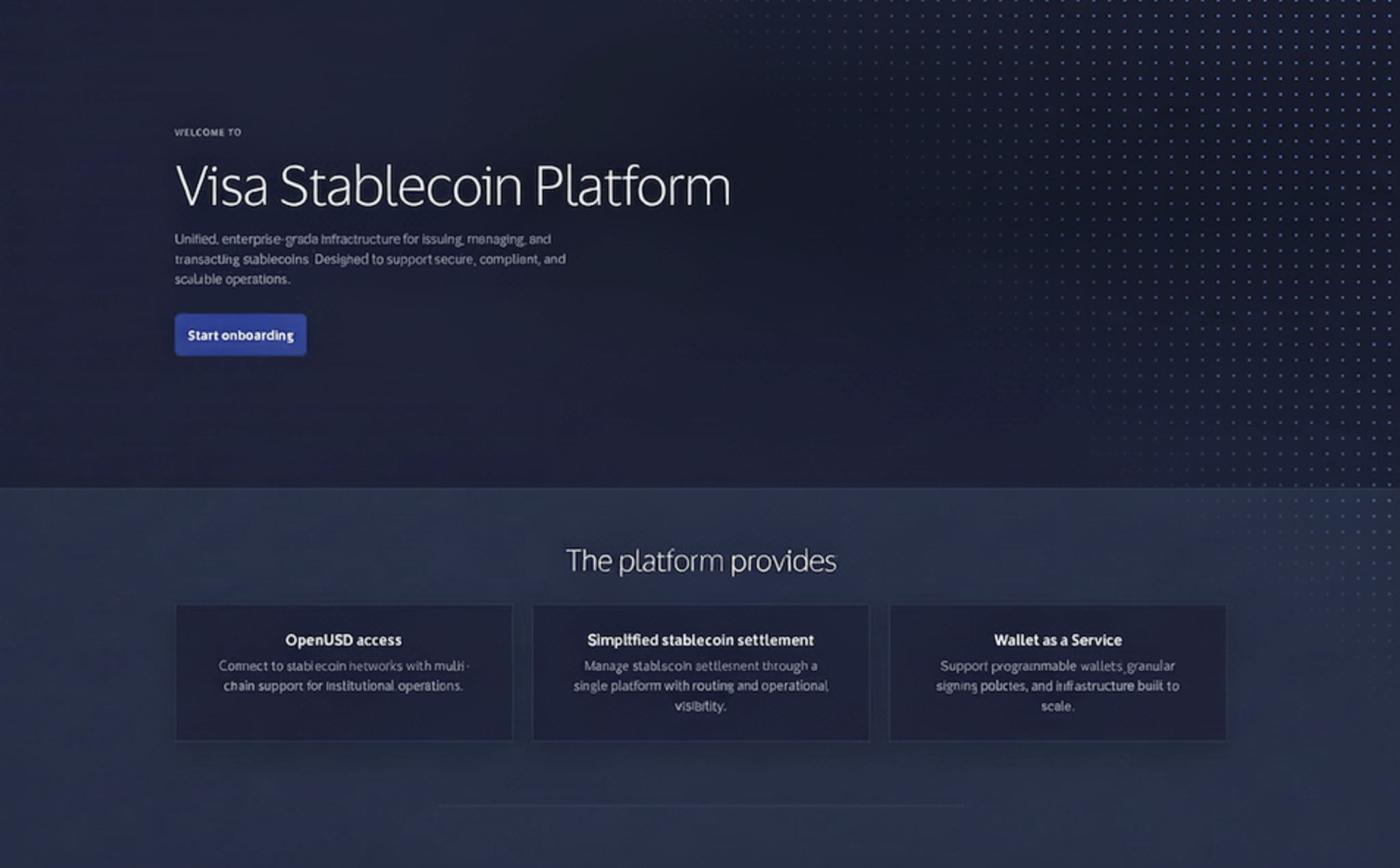
The Visa Stablecoin Platform is an internal system that lets banks and fintechs handle stablecoins, which are a form of cryptocurrency that are backed with reserves to maintain a 1-to-1 peg to the dollar, within their existing Visa payment and treasury workflows. Visa, which settles roughly $15 trillion in payments annually, already processes several billion dollars in stablecoin settlements and hopes to grow that by offering a simpler way for its network of about 15,000 financial institutions and more than 200 million merchants to use stablecoins.
“It’s less about accessing stablecoins and more about how… this interoperate[s] with their treasury settlement, their money movement workflows, [and] their existing bank setups,” Rubail Birwadker Visa’s global head of growth, told Fortune.
For merchants, the advantage of using stablecoins lies in their ability to settle transactions instantly at miniscule cost. Meanwhile, stablecoins are transferred on blockchains, which provides a clear and virtually tamper-proof record of transactions.
The platform will launch with OUSD, a new stablecoin announced two weeks ago by Open Standard, a newly formed consortium of financial giants, as the strategic starting point for this infrastructure. Visa, a partner of Open Standard, sees OUSD as a fresh way to expand its stablecoin lineup while complementing the assets it already supports, including Circle’s USDC and Paxos’ USDG.
Network effects
Birwadker believes that stablecoins will be central to the future of financial infrastructure and that, at this early stage, Visa must hide the technical complexity so customers can solely focus on the payment experience. For him, the key measure of success lies in getting Visa’s clients to understand their potential and integrate their utility.
“We want to bring them along on this journey… and we’ve been doing that for the better part of half a decade, and this is just the next iteration,” Birwadker said.
In March 2020, Visa became the first payments network to settle transactions in USDC. In December, it rolled out a stablecoin settlement program, marking the first such effort by a major global payments company. According to Birwadker, the Visa Stablecoin Platform will serve as an umbrella for all of its existing stablecoin services.
Visa, though, is hardly the only payments processor eyeing stablecoins’ potential. Its main rivals, American Express and Mastercard, have also partnered with Open Standard around the launch of OUSD. Last month, Mastercard introduced stablecoins as a new way for banks and payments firms to settle card transactions, starting with six regulated dollar‑backed assets. Its broader stablecoin strategy is largely partnership‑driven, teaming up with platforms like MoonPay and joining consortiums like Paxos’ Global Dollar network so users can spend and receive stablecoins via Mastercard cards.
This story was originally featured on Fortune.com