


France’s Luxury Property Market Sees Surge in Demand
International buyers are returning to France’s most coveted addresses after two subdued years. LUXUO explores what is driving renewed interest in the country’s prime residential market—and why the revival appears to be unfolding first at the very top.

There is something quietly reassuring about the sight of sunlight washing over a limestone façade in Paris, or the stillness that settles across the Mediterranean as dusk reaches Cap Ferrat. Luxury homes in France have long represented far more than prestigious addresses. For many affluent buyers, ownership has symbolised permanence, heritage and a way of life that transcends market cycles.
Sign Of The Times
After the exceptionally active post-pandemic market of 2021 and 2022, higher interest rates and economic uncertainty slowed residential transactions throughout 2023 and 2024; early signs suggest that international buyers are once again looking towards the country’s most coveted addresses. While France’s wider residential market continues to recover gradually from the slowdown that followed higher interest rates and stricter mortgage lending financing conditions, the luxury segment is beginning to tell a more nuanced story.
Several factors are helping to restore confidence in France’s prime property market. Inflation has eased, central banks have begun lowering interest rates, financial markets have stabilised, and wealthy buyers who postponed acquisitions over the past two years are gradually returning. Rather than triggering another buying frenzy, these changes appear to be encouraging carefully considered purchases in France’s most sought-after locations.
The distinction matters.
Rather than signalling a broad-based resurgence across every corner of the property market, current indicators suggest renewed momentum is concentrated where scarcity, prestige and lifestyle continue to outweigh short-term economic uncertainty. Paris’ historic districts, the French Riviera and select Alpine resorts remain the principal beneficiaries.
Real Estate Bellwether

Official market data paints a measured picture. France’s housing market experienced a pronounced slowdown through 2023 and 2024 as higher borrowing costs dampened transactions across the residential sector. According to Notaires de France, the country’s official association of notaries that tracks property transactions and prices, broader market indicators showed activity cooling after the exceptionally strong post-pandemic years. Although transaction volumes have yet to return to earlier peaks, improving financial conditions and stabilising inflation have begun restoring confidence across parts of the market.
Luxury property, however, tends to follow a different trajectory from the broader housing market.
Prime residential buyers frequently rely less on conventional mortgages than mass-market purchasers. Instead, acquisition decisions are often influenced by portfolio diversification, exchange rate fluctuations, long-term wealth preservation and lifestyle considerations. Falling interest rates therefore serve less as a catalyst for borrowing than as a signal that wider economic uncertainty may be easing. That shift in sentiment has become increasingly visible across France’s premium addresses.
Brokerage Research
Knight Frank, in its outlook for 2025, notes improving confidence across several prime residential markets as borrowing conditions gradually normalise. While the consultancy stops short of describing a widespread boom, its research points towards improving transaction activity and greater optimism among high-net-worth buyers following a subdued period. Similar observations have emerged from Savills, which continues to identify the French Riviera as one of Europe’s most resilient luxury residential destinations, supported by enduring international demand and chronically constrained supply.
Perhaps the clearest indication of returning confidence lies not in rising prices, but in the growing number of overseas buyers entering the market.
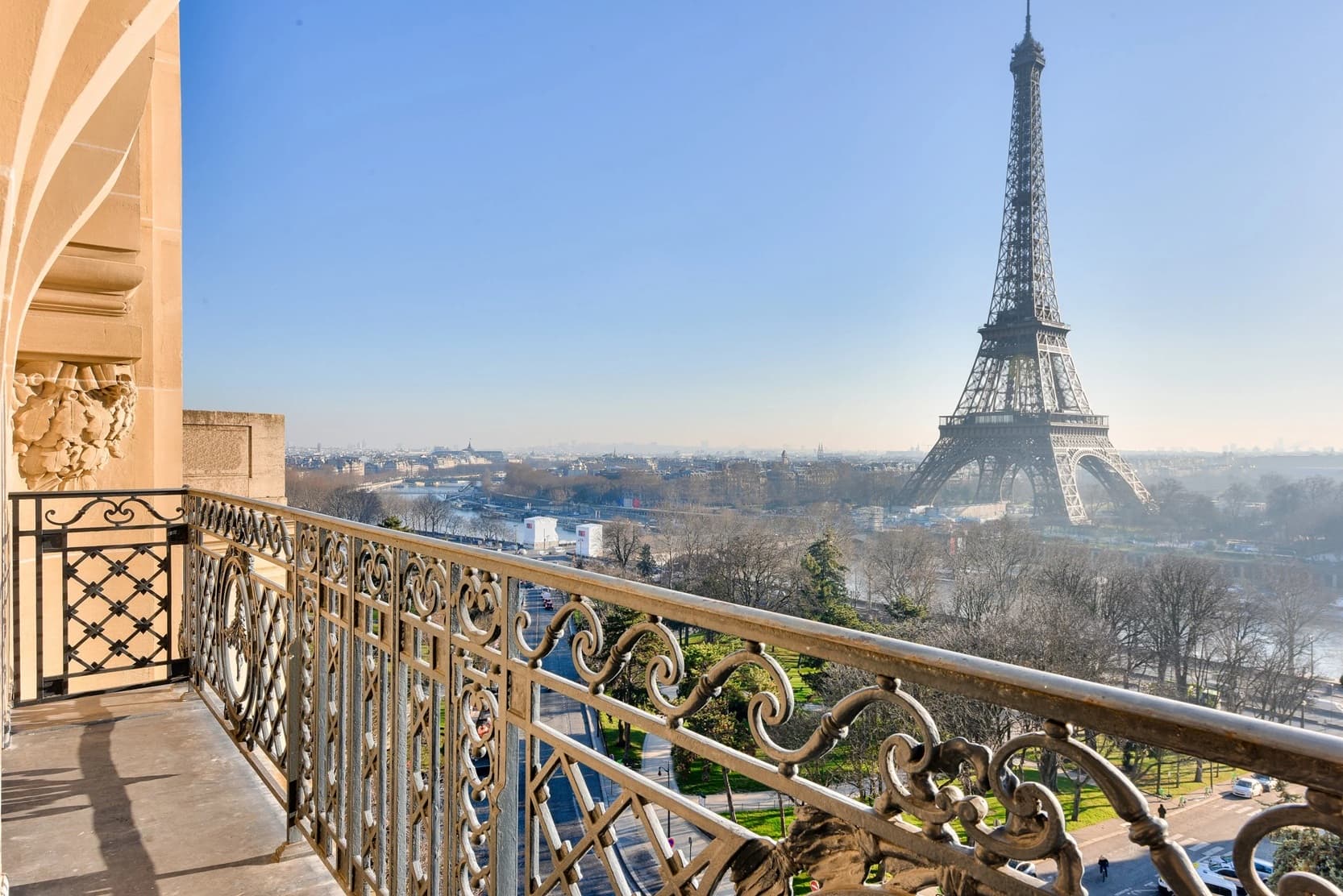
Across Paris and the Côte d’Azur, luxury brokerages including Knight Frank, Savills and BARNES have reported renewed enquiries from American, Middle Eastern and Asian buyers alongside their traditional European clientele. Such buyers are typically seeking assets that offer more than just financial returns. A Haussmann apartment — characterised by grand stone façades, wrought-iron balconies and high ceilings — overlooking the Seine, a Belle Époque villa perched above the Mediterranean or a meticulously restored estate in Provence offers something increasingly difficult to replicate elsewhere: history paired with an exceptional quality of life.
Independent Reporting
Recent reporting by the Financial Times in January 2025 reinforced this narrative, pointing to renewed activity in Paris’ ultra-prime residential market after a prolonged slowdown, with trophy properties once again changing hands as borrowing conditions improved. Separately, Knight Frank noted continued demand for newly built luxury residences and pied-à-terre apartments despite a broader slowdown in the housing market. These homes are rarely judged on price alone. Instead, buyers value their architectural heritage, craftsmanship, privacy and irreplaceable locations.
The contrast between mainstream housing and the luxury segment has therefore become increasingly apparent. Affordability remains the dominant concern for much of France’s residential market, yet scarcity continues to underpin demand at the upper end. Trophy properties seldom enter the market in significant numbers, and the finest addresses often remain tightly held for generations. Limited supply has consequently provided a degree of resilience even during slower market conditions.
None of this suggests that France’s luxury market has returned to the exuberance witnessed immediately after the pandemic. Buyers remain selective, negotiations have become more disciplined and exceptional properties continue to command the strongest interest. Yet the tone has shifted perceptibly. Property agents say enquiries have become more purposeful, with buyers once again willing to arrange viewings and negotiate purchases, especially when architectural significance, privacy and location align.
For international buyers seeking stability alongside enduring cultural appeal, France’s most prestigious homes continue to occupy a category of their own. Current market signals suggest that renewed interest is being shaped less by speculation than by lasting confidence in assets that combine heritage, scarcity and global desirability.
Where Global Wealth Is Looking
If renewed interest has a geographical centre, Paris remains the natural starting point.
The French capital has long occupied a unique position among the world’s prime residential markets. Unlike cities where luxury developments rise at pace, Paris offers relatively little new supply within its historic core. Landmark buildings cannot simply be recreated, nor can sweeping views across the Seine or apartments overlooking Place Vendôme be manufactured to satisfy demand. That rarity remains one of Paris’ greatest strengths.
Recent reporting suggests that overseas buyers are once again becoming more active in the capital’s ultra-prime market, particularly for residences that combine period architecture with contemporary interiors. Wealth advisers have increasingly described Paris property as part lifestyle acquisition, part long-term store of value, particularly at a time when global investors continue seeking tangible assets with enduring appeal.
Coastal Charm


Left: A Belle Époque villa perched on a hill with Mediterranean views is highly prized by investors. Image: Savills. Right: Enjoy stunning coastal views from your living room. Image: Savills.
South of the capital, the Côte d’Azur continues to represent a different expression of French luxury. Morning light spilling across a private terrace in Saint-Jean-Cap-Ferrat, yachts easing into the harbours of Antibes and Cannes, and hillside villas overlooking the Mediterranean remain part of an image that has endured for generations. Yet behind the postcard scenery lies one of Europe’s most supply-constrained residential markets.
Savills has repeatedly identified the Riviera as one of Europe’s most resilient luxury destinations, supported by sustained international demand and limited availability of waterfront homes; unlike conventional residential markets, where increased supply can temper prices, genuinely exceptional Riviera properties change hands infrequently. Many remain within the same families for decades before returning to the market.
Alpine Luxury


Left: A large dining room offering a commanding view of the Alps at an Alpine chalet in Courchevel. Image: Savills. Right: Modern kitchen trappings to satisfy homeowners. Image: Savills.
The French Alps tell a similar story. Prestigious ski destinations such as Courchevel, Megève and Val d’Isère continue to attract affluent buyers seeking year-round lifestyle investments rather than seasonal holiday homes alone. Alpine property has increasingly evolved into a four-season proposition, supported by luxury hospitality, wellness experiences and expanding outdoor recreation beyond winter sports.
What unites these seemingly different markets is not simply wealth, but intention.
Current buyers appear increasingly focused on homes that offer permanence rather than spectacle. Architectural integrity, privacy, energy-efficient renovations and proximity to cultural life have become more influential than sheer scale. Industry commentators have observed that turnkey residences requiring little additional work continue attracting the strongest interest, reflecting changing buyer preferences following years of economic uncertainty.
Several properties currently available illustrate that renewed appetite for French luxury remains centred on distinctive homes rather than sheer extravagance.


Left: A Haussmann apartment in Paris’ Golden Triangle offers modern interiors with sophisticated furnishings. Image: Savills. Right: A spacious living room affording a circular, modular sofa system. Image: Savills.
Among the most notable properties is a restored Haussmann apartments near the Golden Triangle — ‘Triangle d’Or’ refers to one of Paris’ most prestigious neighbourhoods in the 8th arrondissement, bounded by Avenue Montaigne, Avenue George V and the Champs-Élysées — continue to attract international interest in their blend of nineteenth-century craftsmanship and contemporary design. Provence offers meticulously renovated estates surrounded by olive groves and vineyards, appealing to buyers seeking privacy alongside authentic regional character. Meanwhile, contemporary chalets in Courchevel continue defining the upper end of Alpine living, pairing traditional timber construction with wellness facilities, concierge services and direct access to the slopes.
Such homes represent only a fraction of France’s residential market, yet their performance often provides an early indication of confidence returning among global high-net-worth buyers.

That distinction is important.
Current evidence does not yet suggest that France’s luxury housing market has entered a full-fledged recovery. Official market data still points towards a broader residential recovery that remains gradual rather than dramatic. Equally, many of the strongest observations regarding renewed international demand originate from brokerages whose business depends upon activity within the prime market.
Yet viewed together, three distinct strands of evidence begin to reinforce one another. Official indicators suggest the broader housing slowdown is easing. International property consultancies including Knight Frank and Savills describe improving sentiment across France’s prime residential markets. Independent reporting has also documented renewed activity among overseas purchasers seeking trophy homes in Paris and along the Riviera. Taken individually, each piece of evidence offers only a partial picture. Considered together, however, a clearer narrative emerges: France’s most exceptional homes are once again attracting international attention.
Perhaps that should come as little surprise.
Luxury property has always traded as much on emotion as economics. Numbers explain market cycles, yet seldom explain why a centuries-old château, a Haussmann apartment or a Riviera villa continues capturing the imagination across generations and continents. The current chapter therefore feels less like the beginning of another property boom than the quiet return of confidence. International capital may ebb and flow with changing economic conditions. Still, France’s most coveted addresses continue to offer something that markets alone cannot easily quantify: cultural permanence, architectural heritage, and an enduring sense of place.
For discerning buyers, that combination has rarely gone out of fashion. Recent market signals merely suggest that global attention is beginning to find its way back once again.
For more property reads, click here.
The post France’s Luxury Property Market Sees Surge in Demand appeared first on LUXUO.