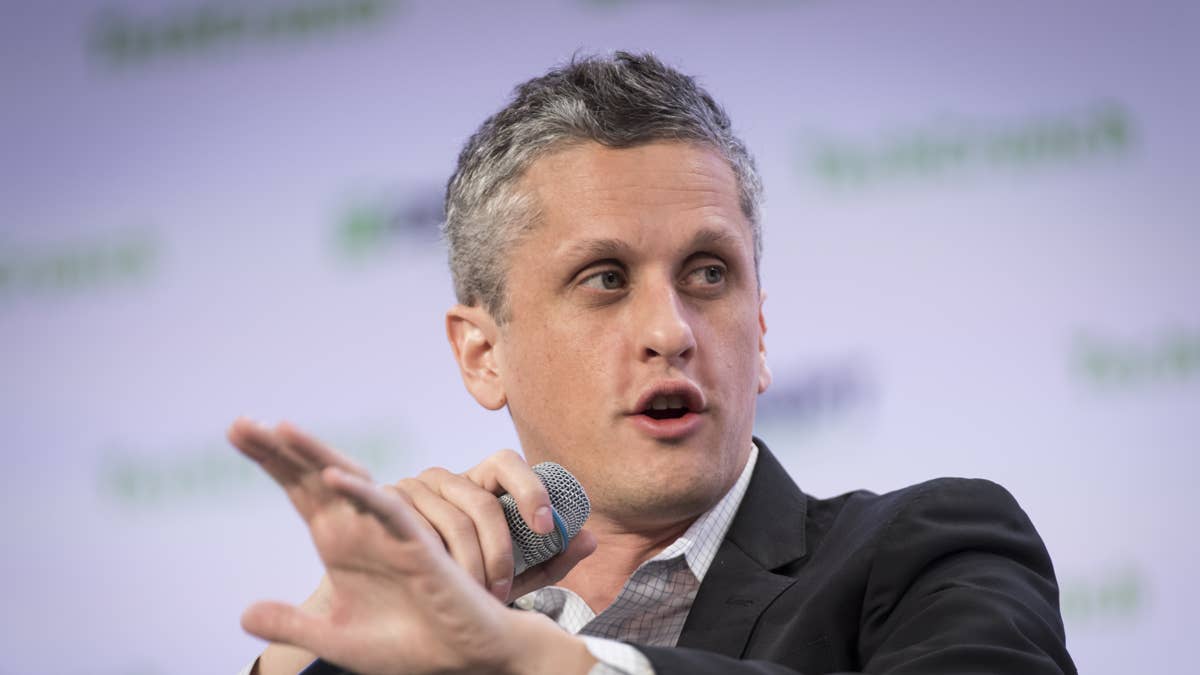
Box CEO reveals why AI boom is still early innings
Most Artificial Intelligence (AI) commentary I read falls into either of two camps: everything is at peak hype, and a correction is coming, or the AI boom is just beginning, and spending will compound for decades.
Box CEO Aaron Levie posted something on X (formerly Twitter) this week that I found more useful than either extreme.
His argument is structural, specific, and grounded in how enterprise software actually gets adopted. And coming from someone who has spent years watching how large organizations absorb new technology, it carries weight that pure market commentary does not.
The spend and token volume for both approaches will continue to go up for years to come as we’re still early on both.
Levie said the statement above, referring to frontier AI models and specialized lower-cost systems.
“This is why the spend and token volume for both approaches will continue to go up for years to come.”
Box (BOX) is not a semiconductor company or a hyperscaler. It is the enterprise content management platform at the center of how companies actually deploy AI against their real business workflows. Levie sees this market from the inside.
Also Read: AI CEO just made a wild prediction about AI agents
What Box CEO actually said and why I think the “both will grow” thesis matters
The debate playing out in technology investing right now is whether cheaper, specialized AI models eventually cannibalize spending on frontier systems from Anthropic, OpenAI, and Google. Levie answers that the framing of the debate is wrong.
I also think Frontier models will always dominate brand-new use cases and complex orchestration workflows.
As those use cases mature and become predictable, enterprises can then peel off workloads to cheaper open or closed models, or models specifically trained for the task. But critically, just as Levie argued in his post, doing that too early does not work.
More AI:
- The new Chinese AI model rattling U.S. tech investors
- Anthropic restores access to Mythos 5 for select organizations
- SoftBank CEO offers stinging critique of Musk’s AI bet
“Doing this too early in the adoption curve of any new use-case doesn’t make sense as you don’t know what you’re optimizing for,” Levie wrote.
Now, my read of that framing is that it explains why enterprise AI spending does not follow the typical technology commoditization curve as quickly as bears expect. Every new AI capability that becomes commercially viable starts at the frontier model layer.
That layer keeps expanding in capability, which means the frontier spend floor never actually falls. It just gets accompanied by a growing specialized spend tier underneath it.
“This process can essentially run on forever as there is no end for both the benefits of frontier intelligence or tuned models.” Levie wrote.
Box is massively positioning itself at the center of enterprise AI workflows
Levie is not just a commentator here. Box is actively building the applied AI layer he described. According to a blog from Box, the company launched Box Agent on April 2, 2026.
Box Agent is a unified AI engine that leverages advanced reasoning models to search, analyze, synthesize, and generate content across enterprise files while maintaining Box’s enterprise-grade security and governance controls, according to Box’s Q1 FY2027 earnings. release.
Related: Google DeepMind prepares for risk of AI agents going rogue
Box Automate, also launched this quarter, is an agentic workflow orchestration solution that dynamically routes work across people, Box Agents, and enterprise systems.
These products are the commercial expression of what Levie described on X (formerly Twitter). Box is building the “applied AI layer” that evaluates enterprise workflows, selects the right model mix for each task, and eventually enables companies to train specialized models for their specific purposes.
Enterprise Advanced, Box’s premium AI tier launched a year ago, now accounts for 10% of total company revenue, with customers paying a 30%-40% price uplift per seat over Enterprise Plus, according to its Q4 2026 Earnings Call Transcript.
That metric arriving within a year of launch is the clearest evidence that the adoption curve Levie described is already running inside Box’s own customer base.
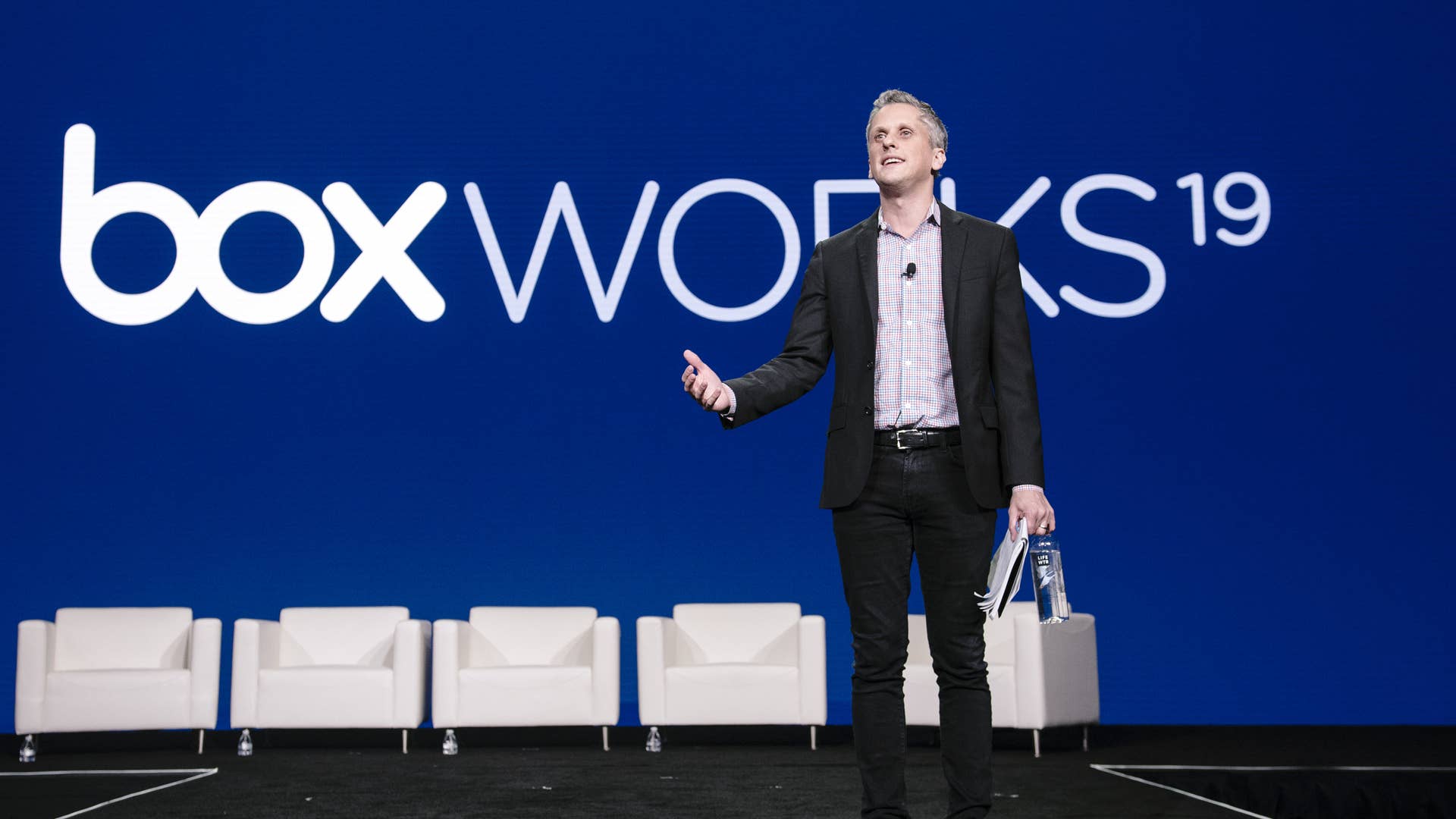
Box’s Q1 FY2027 results show the business accelerating alongside the AI argument
The Q1 FY2027 results, reported May 26, provided concrete validation for the enterprise AI adoption thesis Levie outlined.
- Record revenue of $305.9 million came in up 11% year over year, or 10% on a constant currency basis
- Remaining performance obligations reached $1.6 billion, up 12%, with long-term RPO growing 16%, signaling customers are making multi-year AI commitments.
- Non-GAAP operating margin expanded to 27.7% from 25.3%
- Free cash flow of $127.7 million was up 8%
- Non-GAAP EPS of $0.37 beat the prior year’s $0.30
Source: Box First Quarter Fiscal 2027 Financial Results
“Customers are adopting Enterprise Advanced to manage and connect their organization’s unique content to AI agents, allowing them to securely build intelligent workflows, automate work, and accelerate decision-making at scale,” Levie said in the earnings release.
For Q2 FY2027, Box guided for revenue of approximately $319 million, up 9% year over year. Full-year FY2027 guidance calls for revenue of approximately $1.28 billion, up 9%, with a non-GAAP operating margin of approximately 28% and non-GAAP diluted EPS of $1.56.
The broader implication for investors watching AI spending
Box CEO Aaron Levie argues that AI spending will expand across both frontier and specialized models rather than shift from one to the other, implying a much larger AI market than many investors expect.
Box is positioning itself at the enterprise AI layer, backed by its recognition as a Leader in the 2026 Gartner Magic Quadrant for Document Management and the integration of Box Agent for Gemini Enterprise with Google Cloud AI orchestration.
What I find most useful about Levie’s post is that he is not selling optimism. He is describing a mechanism. Levie sees enterprise AI as a continuous process of evaluating, selecting, and training models for specific workflows, with no clear end in sight.
Related: Salesforce makes gutsy bet to win AI agent race