



Qatari LNG Tanker Hit By Iranian Missile In Hormuz Chokepoint
Qatari LNG Tanker Hit By Iranian Missile In Hormuz Chokepoint
A fully loaded Qatari LNG tanker was struck by a projectile near the Omani coast while exiting the Strait of Hormuz, raising fresh concerns that disruptions across the key energy maritime chokepoint could persist longer than traders had expected. Brent crude rose more than 1% to $72.76 a barrel as traders reassessed the war-risk premium in the Gulf area.
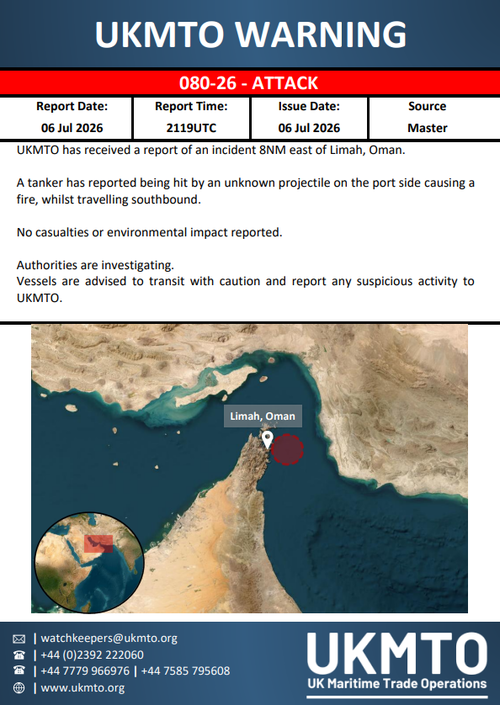
The Al Rekayyat, owned by Qatar’s state shipping company Nakilat, was struck early Tuesday about 8 nautical miles east of Limah, Oman, according to Bloomberg, which cited people familiar with the matter and an alert from EOS Risk Group.
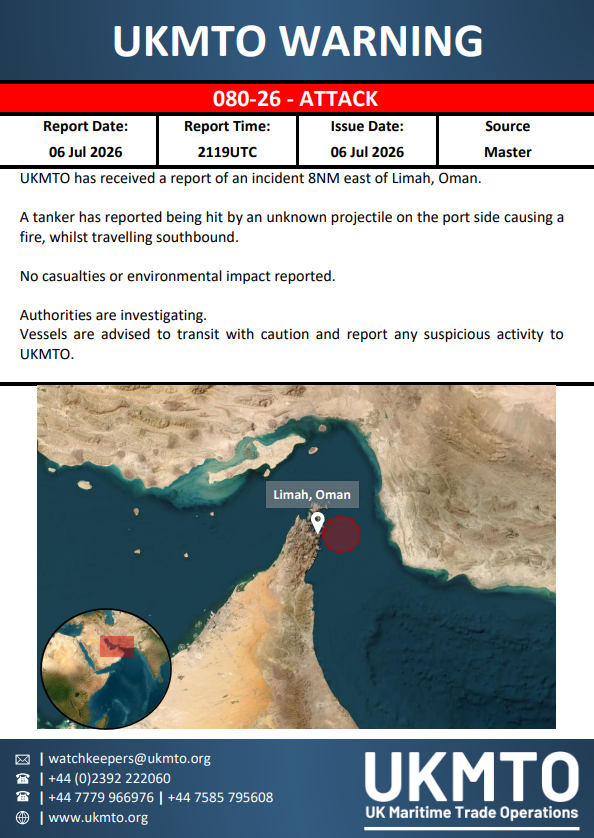
EOS said the maritime incident involved either an Iranian suicide drone or a missile strike that resulted in a fire on the Al Rekayyat. No casualties were reported.
Al Rekayyat was fully loaded at Qatar’s Ras Laffan export terminal, making it the first Qatari LNG carrier targeted since the US-Iran conflict began in late February. The tanker appeared to be transiting part of the Hormuz chokepoint with its transponder off, indicating it was not on an Iranian-approved shipping route.
Following the attack, another Qatari-loaded LNG carrier, Al Areesh, made an abrupt U-turn before entering the strait and began circling, Bloomberg ship tracking data showed. Other tankers continued to sail through the highly contested chokepoint, including oil tankers and LPG carriers, using both Iran-approved and US-managed routes.
Later today, President Trump heads to a NATO summit in Ankara, where the Iran conflict is expected to be the center of discussion among world leaders.
US-Iran talks remain suspended while Tehran holds funeral ceremonies for late Supreme Leader Ali Khamenei. Qatar has said negotiations will resume after the ceremonies.
UBS analyst Justinus Steinhorst commented on market reaction:
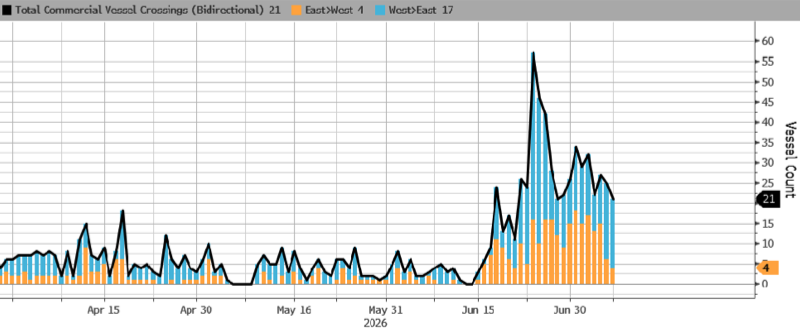
Energy {UBXEENER} is among the best sectors on Tuesday after an LNG tanker was hit at Hormuz, rekindling fears around longer term disruption. Progress to normalise flows through strait appears to be stalling slightly with crossings still well below pre-conflict levels.
UBS analyst Aditi Samajpati noted:
Oil prices may remain under pressure in the near term as additional barrels from previously stranded ships in the Strait of Hormuz reach the market. UBS Wealth Management CIO however believes the current price level overestimates how quickly traffic through the waterway will normalize as it takes time for shipping confidence to be fully restored and for tankers to return to the Persian Gulf to load oil for export. The Strait is now accommodating fewer ships than before the conflict began, and the recovery of shut-in production is likely to be slower than expected, CIO says, adding that broad commodity exposure continues to offer diversification benefits in a portfolio.
Vessel flows on the Hormuz chokepoint (transponders on) remain elevated but well below pre-war levels. This may only suggest the normalization process will take longer than expected.
Kpler analyst Muyu Xu said:
The continued use of different shipping lanes suggests that traffic through the strait remains operational, but is fragmented as shipowners adopt different routing strategies based on their individual risk assessments.
Latest Iran and Hormuz headlines (courtesy of Bloomberg):
Strait of Hormuz Attacks
• Iran reportedly fired at least two missiles at commercial ships in the Strait of Hormuz on Monday night, with both vessels suffering significant damage but no casualties
• A Qatari LNG carrier, Al Rekayyat, was struck by a projectile near the Omani coast on Tuesday morning as it exited the Strait of Hormuz
• Another loaded LNG tanker, Al Areesh, appears to have U-turned in the Persian Gulf on Tuesday following the strikes
• The attacks are testing a late-June US-Iran deal intended to halt attacks in the waterway as the two sides work toward a peace agreement
Diplomatic Developments
• Iran’s Foreign Minister Abbas Araghchi warned on Tuesday that negotiations on a final deal will not commence if threats continue, referencing a memorandum of understanding with the US
• Iranian President Masoud Pezeshkian will travel to Iraq on Tuesday to attend funeral processions for former Supreme Leader Ali Khamenei, scheduled for Wednesday in Najaf and Karbala
Market Impact
• European natural gas prices surged as much as 6% on Tuesday, the most in a month, following the attacks on ships in the Strait of Hormuz
• Oil prices climbed on Tuesday, with Brent trading near $73 a barrel, as the attacks highlighted continued risks to vessels in the critical waterway
• Gold fell for a second day on Tuesday, dropping as much as 1.2% to below $4,120 an ounce, as the Hormuz attacks rekindled inflation concerns
• France lowered its 2026 GDP growth forecast to 0.7% from 0.9%, citing the Middle East conflict as a factor holding back output
Oil Trade Developments
• India’s state-run refiners are in talks with traders marketing Iranian crude and preparing to buy barrels if the US extends waivers beyond August or eases restrictions
• Two supertankers hauling Saudi crude are heading to the US for the first time since February, following the reopening of the Strait of Hormuz
• Russia’s Urals crude price averaged $41.66 a barrel at western ports in early July, falling to pre-Iran war levels and less than half the level during the height of oil market turmoil in April
Tyler Durden
Tue, 07/07/2026 – 07:20