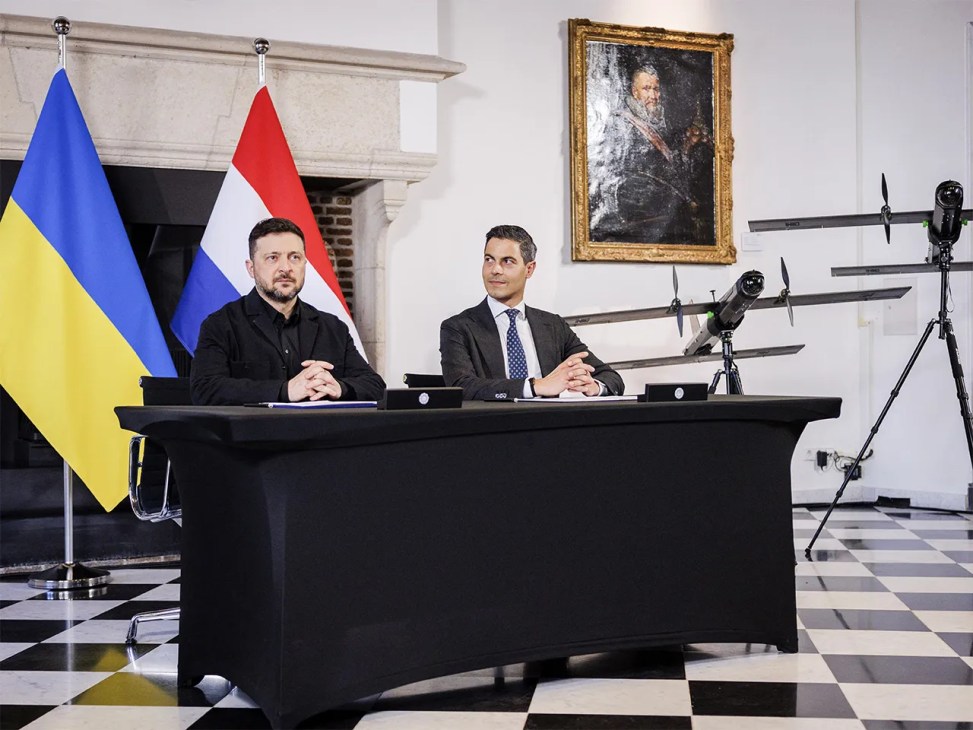
The Dutch seek to ‘dronify’ their military with lessons from Ukraine
The sun beats down on Gilze-Rijen Air Base with the kind of intensity that makes a flak jacket feel more like a hindrance than a lifesaver. Despite that, kitted-out marines, reservists and pilots stand shoulder to shoulder, blinking in the glare. A small, uncrewed ground vehicle trundles forwards, flanked by heavily armed soldiers. The whole group was surrounded by drones of every conceivable size parked out on the tarmac. On the apron of the base, the Dutch defence chief General Onno Eichelsheim speaks to an audience of stakeholders and journalists about a white paper that lays out a brand new military strategy.
The Netherlands intends to make its military the most innovative in Europe. He also wants us to know that they’ve done their homework before making that pledge. Over the past year, Dutch support for Kyiv has grown remarkably. The taxpayer-funded Drone Line Initiative, which originally had a budget of around €500m, has expanded to more than £1bn to deliver almost one million drones. Ukrainian officials credit the partnership with having “changed the course of the war”. By Kyiv’s own estimates, drone units equipped by the Netherlands are now responsible for roughly a third of Russian casualties at the front.
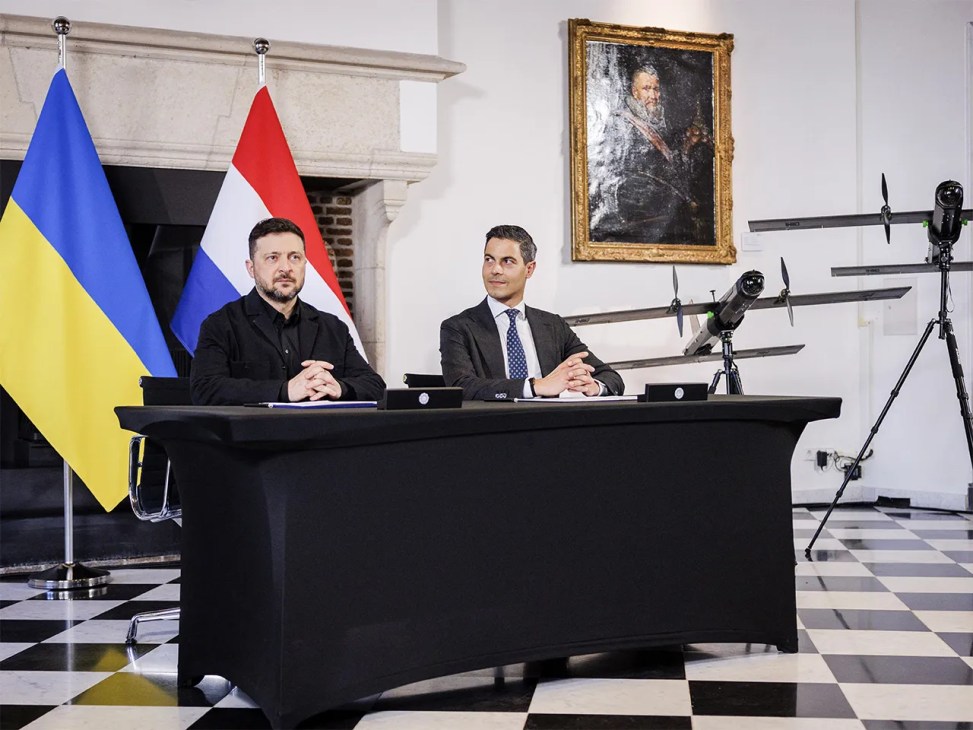
The operative verb – heard frequently throughout the day – is to “dronify”. But it is not simply about buying or making drones. “It is also about how you defend yourself against them,” says Eichelsheim, still squinting in the afternoon sun. The ambition within five years, he says, is for more than half of all operational effects to come from uncrewed systems. But the general is remarkably relaxed about how this impacts his work. “Yes, I really do think that in a few years I will have some robots around me doing the writing and the thinking with me,” he tells Monocle after his speech.
The white paper itself reads like a manifesto for pragmatic modernisation: a “smart mix” of expensive, highly capable systems alongside cheap, expendable platforms; a hybrid navy in which crewed command ships direct swarms of uncrewed vessels; a DARPA-style innovation authority operating at arm’s length from the bureaucracy; and, underpinning it all, a legally enshrined defence budget of 3.5 per cent of GDP by 2035. It is a thoroughly contemporary strategy, concerned less with traditional military prestige than with drones, data and the decidedly unglamorous business of sustaining combat operations.
“We are genuinely breaking with the past,” deputy prime minister Dilan Yeşilgöz tells Monocle. The emphasis is on operational effect rather than administrative efficiency, with lessons drawn directly from the battlefield. “These are the concrete lessons we are learning from Ukraine. And we are now one of the world leaders in this kind of technology.”
Yeşilgöz is equally keen to stress that the relationship is reciprocal: the Netherlands supplies drones while Ukraine returns something just as valuable: the hard-earned knowledge of how to use them effectively.
Curiously, the UK unveiled its own defence vision almost simultaneously and the similarities are striking. Both papers take Ukraine as their template, pivoting toward integrated crewed-and-uncrewed forces, establishing a scaled-down DARPA-like innovation agency and committing to spending 3.5 per cent of GDP by 2035. The overlap extends to remarkably similar figures, priorities and even footnotes. Great minds, perhaps, or simply the same consultants.
The post The Dutch seek to ‘dronify’ their military with lessons from Ukraine appeared first on Monocle.