



U.S.-Iran ceasefire could go up in flames
This is more fire than cease:
- Over the past few days, tension between the U.S. and Iran has been escalating with another exchange of strikes on Saturday. President Trump threatened on Truth Social to resume the war and “complete the job.”
Why it matters: The U.S. and Iran are bombing each other again, putting the tenuous ceasefire in doubt again.
Between the lines: One reason for the renewed fighting seems to be different interpretations of the memorandum of understanding (MOU) to end the war that was signed 10 days ago — especially when it comes to the Strait of Hormuz.
- With the situation escalating by the day, it isn’t clear if the next round of negotiations between the U.S. and Iranian technical teams planned for Tuesday in Switzerland will actually take place.
Catch up quick: As part of the MOU, Iran committed to make its best efforts to allow safe passage of commercial vessels through the strait. In return, the U.S. lifted its blockade on Iranian ports.
- During negotiations in Switzerland last week, the U.S. delegation — headed by Vice President Vance — agreed with Iran to establish a “hotline” between the U.S. military and the IRGC (Islamic Revolutionary Guard Corps), Iran’s military command, to coordinate traffic in the strait.
- As of Saturday, the “hotline” still wasn’t operational. The situation has been escalating as Iran started claiming, again, that ships need to coordinate passage.
On Saturday evening, the U.S. military struck Iranian targets in retaliation for an attack Saturday morning on a commercial tanker.
- It was the second wave of U.S. strikes in Iran in 24 hours.
The latest: Iran responded with drone and missile attacks on U.S. bases in Kuwait and Bahrain, according to the IRGC.
- Iranian state media quoted the IRGC as threatening more forceful attacks on ships in the Strait of Hormuz, raising the prospect of the peace process coming to a halt.
Earlier Saturday, the IRGC launched an attack drone at the Panama-flagged M/T Kiku tanker, which was passing through the strait with more than 2 million barrels of crude oil, U.S. Central Command (CENTCOM) said.
- The incident happened several hours after the U.S. struck Iranian targets, in retaliation for another attack on a commercial ship on Thursday. In addition to the tanker strike, Iran retaliated by attacking targets in Bahrain early Saturday.
- CENTCOM said in a statement that U.S. aircraft targeted Iranian military surveillance infrastructure, communication systems, air defense sites, drone storage facilities and minelaying capabilities.
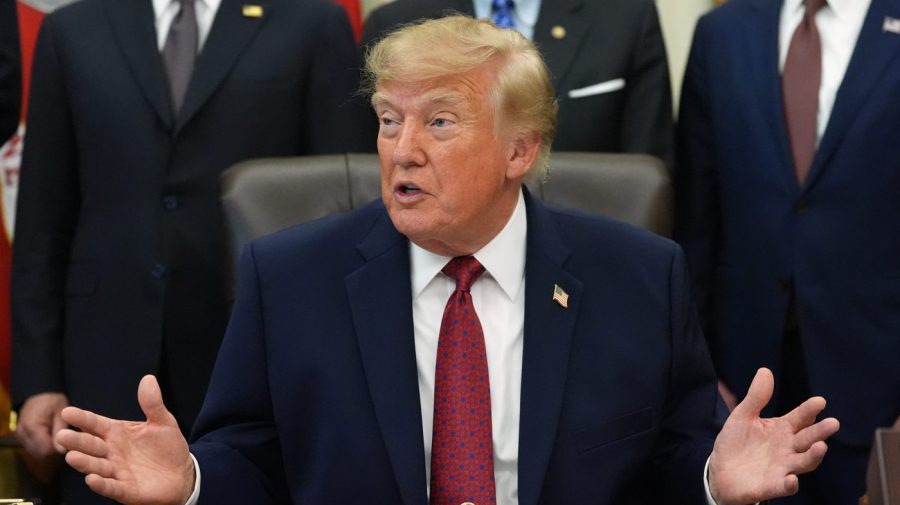
What they’re saying: Trump, in a Truth Social post Saturday evening, confirmed the strikes and threatened more.
- “There may come a point when we are no longer able to be reasonable, and will be forced to militarily complete the job that we very successfully started,” he wrote. “If that happens, the Islamic Republic of Iran will no longer exist!”
Go deeper: Trump’s messy path to peace.