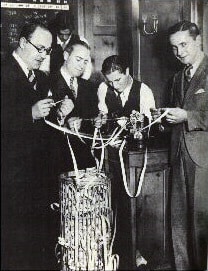
When Market Data Became Confetti
When the New York Knicks celebrated their first NBA championship in 53 years with a ticker-tape parade last week, the route through Lower Manhattan followed a familiar tradition.
The parade traveled up Broadway toward City Hall, along the stretch now known as the Canyon of Heroes — the ceremonial route where New York has celebrated championship teams, astronauts, soldiers, world leaders and other historic figures for more than a century.
For Wall Street, the term “ticker-tape parade” carries a more literal history. Before ticker tape became part of New York’s celebration language, it was market data.
Long before computers, smartphones and trading screens, stock prices moved through ticker machines. The stock ticker, introduced by Edward A. Calahan in 1867 and later improved by Thomas Edison, transmitted prices and volume over telegraph lines and printed them onto narrow strips of paper. The machine took its name from the ticking sound it made as it printed.
For traders and brokers, the tape was a way to follow the market in real time. It showed what was trading, where prices were moving and how quickly sentiment was changing. But it also had a short shelf life, as once prices changed, the paper was no longer useful.
That discarded paper became part of New York history almost by accident. By the late 19th century, brokerage offices and financial firms clustered around Wall Street had a steady supply of used ticker tape. On October 28, 1886, during the dedication of the Statue of Liberty, traders and office workers reportedly threw tape from windows as the parade passed the New York Stock Exchange, helping launch what became one of the city’s most recognizable civic traditions.
Market data had become confetti.
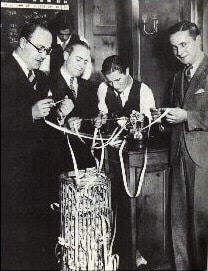
That is the unusual history behind the ticker-tape parade. What began as a byproduct of the financial district eventually became a signature part of New York City celebrations.
The paper disappeared as ticker machines were phased out and computers and electronic market-data systems took over, and modern parades rely on shredded office paper and store-bought confetti rather than the strips that carried stock quotes.
But tape is still part of market vernacular. Traders still talk about reading the tape, even though that tape now appears on screens, apps, and trading systems rather than paper.
(Featured image: DepositPhotos.)