


Radiohead’s Jonny Greenwood compares boycott-led show cancellations to “taking books off shelves”

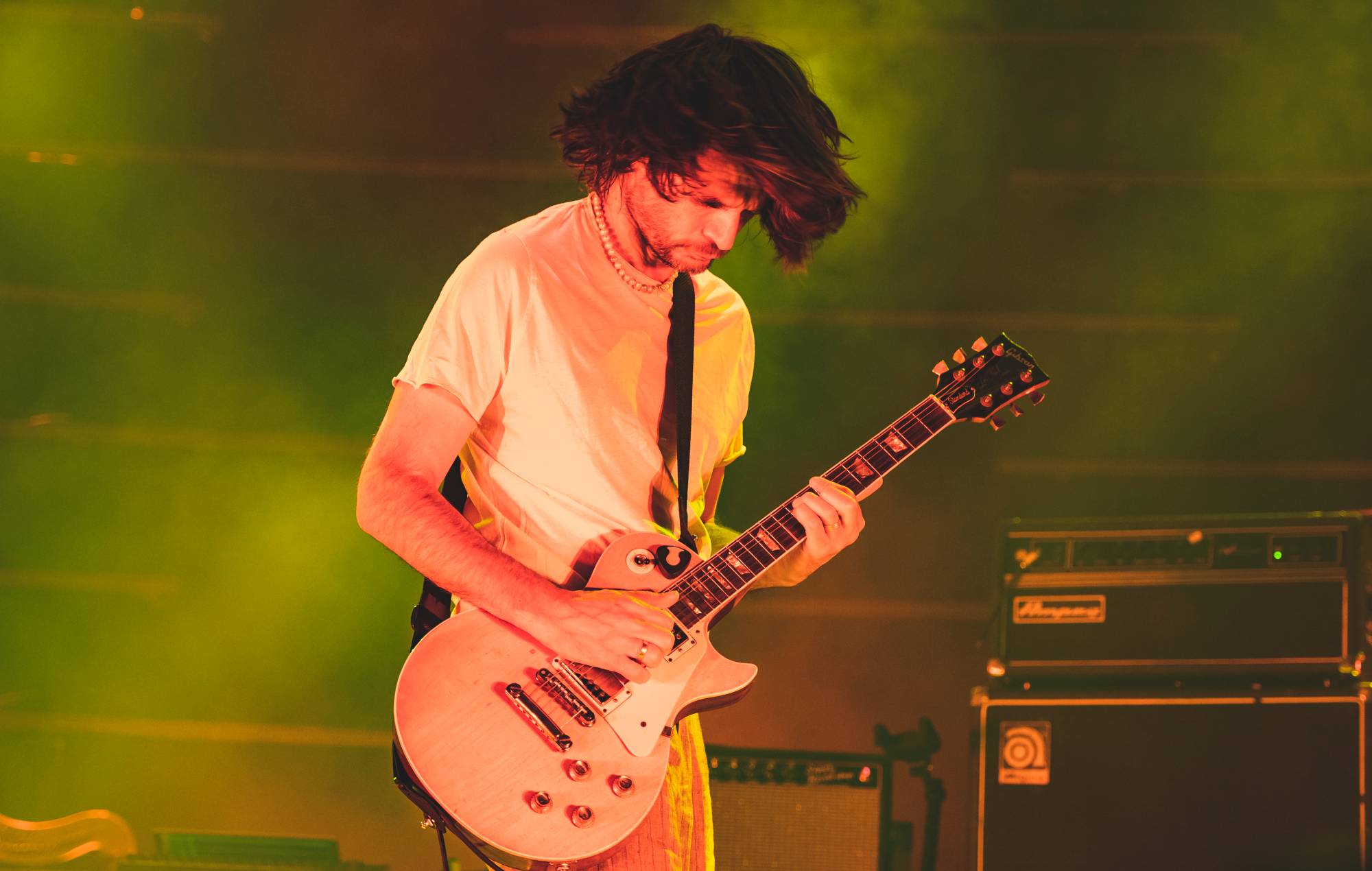
Radiohead’s Jonny Greenwood has likened his Israeli gigs being cancelled due to boycotts to “taking books off shelves”.
In May 2024 and again in March 2025, Greenwood played in Tel Aviv with Israeli musician Dudu Tassa, incurring criticism from the Boycott, Divestment and Sanctions (BDS) movement. A pair of UK performances by the duo, scheduled for June 2025 in Bristol and London, were later cancelled following pressure from pro-Palestinian campaigners.
The Palestinian Campaign for the Academic and Cultural Boycott of Israel (PACBI) said those cancellations followed “peaceful BDS pressure”, citing what it called the artists’ “clear and irrefutable links to whitewashing Israel’s genocide in Gaza that has killed at least 62,000 Palestinians”. Its post also said: “Dudu Tassa has repeatedly entertained genocidal Israeli forces in between these massacres of Palestinians in Gaza, willingly acting as a cultural ambassador for apartheid Israel.”
Palestinians welcome the cancellation of Jonny Greenwood and Dudu Tassa’s concert, which was due to take place in Bristol, UK on the 23rd June and would have whitewashed Israel’s genocide against 2.3m Palestinians in Gaza and underlying settler-colonial apartheid regime. pic.twitter.com/PE12H1ohVL
— PACBI – BDS movement (@PACBI) May 1, 2025
Greenwood has now given an interview to El País, in which he was asked to compare his stance on playing in Israel to the cultural boycott of apartheid South Africa in the 1980s.
“I’m a fan of lots of Israeli films and writers and musicians, and the music I make with Dudu is resurrecting songs that are older than most of the countries that are currently fighting each other,” Greenwood responded.
“That’s always going to be more important to me,” he added. “There are bookshops in Madrid that are openly selling Amos Oz’s novels and he’s Israeli. To me, cancelling music is the same as taking books off shelves.”
Greenwood responded in a statement at the time of the cancellations, saying: “The venues and their blameless staff have received enough credible threats to conclude that it’s not safe to proceed.”
“Forcing musicians not to perform and denying people who want to hear them an opportunity to do so is self-evidently a method of censorship and silencing,” he continued. “Intimidating venues into pulling our shows won’t help achieve the peace and justice everyone in the Middle East deserves. This cancellation will be hailed as a victory by the campaigners behind it, but we see nothing to celebrate and don’t find that anything positive has been achieved.”
— Jonny Greenwood (@JnnyG) May 6, 2025
That controversy followed a long-running backlash against members of Radiohead over their performances in Israel. In 2017, the band played Tel Aviv despite protests urging them not to, with figures including Roger Waters, Thurston Moore, Young Fathers and Archbishop Desmond Tutu signing an Artists For Palestine UK open letter pressuring them to cancel.
Thom Yorke later responded to the 2017 controversy by saying: “Playing in a country isn’t the same as endorsing its government. We don’t endorse Netanyahu any more than Trump.” Around the same time, he also got into a Twitter altercation with director Ken Loach, after Loach asked whether Radiohead would “stand with the oppressed or the oppressor?”
PACBI has since said Radiohead have “yet to apologise” for playing the show, and again called for a boycott of the band’s 2025 UK and European tour.
Yorke again became the subject of controversy in October 2024, when he clashed with a protester during a solo show in Melbourne. After a pro-Palestinian campaigner in the audience shouted at the stage, the frontman said: “Come up and say that, right here. Come up on the fucking stage and say what you want to say. But don’t stand there like a coward, come here and say it.” Yorke then briefly walked off stage, before returning to perform ‘Karma Police’.
In May 2025, Yorke shared a lengthy post attempting to explain his stance on the Israel-Palestine conflict.
“Some guy shouting at me from the dark last year when I was picking up a guitar to sing the final song alone in front of 9000 people in Melbourne didn’t really seem like the best moment to discuss the unfolding humanitarian catastrophe in Gaza,” Yorke began. “Afterwards I remained in shock that my supposed silence was somehow being taken as complicity, and I struggled to find an adequate way to respond to this and to carry on with the rest of the shows on the tour.”
“That silence, my attempt to show respect for all those who are suffering and those who have died, and to not trivialise it in a few words, has allowed other opportunistic groups to use intimidation and defamation to fill in the blanks, and I regret giving them this chance. This has had a heavy toll on my mental health,” he continued, before saying his music should be enough of an indication that he “could not possibly support any form of extremism or dehumanisation of others”.
He said Netanyahu was “totally out of control” and that the “international community should put all the pressure it can on them to cease”, while arguing that “the unquestioning Free Palestine refrain that surrounds us all does not answer the simple question of why the hostages still have not all been returned? For what possible reason?”
Some criticised Yorke’s comments, including Reggie Watts, who said he was “disappointed to see that Thom’s statement centers his hurt feelings and frames his fans’ demands for him to speak up as a ‘social media witch hunt,’ instead of recognizing the urgency of their call for him to speak out against the world-historical humanitarian crisis in Palestine.”
In October last year, Yorke said that Radiohead would “absolutely not” return to Israel as he “wouldn’t want to be 5,000 miles anywhere near the Netanyahu regime”.
In January 2024, Radiohead guitarist Ed O’Brien wrote: “Like so many of you I have found the events of October 7 and what has followed too awful for words.. anything that I have tried to write feels so utterly inadequate. Ceasefire now. Return the hostages.”
The post Radiohead’s Jonny Greenwood compares boycott-led show cancellations to “taking books off shelves” appeared first on NME.