Tanks, guns and rocket launchers: The ties that bind the EU and South Korea
BRUSSELS — The EU is looking for international friends at a time of rising global turmoil, and South Korea fits the bill — with a top-level meeting set for Wednesday to cement tech, defense and industrial ties.
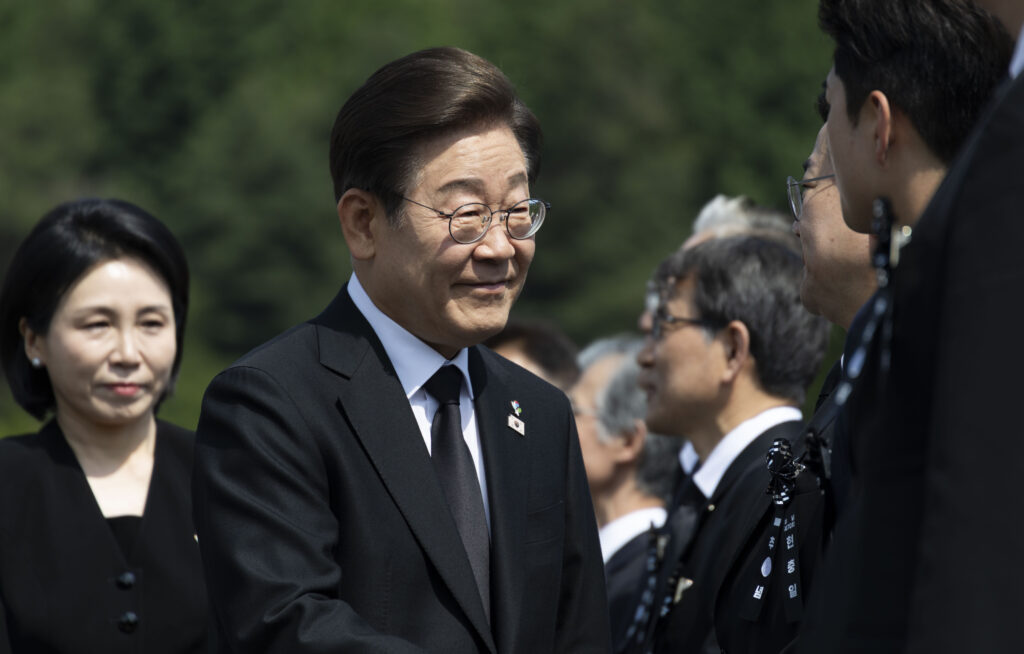
South Korean President Lee Jae Myung will meet with Commission chief Ursula von der Leyen and Council President António Costa for over two hours — the first such summit in three years.
“The summit also provides an important opportunity for the EU to deepen its economic security cooperation with South Korea, which is a crucial de-risking partner,” said Alexander Lipke, an analyst at the European Council on Foreign Relations.
One key goal will be to launch a new competitiveness partnership to better cooperate on trade, investment and economic security. Such ongoing dialogues exist only with Japan and India.
The two sides will also sign a digital trade agreement negotiated last year.
But much of the talk will focus on defense — where South Korean weapons makers have become increasingly important to a fast-rearming Europe. The two sides signed a security and defense partnership in November 2024.
South Korean companies have become important suppliers to European militaries racing to buy off-the-shelf weapons to deter Russia, but they could also become rivals to established EU arms makers.
The biggest buyer of Korean arms has been Poland, which has signed multi-billion-dollar deals for 362 K9A1 Thunder self-propelled howitzers, 360 K2 Black Panther tanks, 288 K239 Chunmoo rocket launchers, and 48 FA-50 light combat aircraft.
Poland accounted for almost half of South Korea’s arms exports between 2022 and 2024, with delivery speed a key factor, something U.S. rivals were unable to match.
Romania has since become another large customer, buying 54 K9 howitzers and 36 K10 ammunition resupply vehicles. The deal included Hanwha Aerospace setting up production in Romania.
Korean firms have also made sales to Estonia, Norway and Finland — largely for K9 howitzers.
“Baltic and Eastern European countries were the first ones to reassess their capability needs following Russia’s annexation of Crimea” in 2014, said Kévin Martin, a researcher at the Paris-based Foundation for Strategic Research. He said that the K9 was one of the few artillery systems on the market that met their demands.

South Korean equipment is attractive because it’s delivered quickly, meets European countries’ operational requirements and is compliant with NATO standards, he added.
South Korea is also gaining market share thanks to growing European worries about being too reliant on the U.S. as President Donald Trump questions his country’s traditional security relationship with the continent, he said.
South Korea could benefit from the new €150 billion Security Action for Europe loans-for-weapons scheme. However, because of pressure to favor the bloc’s own industry, third-country companies can account for only 35 percent of the final value of weapons systems financed by the program.
“Member states have largely decided how they will spend their SAFE funds, and they are now launching procurements for those funds,” an EU official said.
South Korea was interested in a special deal that would have allowed greater participation — something only Canada has achieved — but there is no agreement on it.
EU Defense Commissioner Andrius Kubilius also raised the possibility of South Korea’s future involvement in a European Defense Union on Tuesday. The union is a still-nascent idea to more tightly integrate the continent’s defense and military industrial complexes.
Kubilius told POLITICO that participation in such a body could “theoretically” be open to South Korea, as well as to other countries such as the United Kingdom, Norway, and Ukraine, and possibly Canada and Turkey.
He said it was still uncertain when the defense union proposal would be presented, but it could be “maybe after the NATO summit” in Ankara in early July.