



Multifamily’s New Math Favors Suburbs and Scale
The multifamily market heading into the second half of 2026 presents a peculiar mixture of strength and strain, according to the data presented in a recent webinar on the multifamily market outlook. On the surface, leasing fundamentals look solid. Absorption is tracking above historical averages in many markets, and capital is flowing into the sector. But beneath those headline numbers, developers and operators are confronting a market that’s fundamentally different from what it was two years ago. The sector is no longer chasing growth in the same ways it did two years ago. Instead, operators are recalibrating their strategies around tighter margins, consolidated geographies, and different product types.
Capital remains available for multifamily investment, which alone represents a significant advantage in the current environment. Many industries face financing constraints, but the multifamily sector continues to attract investors and lenders. Manus Clancy, Head of Data Strategy at LightBox, pointed to the comparison with the 2010 to 2014 period as a baseline for understanding the current market health. “We’re still seeing a market that’s functioning. People are buying and selling, people can find capital, there’s liquidity out there, and the markets are performing. If you remember what happened in 2010 to 2014, liquidity just completely dried up. It left the room, and people were beg, borrowing, and stealing to refinance their debts. We haven’t seen this, despite many, many headwinds over the last couple years, and that makes me very, very encouraged.” Access to capital creates room for operators to make strategic decisions rather than reactive ones. Refinancings are possible. New development can move forward. The sector isn’t in distress mode.
The markets that have driven multifamily narratives for the past five years are beginning to show saturation. Denver, Austin, and Nashville attracted enormous amounts of capital and development activity because they offered consistent rent growth, strong population inflows, and favorable development conditions. That dynamic has shifted. Rents in these markets have moderated as new supply comes online faster than demand can absorb it. Developers who built business models around sustained rent growth in these metros are now facing reality. The obvious plays in obvious markets have already been executed. Returns that were available two years ago simply don’t exist today.
This saturation is forcing a geographic reorientation. Developers and operators are moving away from the high-growth metros and looking at secondary and tertiary markets that previously received less attention. The shift requires more work and more due diligence. Lee Miller, Vice President of Multifamily at Brivo, described the current mindset: “I think now, everybody’s having to work a little bit harder, everybody’s having to think outside of the box. Everybody’s gonna have to get on a plane to Cincinnati and go check out what they have to offer, right? There’s some great places to live in this country, but you have to go find them.” The implication is clear. There are viable multifamily markets throughout the country, but they require investigation and market-specific analysis rather than relying on broad macro trends that worked in Denver or Austin.
The geographic shift is changing what gets built. A decade ago, multifamily development concentrated heavily in urban cores and higher-density submarkets. Developers pursued walkable, amenity-rich locations in major cities. That development pattern reflected both investor preferences and what seemed like demographic momentum toward urban living. Jay Lybik, Senior Director of Market Research at Continental Properties, described the shift: “There’s definitely been more interest in going into suburban locations and ex-urban locations compared to say 10 years ago. Ten years ago, there was a very, very strong interest in building into either urban cores or higher density locations, first-rung suburbs, walkable areas, etc. So I think that’s been a little bit of a shift.”
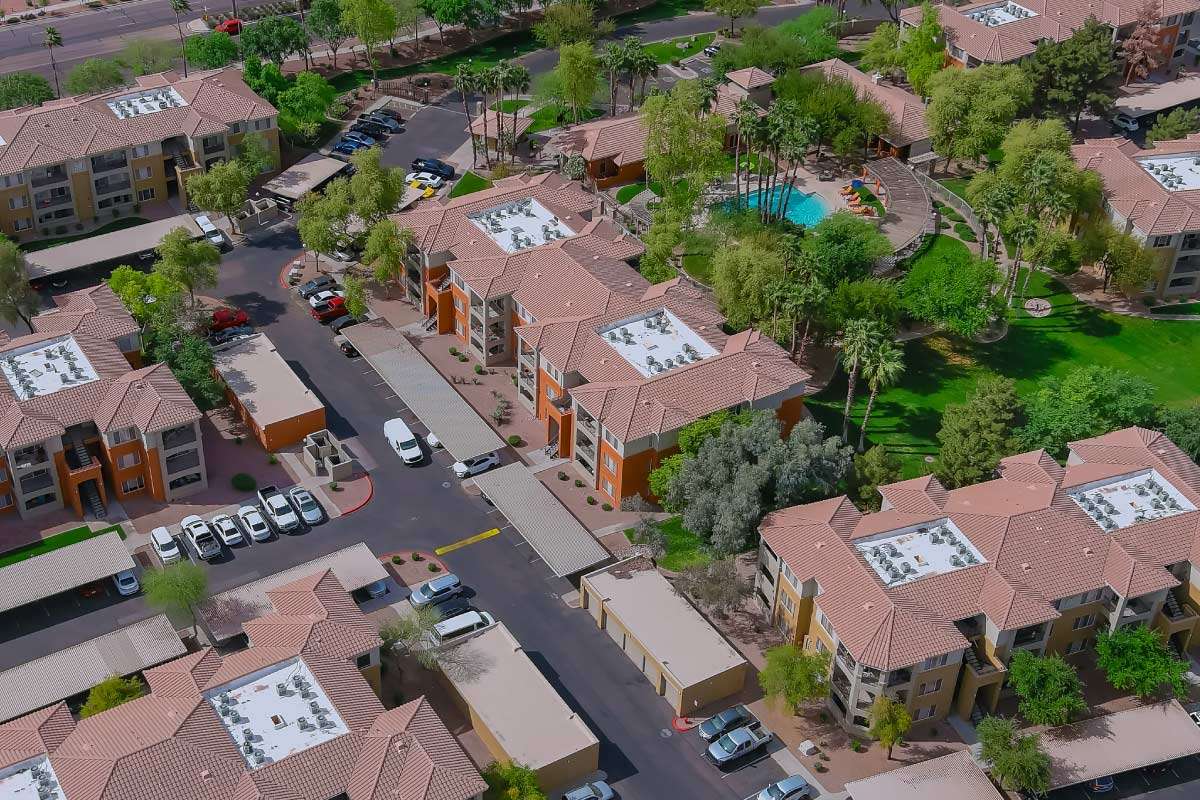
That geographic shift manifests in product type. During the pandemic and immediately after, approximately 90% of new multifamily construction was mid-rise or high-rise product. Garden apartments, which are smaller in scale and typically lower in density, represented a minimal share of development activity. The ratio has reversed significantly. Lybik noted that garden apartments now represent 25 to 30% of new multifamily construction, a substantial increase from near-zero levels just a few years ago. Garden apartments cost less to develop per unit than mid-rise or high-rise buildings. They require different land bases—typically suburban or exurban rather than urban core. They align with where demographic demand is actually materializing, particularly among households seeking more space and lower density living arrangements.
The shift toward secondary markets and garden apartments reflects rational capital allocation, but it’s also driven by economic pressure. The cost of building apartments has risen dramatically. Materials, labor, and energy costs are significantly higher than they were three years ago. For mid-rise and high-rise construction in expensive urban markets, those cost increases are often unmanageable. The economics simply don’t work. Garden apartments in suburban markets offer a lower cost basis and a faster path to stabilization. For operators managing existing portfolios, margin pressure is acute. Even with strong leasing fundamentals, operating costs are consuming larger shares of revenue. Maintenance, labor, utilities, and property-level expenses have all increased. Operators must find ways to improve efficiency or face deteriorating NOI despite solid leasing performance.
The response from operators is a deliberate move toward geographic consolidation. Rather than maintaining scattered properties across multiple markets, operators are concentrating acquisitions and development in specific geographic areas. The logic is operational efficiency. Managing multiple properties across different markets requires duplicate staff, inconsistent operational procedures, and higher overhead costs. By concentrating holdings in specific geographies, operators can centralize management functions while maintaining on-site staffing. Lee Miller described the approach: “People are thinking harder, and they are looking to either make purchases or do developments all within the same geographical area, because what they are thinking about long-term is that they may not have a staff to manage one site, or multiple sites. If they can have a centralized staff, it’s not that they’re removing the staff, but you may have the same amount of maintenance people on site who are also working at two other sites that day.”
The strategy reflects a fundamental shift in how operators think about portfolio construction. Scale no longer means more properties scattered across more markets. It means density within markets. A centralized team can manage multiple properties more efficiently than distributed teams managing single properties. This approach also creates operational consistency, reduces training overhead, and allows for better procurement leverage on maintenance and materials at a market level. Operators who can execute this strategy effectively gain cost advantages that directly improve margins.
For the remainder of 2026, the multifamily sector will likely divide along these lines. Leasing fundamentals will remain reasonably stable. Absorption will continue in most markets. But the economics of building and operating will sort operators by capability and strategy. Those with the discipline to consolidate geographically, shift toward lower-cost product types, and centralize operations will find operational leverage. Those maintaining fragmented portfolios across multiple markets will face continued margin pressure. Capital will continue to flow into the sector, but increasingly toward operators executing clear consolidation strategies rather than toward bulldozer developments chasing growth in saturated primary markets.
The post Multifamily’s New Math Favors Suburbs and Scale appeared first on Propmodo.