




8 Striking Examples of Carchitecture Around the World
LUXUO examines eight buildings where the automobile becomes the organising principle of architecture. Cars are no longer stored out of sight. They are displayed, elevated and engineered into the structure itself. Speed does not sit on the road alone. It is embedded into glass façades, lift systems and reinforced concrete volumes designed around weight, width and display. Projects range from automated car towers in Singapore to private residences built around fixed collections. In each case, the building responds to the dimensions and status of the vehicle first and the living space follows. The garage stops being a support function and becomes the main programme. This shift changes how these spaces operate. Cars sit at the centre of circulation, sightlines and daily use. Architecture now treats the automobile as a permanent resident rather than a stored object.
Autobahn Motors, Singapore: The World’s Most Expensive Vending Machine

In land-scarce Singapore, Autobahn Motors faced a practical problem of storing up to 60 luxury vehicles with limited ground space. An innovative solution had to be deployed to transform constraint into spectacle. The building rises 15 storeys, its glass facade revealing a fishbone-style automated elevator system that retrieves selected cars to the showroom floor within two minutes. Customers browse on a tablet and watch their choice descend through the illuminated tower.
Gary Hong — director of Autobahn Motors — told Reuters: “We needed to meet our requirements of storing a lot of cars. At the same time, we wanted to be creative and innovative.” The inventory includes a 1990 Ferrari Testarossa, a 1984 Mazda RX-7 and multiple Porsche 911s. Beyond efficiency lies theatricality. Customers receive a commemorative coin — a nod to traditional vending machines — and watch from a front-row seat as their purchase descends through the brightly lit structure.
El Capitola, Washington: The Home That Gives More Space to Cars Than People
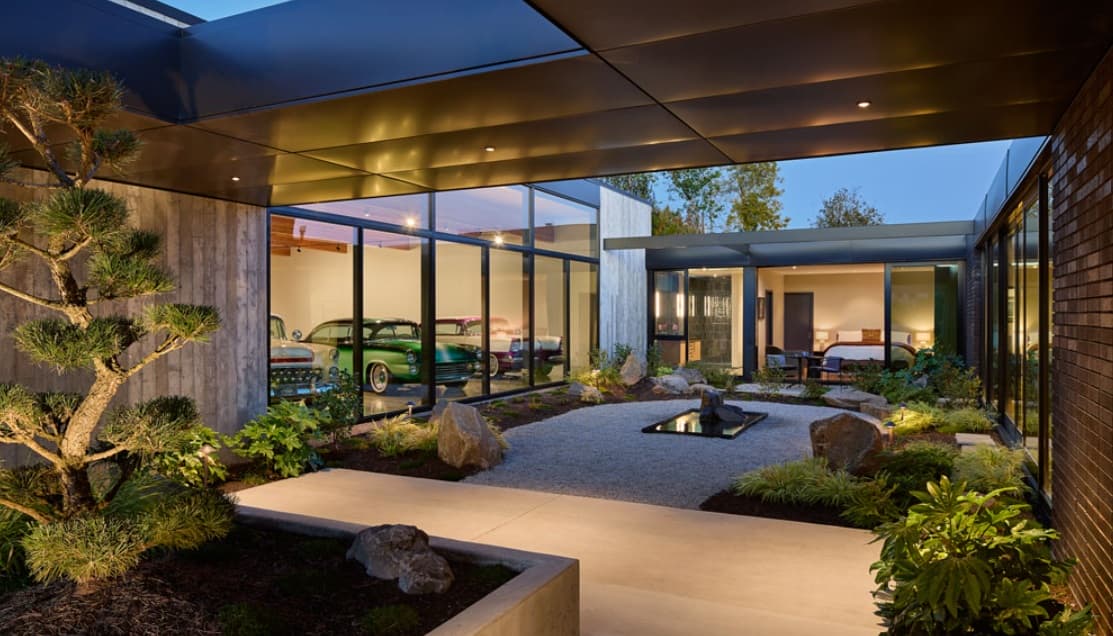
On a slope overlooking the Columbia River in Washington State, El Capitola inverts the traditional hierarchy of domestic space. The home devotes more square footage to its car gallery than to living quarters. The architect employed a minimal palette of board-formed concrete, steel and dark brick. A low linear facade opens onto a courtyard with a bubbling water feature and a Japanese pine growing through an aperture in the steel canopy above. Expansive glass walls reveal a horseshoe plan organised around an eight-car gallery visible from every major room. Pocketed window walls at either end of the living room open to frame a sightline to the river straight through the house. Interior finishes reinforce the automotive theme: leather, chrome, glass and concrete. A corner garage office displays vintage signage, retired license plates and a library of hot-rodding magazines. A dramatic cantilever at the southwest corner forms a carport that announces the building’s purpose before a visitor steps inside.
London Mews House: A Hydraulic Lift Raises the Car into the Living Room
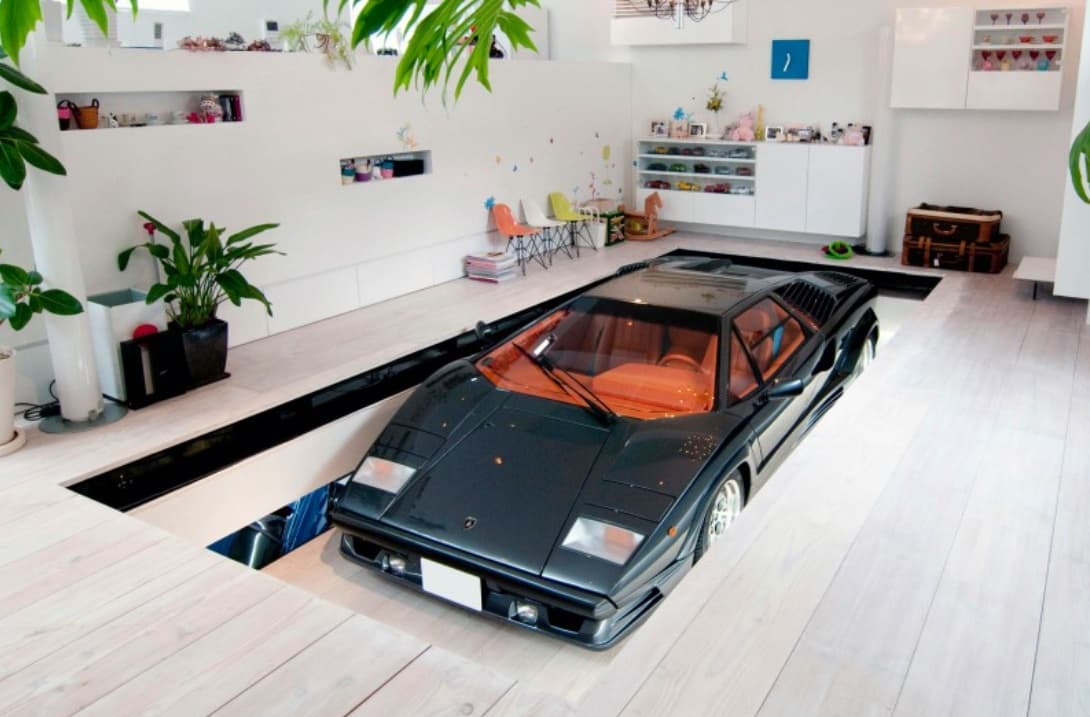
Behind an unassuming facade in a London mews, a private residence has solved the urban parking problem with audacious engineering. A hydraulic lift raises a classic car from street level directly into the main living area. The system — documented by architecture site Dornob — transforms the vehicle into a rotating exhibit. When not in use, the car descends to a secure ground-level bay. When entertaining, the owner activates the lift and the automobile ascends to sit alongside the sofa and dining table. The engineering required precision: the floor has to support several tonnes of moving weight and the mechanism must operate silently. The result is a seamless home where the boundary between garage and living room has been erased. This approach resonates in London, where land is expensive and off-street parking is a luxury. The mews house celebrates the car rather than hiding it. The automobile becomes a resident, not a visitor.
Bentley Residences, Miami: A 62-Storey Tower with a Car Elevator Called the Dezervator
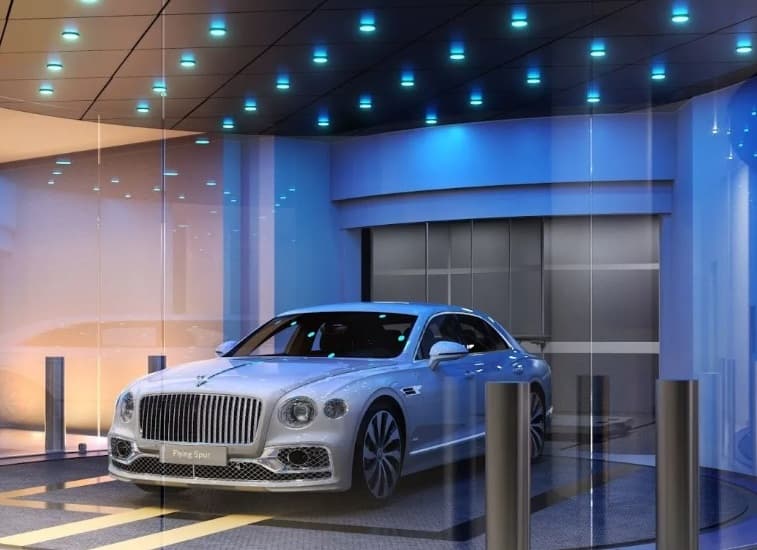
When completed in 2026, the Bentley Residences on Miami’s Sunny Isles Beach will offer a glass-enclosed car elevator that delivers the vehicle and owner directly to a private in-unit garage. The “Dezervator” builds on technology first deployed in the neighbouring Porsche Design Tower. Gil Dezer — president of Dezer Development — told SupercarBlondie.com: “We immediately agreed that we need to bring passengers in their cars up to the apartment.”
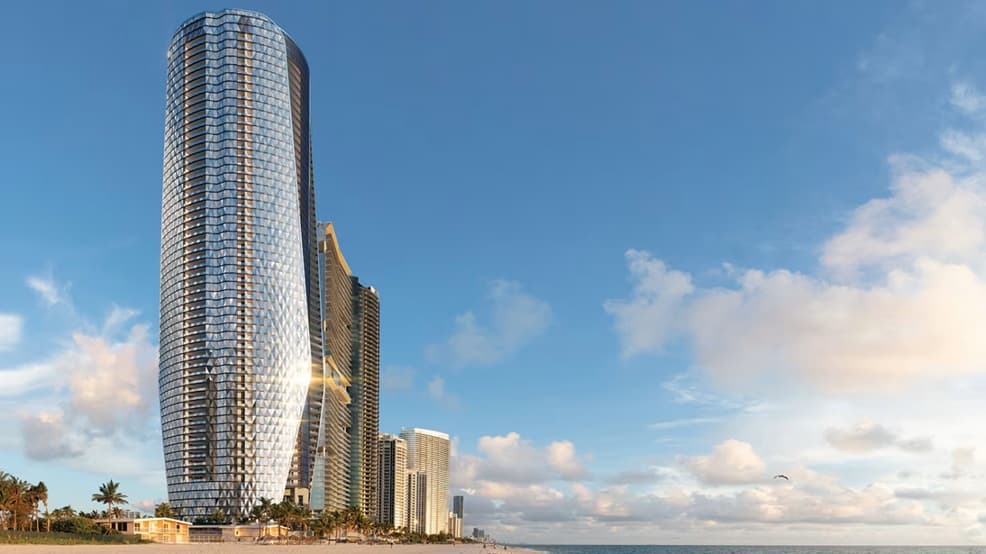
The 62-storey tower — designed with Bentley Motors — comprises 216 furnished residences. Each apartment features a private swimming pool, floor-to-ceiling glass windows and a garage space adjacent to the living quarters. Dezer noted additional benefits: “No need to call a valet. Privacy and security are also reasons for our customers to love the Dezervator”. The building — financed with USD 630 million in construction loans — represents a significant bet on the convergence of automotive passion and luxury real estate. Prices start at USD 5 million.
West Bellevue House: Two Bedrooms, 16 Garage Spaces
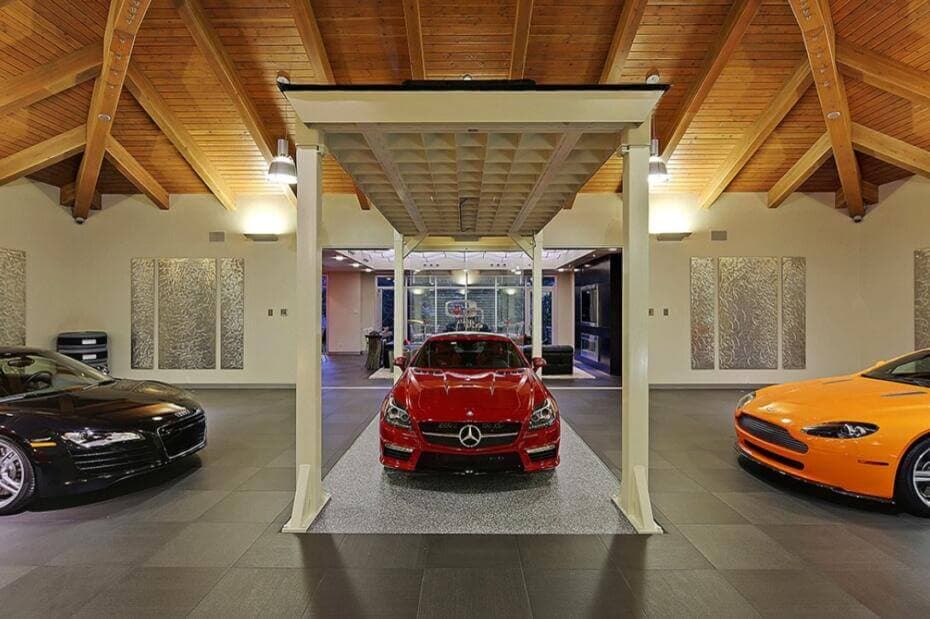
The arithmetic of the West Bellevue house is unusual — two bedrooms, 16 garage spaces — but the automobile collection takes precedence. Documented by architecture site Dornob.com, this Washington residence treats the car gallery as the primary spatial event. The footprint dedicates a vast amount of square footage to climate-controlled storage and display, with living quarters compressed into the remaining volume. The design employs industrial materials: polished concrete floors, steel beams and expansive glass walls that illuminate the vehicles. The effect is less that of a home with a garage than of a museum with a bedroom annex. For collectors who require precise humidity, temperature control, security and curatorial presentation, this approach makes practical sense. The house merely makes the priority explicit.
Villa Kirk, Denmark: A Surrealist-Inspired Extension for Classic Car Exhibition
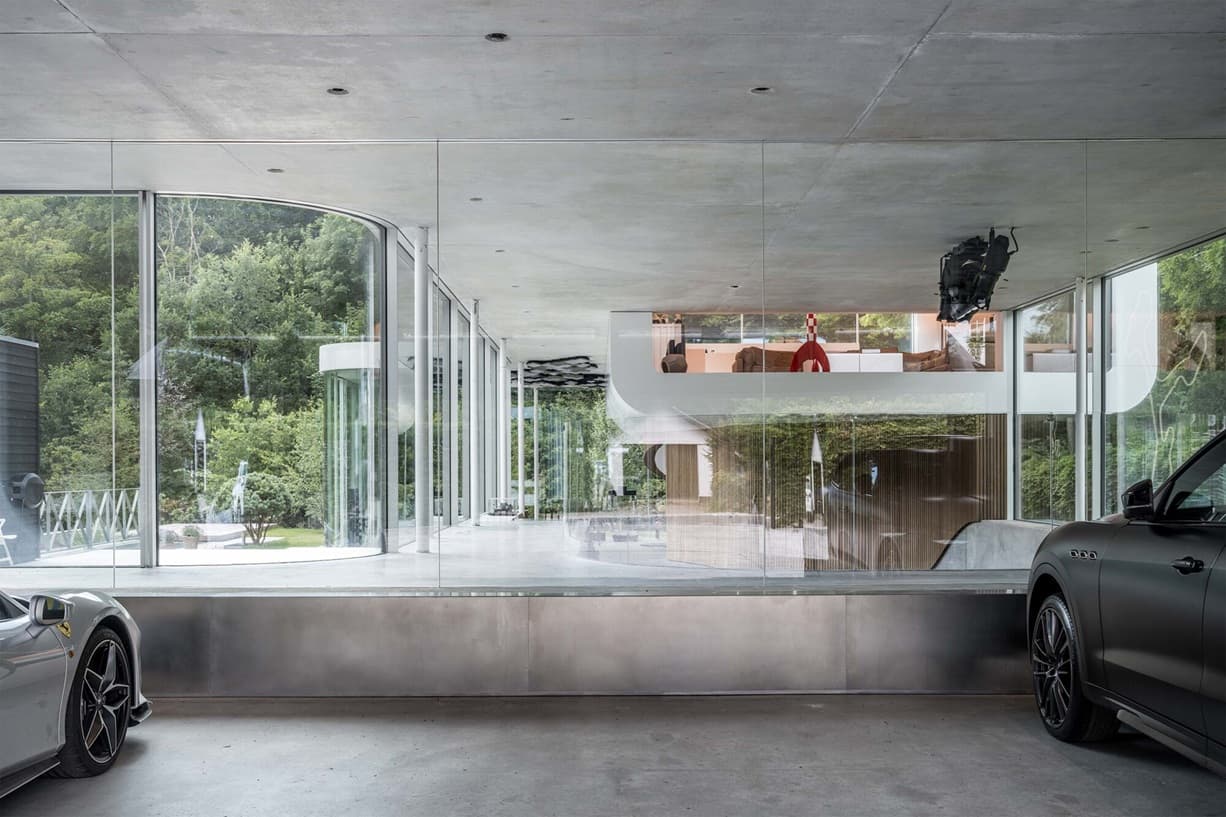
North of Copenhagen, a sober Danish house received an extension that Spol Architects describes as a blend of “bat cave and mancave in the shape of a melted Salvador Dalí watch”. The project — assigned within days of a chance meeting on Christmas Day — transformed a traditional suburban residence with a wood-slat facade into something more dramatic. The new wing comprises steel and concrete with sweeping curves, tall ceilings and bespoke Sky-Frame windows.
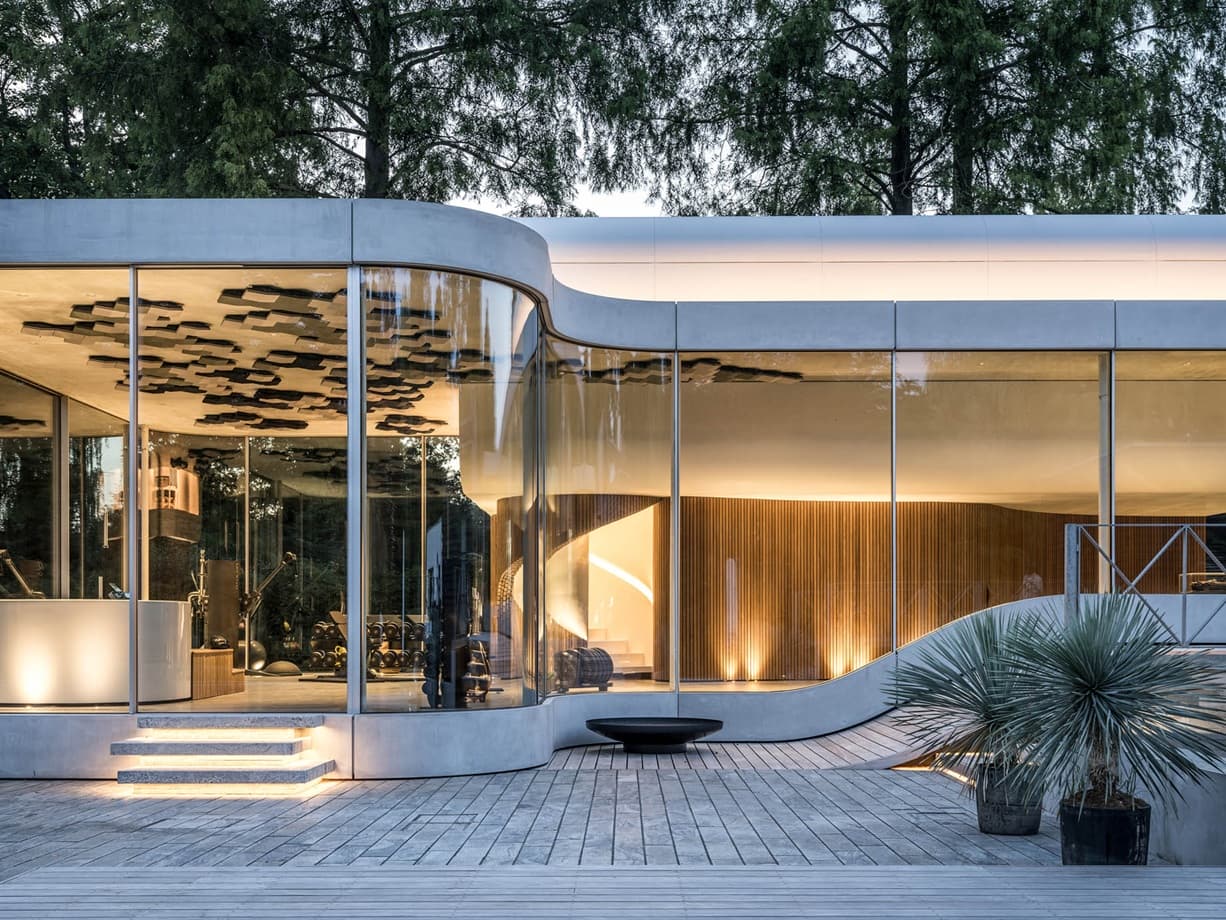
Architect Adam Kurdahl said the extension serves as “a hedonistic space for play, exercise and receiving guests, and an exhibition space”. A lift connects two levels of exhibition halls housing the owner’s classic car collection, as well as a bar, cinema and fitness hub. The materiality is intentionally raw: concrete, steel and wood. Due to “the complex geometry,” Kurdahl explained, the team worked with engineers to cast the basement in one continuous pour. The result is an aesthetic that’s organic and futuristic.
Carvana, San Francisco: An Eight-Storey Glass Vending Machine in Daly City

The Carvana vending machine in Daly City — south of San Francisco — stands eight storeys tall. Its steel-and-glass structure holds 27 vehicles visible through the illuminated facade. Customers arrive at an appointed time, receive an oversized commemorative coin, insert it into a slot and watch as their car descends through the tower. This is the thirty-second such machine Carvana has erected across the United States. The vending machines serve a dual purpose: functional pickup points and highly visible marketing landmarks. Founder and CEO Ernie Garcia said the machine embraces “San Francisco’s world-renowned disruptor spirit”.
The San Diego Union-Tribune quoted community development director Mike Strong: “What is attractive about this business model is they are using less space on their site for storage of vehicles.” Unlike the private residences on this list, Carvana’s vending machines are open to the public. Anyone can schedule a pickup and experience the theatrical descent of a vehicle through the glass tower.
When Speed Stands Still
These eight properties share a simple insight: the automobile deserves to be exhibited. No longer satisfied with detached garages, homeowners and developers now demand car elevators, glass-walled galleries and hydraulic lifts that raise vehicles into living rooms or showrooms.
Architecture has always reflected what its inhabitants value. Cathedral spires once announced devotion to God; however, these new buildings give genuflection to the machine. For those who love automobiles, the garage was never just a garage. Architecture has helped to change the cultural shift: the car has moved from the periphery to the centre of domestic life.
For more architectural reads, click here.
The post 8 Striking Examples of Carchitecture Around the World appeared first on LUXUO.